
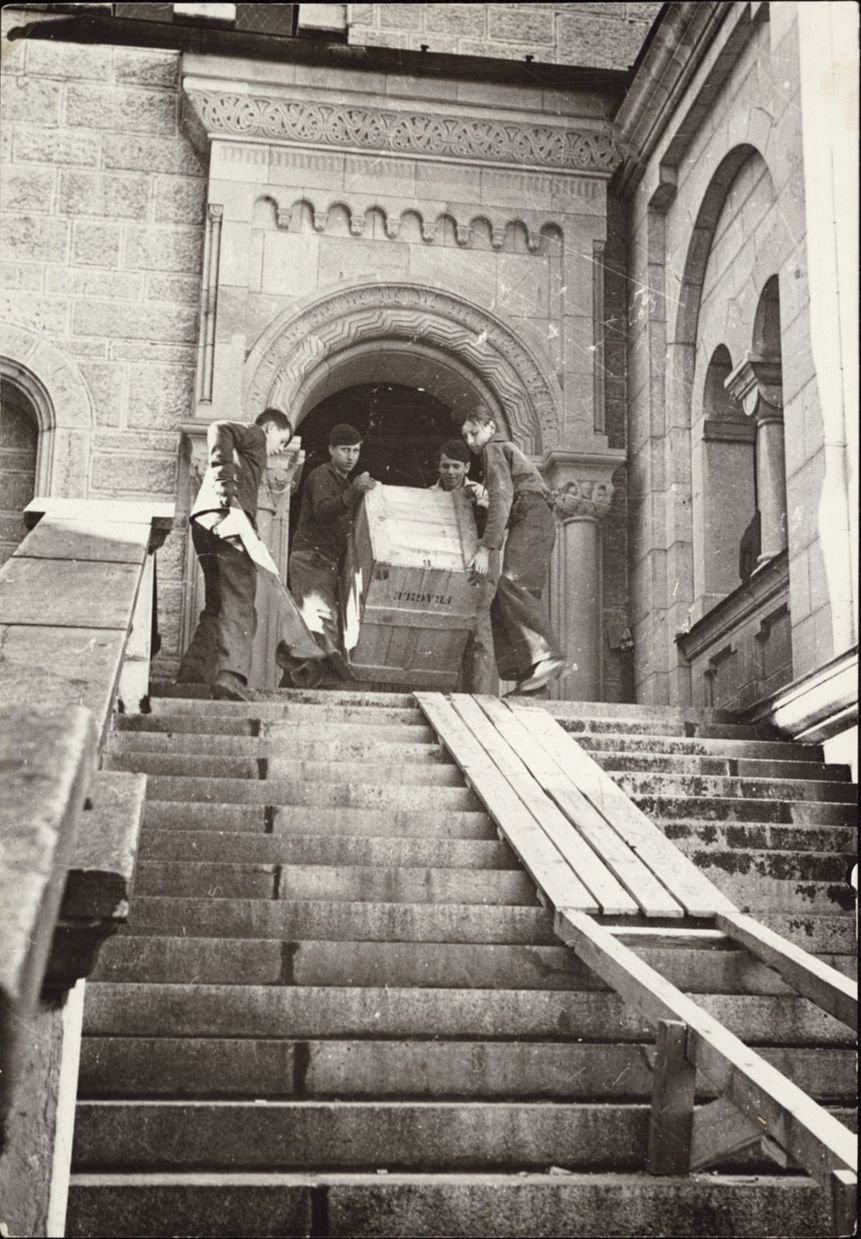
In May 1945, the Monuments Men entered the Altaussee salt mine for the first time. Deep within its galleries, they discovered thousands of works of art in storage — paintings, drawings, sculptures, books, furniture, and decorative objects — all looted by the Nazis. What followed was an extraordinary mission of recovery and restitution.
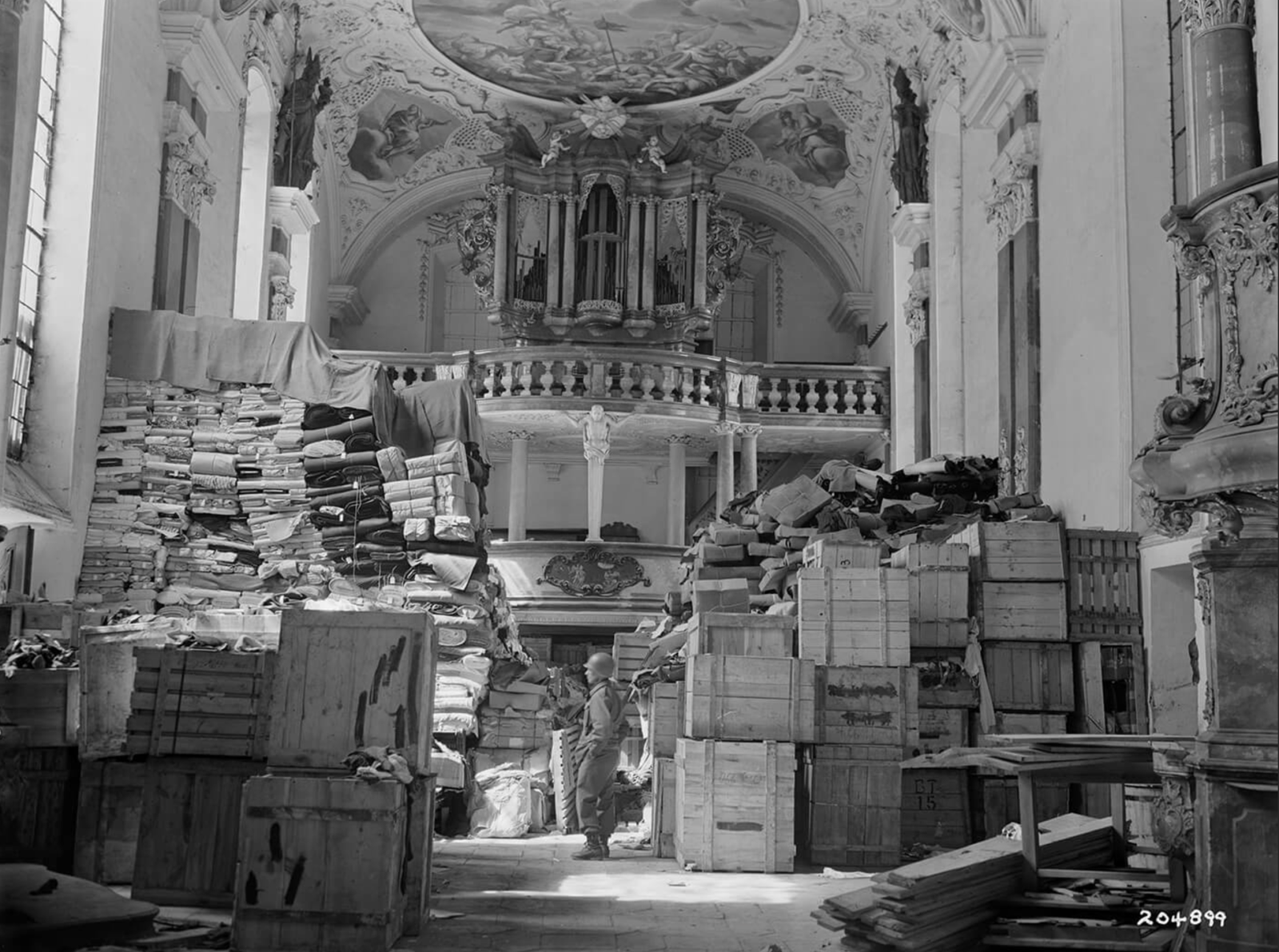
© National Archives and Records Administration
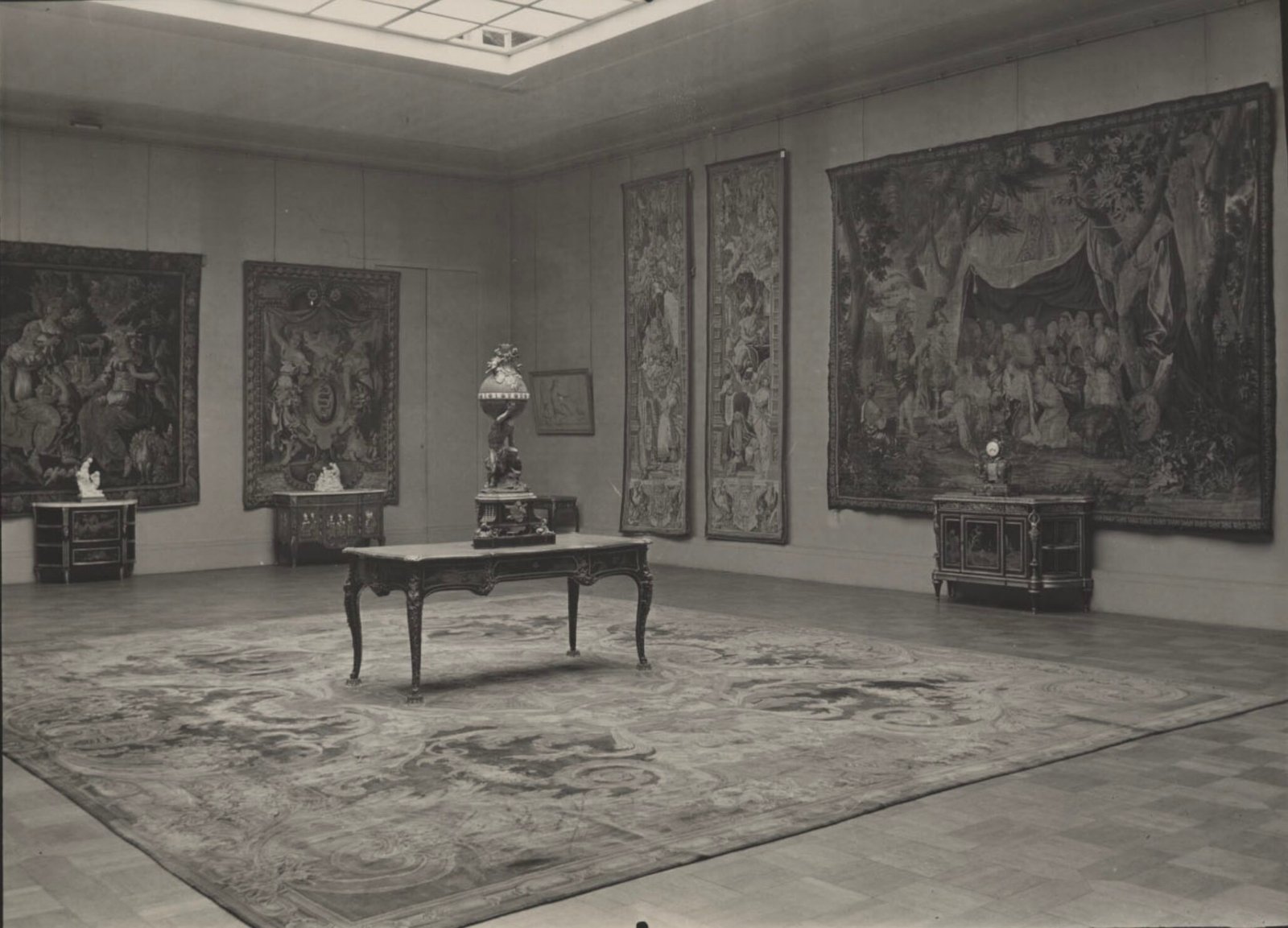
Beginning in the fall of 1940, the Reich embassy in Paris organized the systematic looting of works of art, carried out by the Einsatzstab Reichsleiter Rosenberg (ERR) under the command of Alfred Rosenberg. In Paris and across the provinces, the ERR sought out the works held in the greatest private and dealer collections, particularly those belonging to Jewish families. Inventoried, catalogued, and packed into crates, the works were gathered at the Jeu de Paume, where high-ranking Nazi officials hoping to claim them for themselves came to admire the pieces. The most prestigious works were first set aside for Hitler, who had been planning since 1939 to build the Führermuseum in Linz, his hometown. Reichsmarschall Hermann Göring, a voracious collector, then reserved the most important pieces for himself. Stamped H or G according to their intended recipient, shipments of art left Paris on a regular basis bound for Germany. In all, nearly 100,000 works were looted in France.
Faced with the scale of the looting and destruction of works of art, the Allied armies established the Monuments, Fine Arts, and Archives program (MFAA), better known as the Monuments Men. The unit brought together some 345 men and women from thirteen different nations, many of them museum curators and art historians. Initially working from abroad, they followed the Allied bombing campaigns from 1944 onward to rescue works from the rubble. Once they reached Germany, the nature of their mission shifted: rather than focusing on the preservation of damaged works, they now set out to locate the countless caches of looted art that the Nazis had hidden across Germany and Austria. The Altaussee salt mine was one of the largest of these depots, and the site where works destined for the Linz museum had been stored. Neuschwanstein Castle also housed a great many pieces, along with a restoration workshop set up by the Nazis. A massive operation of collection, sorting, and shipment then got underway: nearly 1,400 caches were ultimately discovered, and more than 5 million works and documents were returned by 1951.
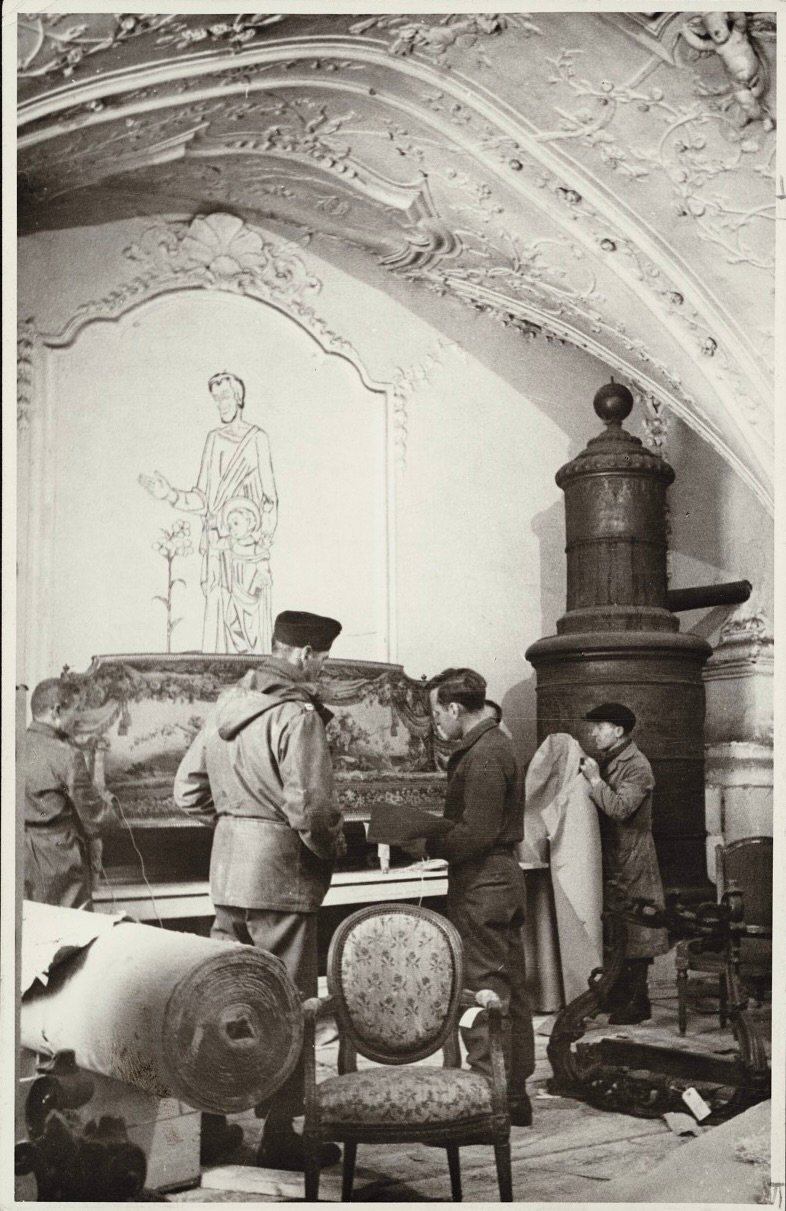
In Paris, the Monuments Men found invaluable allies in Jacques Jaujard (1895–1967) and Rose Valland (1898–1980). Jaujard, director of the Musées Nationaux, spent the entire war protecting public collections as well as those of many private owners, including the Rothschild, David-Weil, and Bernheim families. In November 1944, he supported the creation of the Commission de Récupération Artistique (CRA), tasked with finding the owners of looted works brought back to France by the Monuments Men. Fittingly housed at the Jeu de Paume, the commission oversaw the restitution of nearly 45,000 works. Rose Valland, who had been in charge of the museum during its use by the ERR, meticulously documented the works the Nazis stored there and their intended destinations. It was she who pointed Monuments Man James Rorimer (1905–1966) — a curator at the Metropolitan Museum before the war — toward the Neuschwanstein depot.
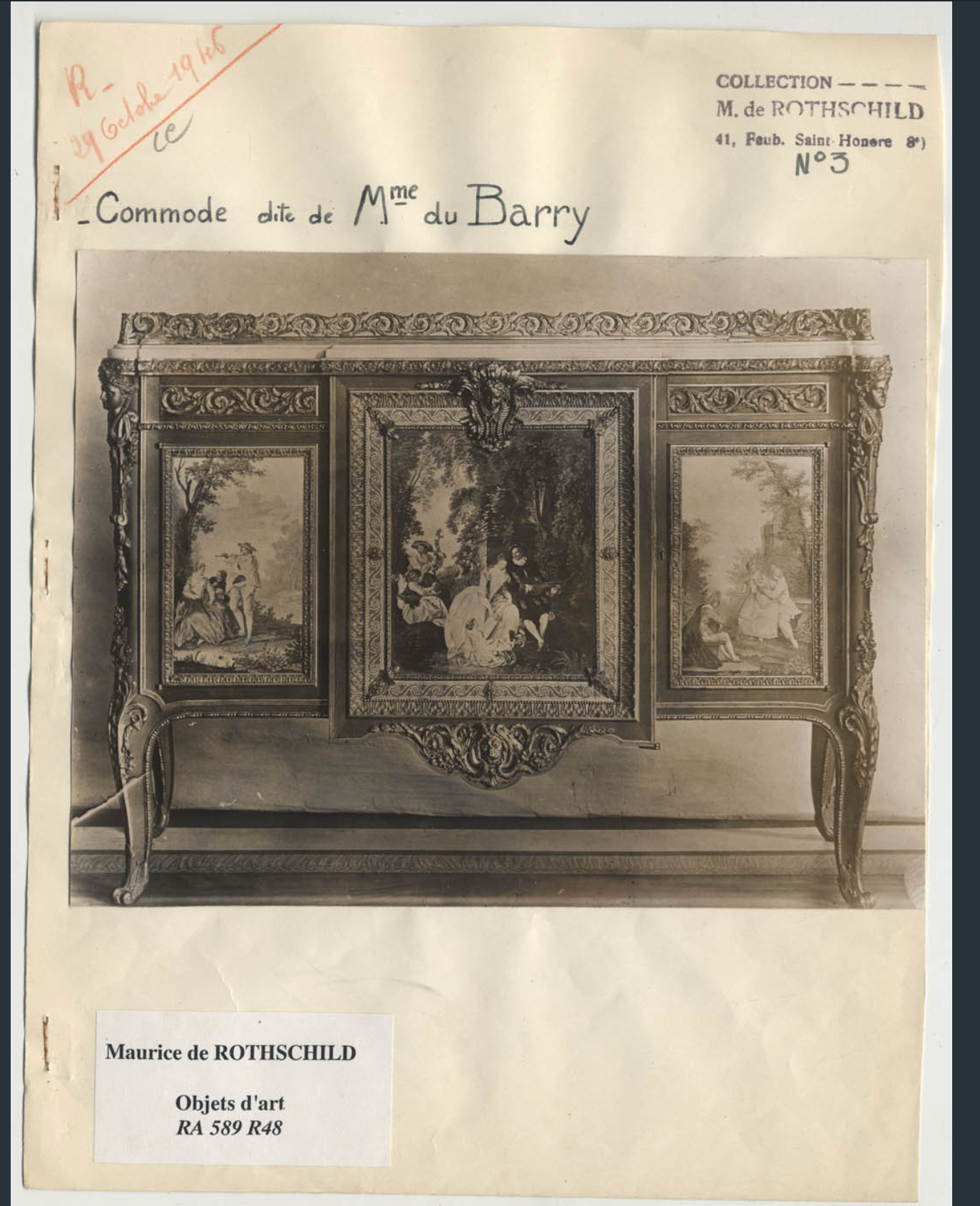
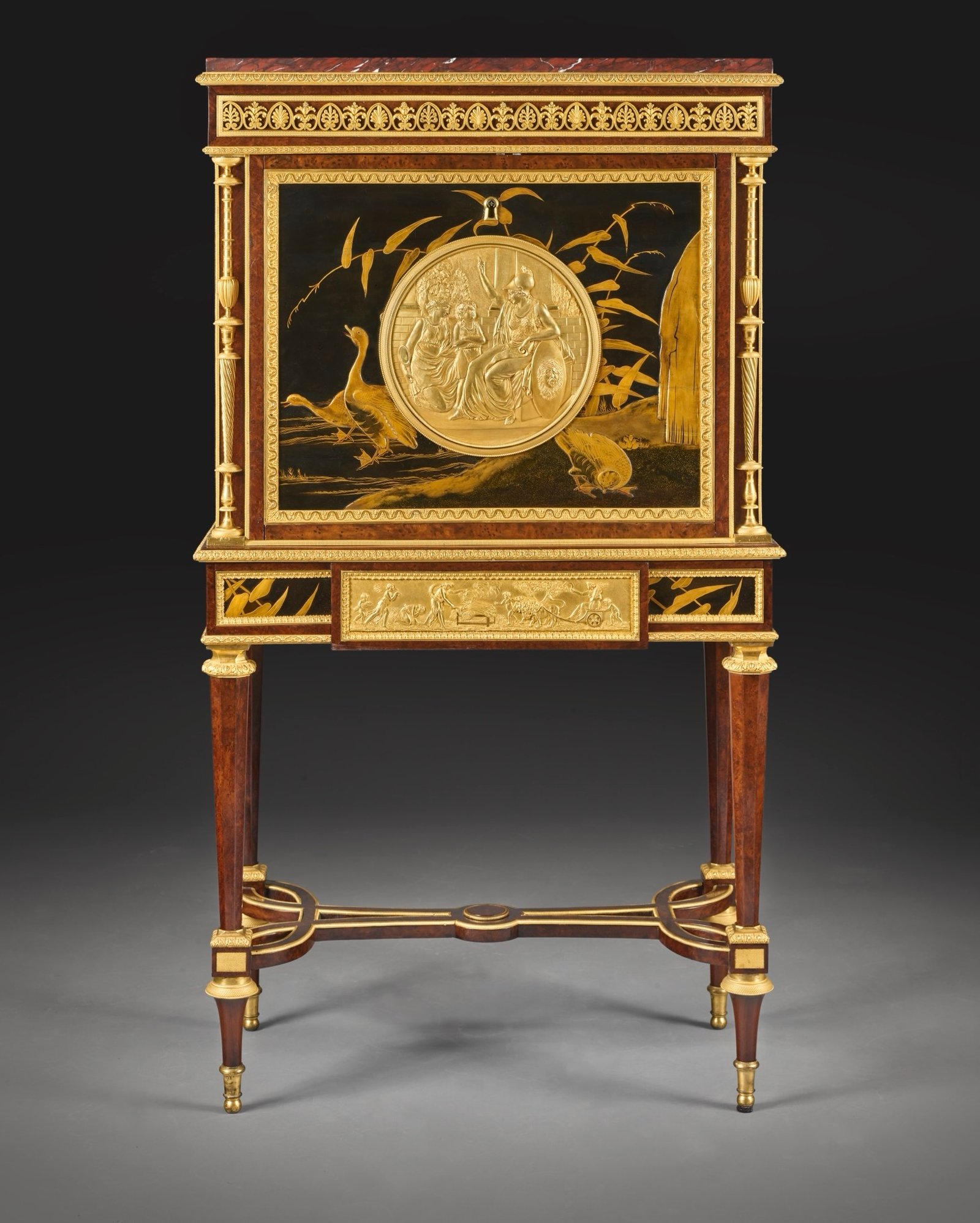
Eighteenth-century decorative arts made up a significant share of the looted works. Major collections were plundered, including those of Maurice, Édouard, and Edmond de Rothschild, David David-Weil, and Jean Seligmann. Eighteenth-century masterpieces were shipped to Germany, among them Madame du Barry’s chest of drawers, mounted with Sèvres porcelain plaques and attributed to Martin Carlin (Musée du Louvre, inv. OA 11293). A Japanese lacquer secretary by Adam Weisweiler (1746–1820), formerly part of Édouard de Rothschild’s collection during the Second World War, is now in our gallery’s collection. Seized in 1940, it was sent to Neuschwanstein Castle alongside some of the most important works from the Rothschild collections. Discovered there by the Monuments Men, it was returned to France in October 1945. Thanks to the CRA, it was finally restored to the Rothschild family in 1946.
Today, several thousand works have yet to be reunited with their rightful owners. In France, the works known as Musées Nationaux Récupération (MNR), placed in the custody of the museums of France in 1949, are still awaiting identification of their provenance.
Bibliography:
Hector Feliciano, Le Musée Disparu. Enquête sur le pillage d’oeuvres d’art en France par les nazis, Gallimard, 2008
Melissa Muller, Monika Tatzkow, Marc Masurovsky, Œuvres volées, destins brisés. L’histoire des collections juives pillées par les nazis, Beaux-Arts éditions, 2009
Monuments Men and Women Foundation: https://www.monumentsmenandwomenfnd.org/
Archives diplomatiques, Service français de récupération artistique, 209SUP

