
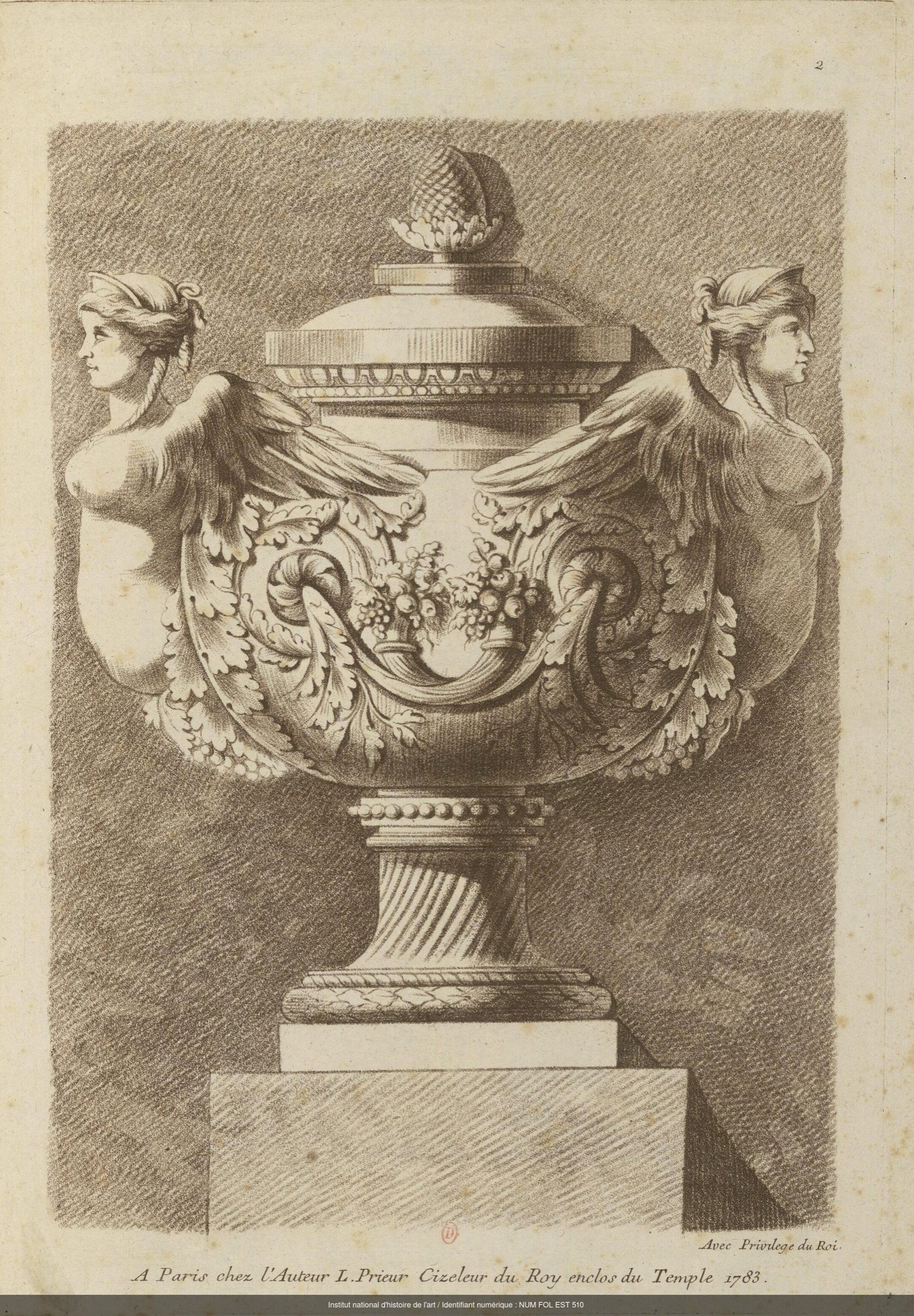
A sculptor, bronze maker, and designer, Jean-Louis Prieur was one of the great creative figures of the second half of the eighteenth century. Across his work, he developed a refined Neoclassicism poised between the Greek taste and the arabesque.
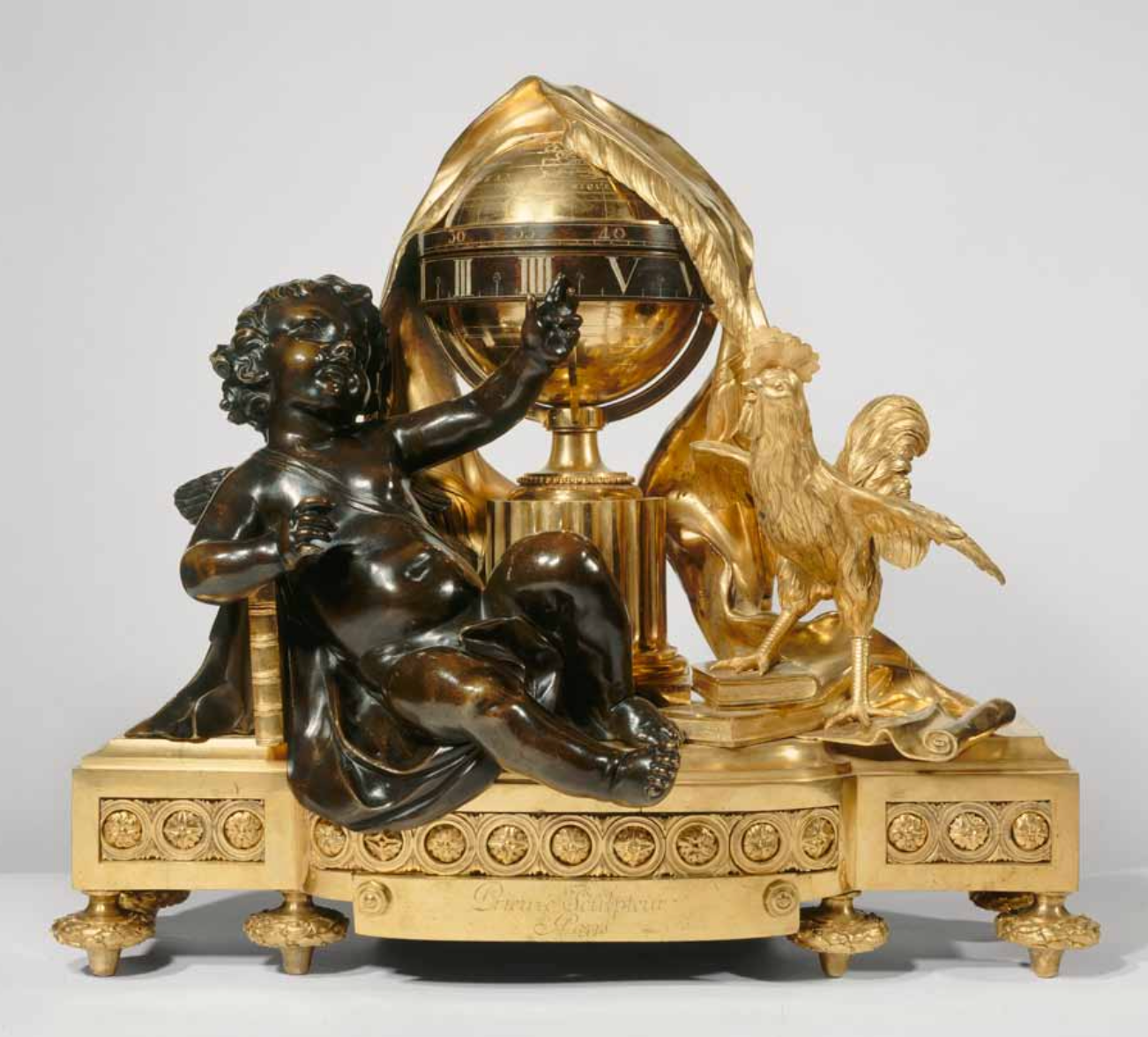
The bronze is signed on the front “Prieure, sculpteur à Paris.”
© RMN — Grand Palais (musée du Louvre) / Les frères Chuzeville
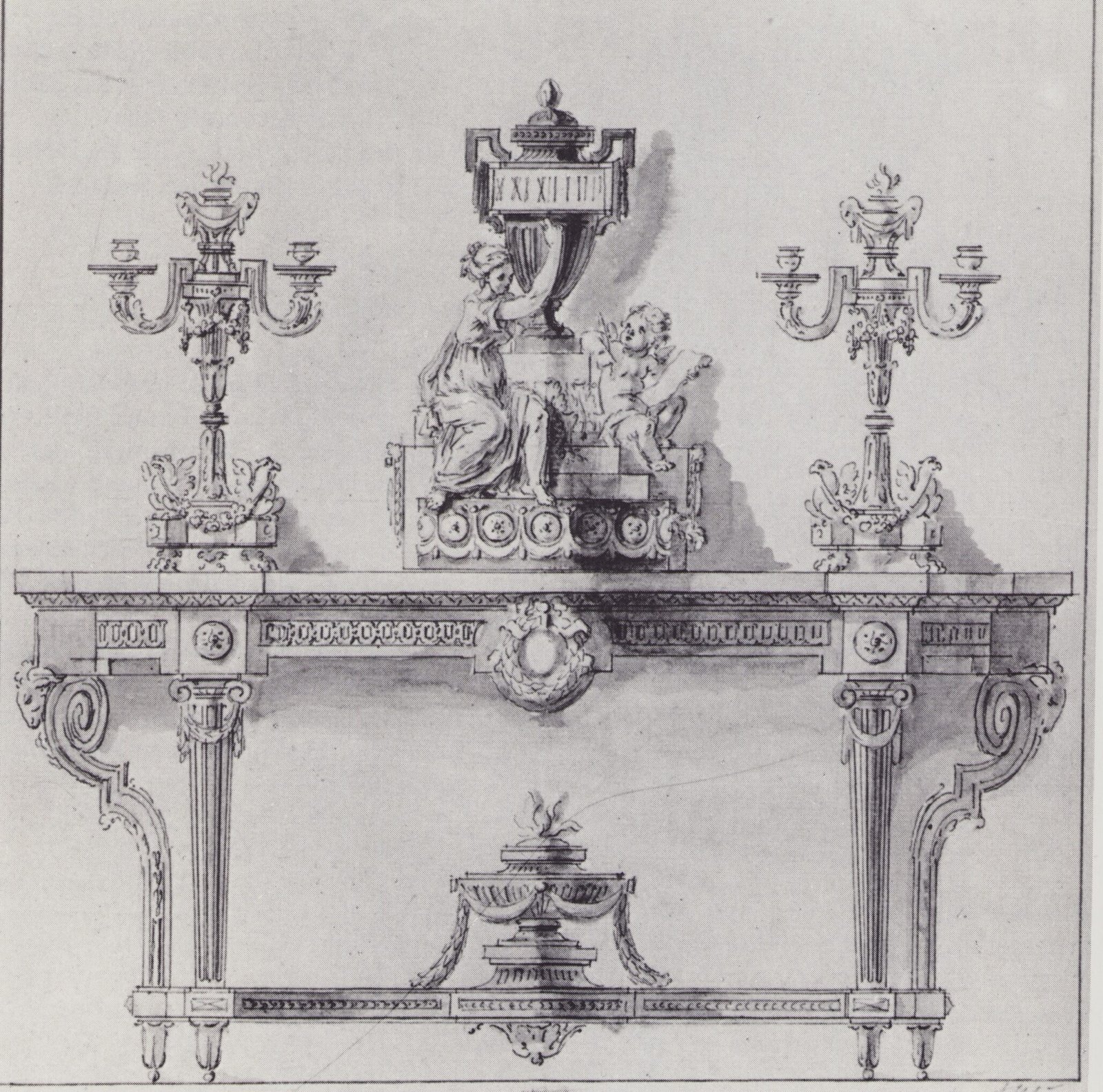
Born around 1732 into the Parisian artisanal milieu, Jean-Louis Prieur began his career as a sculptor. Received as a Master at the Académie de Saint-Luc in 1765, he was chosen the following year by the architect Victor Louis (1731–1800) to assist him in the redesign of the apartments of King Stanisław Poniatowski at the Royal Castle in Warsaw. Working alongside the bronze makers Philippe Caffieri (1714–1774) and François-Thomas Germain (1726–1791), he produced designs and executed several pieces of furniture and works of art, including a table, a clock, girandoles, and wall lights. He devised models for bronzes and also conceived more elaborate decorative ensembles. A drawing held at the University Library of Warsaw shows a console surmounted by a pair of candelabra and a clock with Urania ornate with the arms of the King of Poland—a similar model of which is preserved in our gallery. A few years later, around 1779, Prieur once again provided a design for the project at the Royal Castle in Warsaw: a set of wall lights, the drawing of which is now kept in Warsaw and several examples of which are housed at the Musée Nissim de Camondo in Paris.
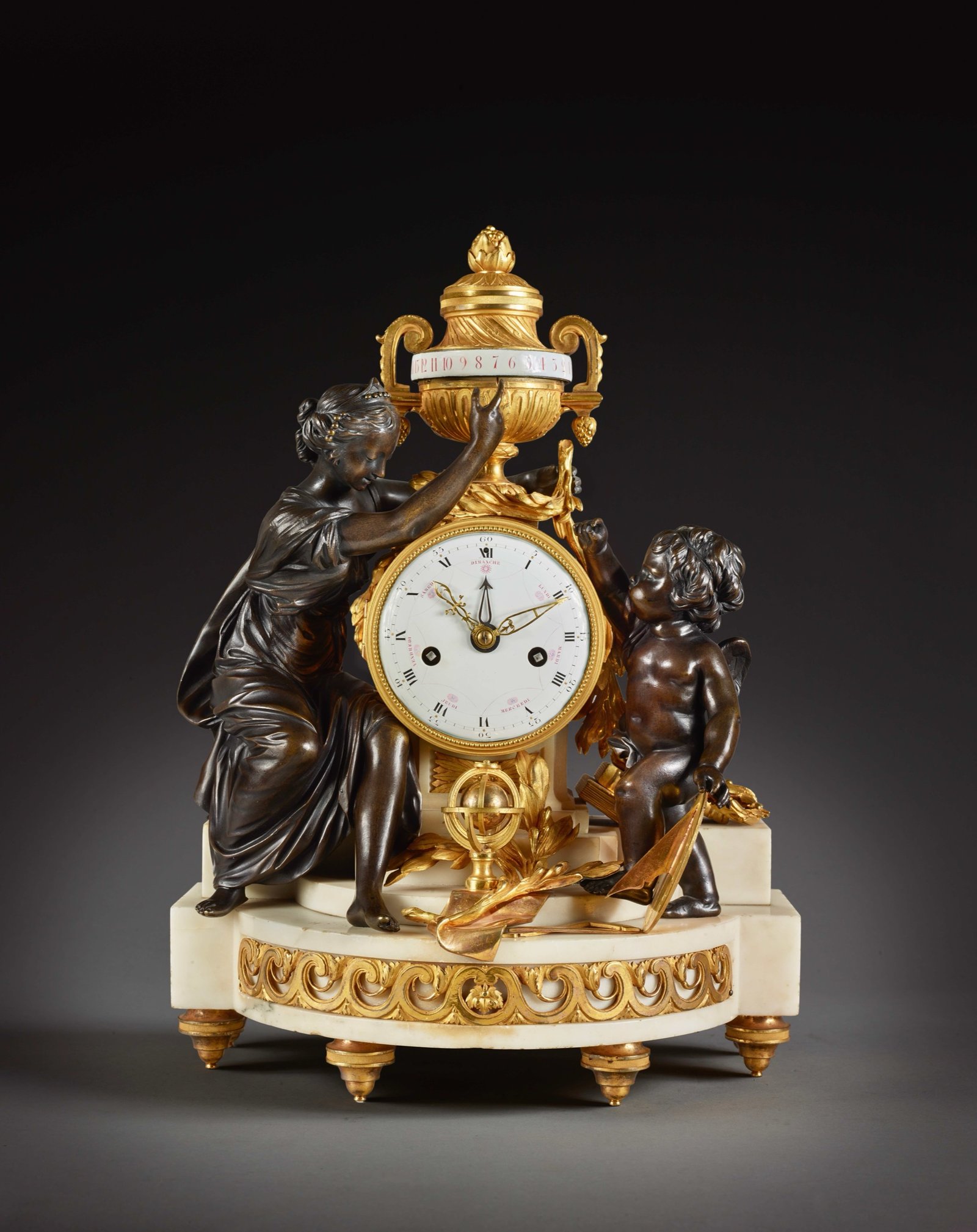
Already well versed in working with bronze, Jean-Louis Prieur was received as a master founder in 1769. As a fondeur-ciseleur, he did not himself own the equipment required for casting, but entrusted that work to fellow craftsmen. Prieur went on to receive numerous prestigious commissions. In 1770, he modeled two allegorical clocks intended for the Dauphin on the occasion of his marriage: The Alliance of France and the Empire and Peace and Abundance. In the years that followed, he created many models for the royal family and for a wealthy private clientele. In 1776, he delivered two “three-branch girandoles enriched with chased roses and trophies of love” for the Turkish boudoir of the Comte d’Artois at Versailles. The crowning achievement of his career came with the commission for the bronzes of the coronation carriage of Louis XVI, a masterpiece he executed in 1775 after designs by François-Joseph Bélanger (1744–1818). Then at the height of his career, he was widely praised in the periodicals of the day: the Almanach Dauphin described him as one “of the most skilled modelers and finishing founders of this capital, by the very admission of his fellow artists; he composes his own designs and executes himself all those he is given.”
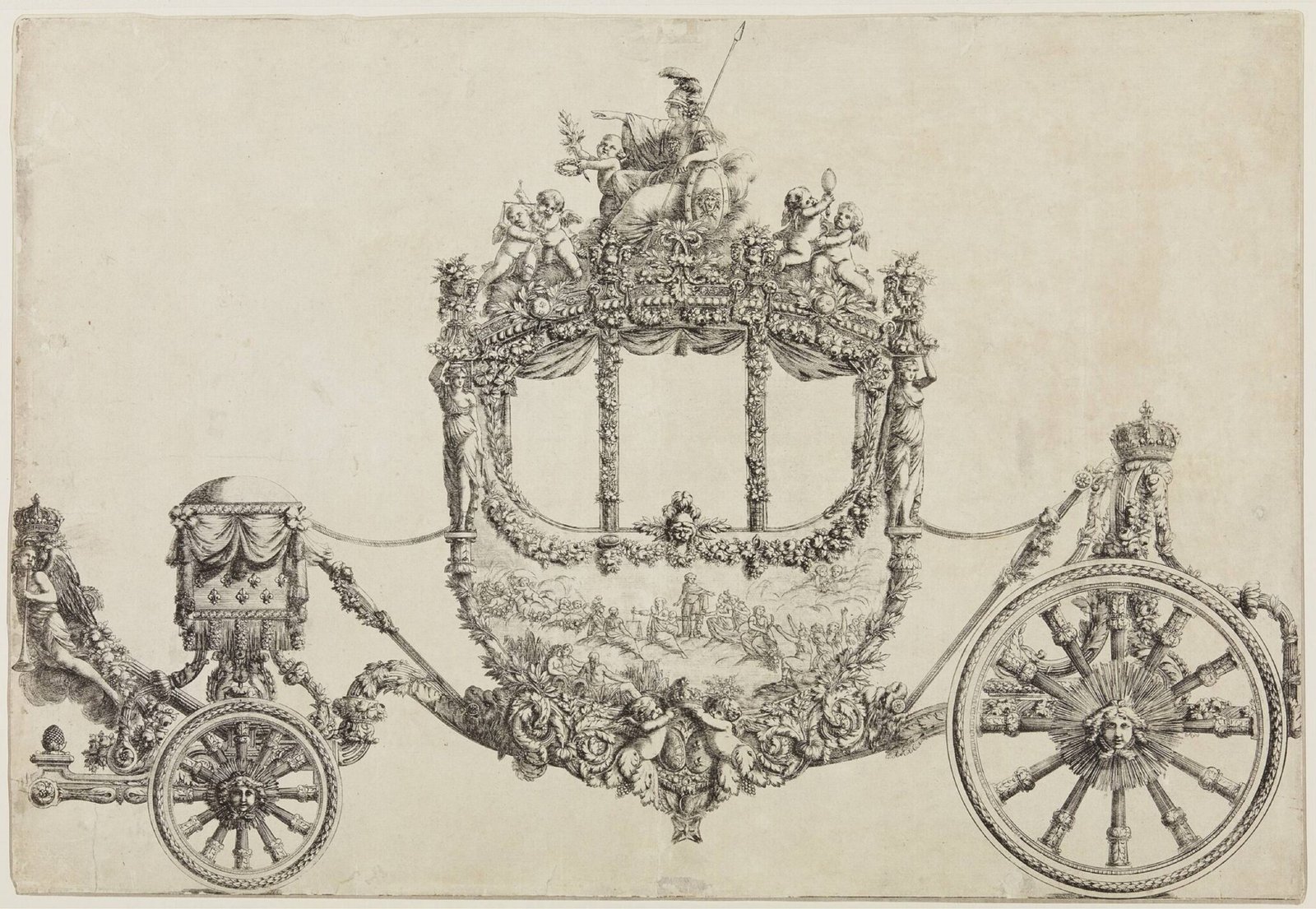
© Château de Versailles, Dist. RMN / © Christophe Fouin
Sculptor and bronze maker, Prieur was also one of the first professional ornamental designers. In 1766, the guild of master founders established a registry of designs, allowing models to be recorded and protected. Prieur thus conceived a wide variety of furniture and decorative objects: chimneypieces, lighting fixtures, consoles, and clocks. A design for a chimneypiece by his hand, richly ornamented with gilt-bronze masks is intended for the formal reception room of the small apartments of the Palais Bourbon. He is also credited with a model for a wall light surmounted by a flaming torch, versions of which can be found in gilt bronze and one in gilt wood in the gallery’s collections.
Despite his success, Prieur went bankrupt in 1778. He then took refuge at the Temple, presumably under the protection of the Comte d’Artois. From that point on, he devoted himself to ornamental drawing and engraving, publishing several collections, including seven Cahiers de sujets arabesques (after 1784) and Suites de vases.
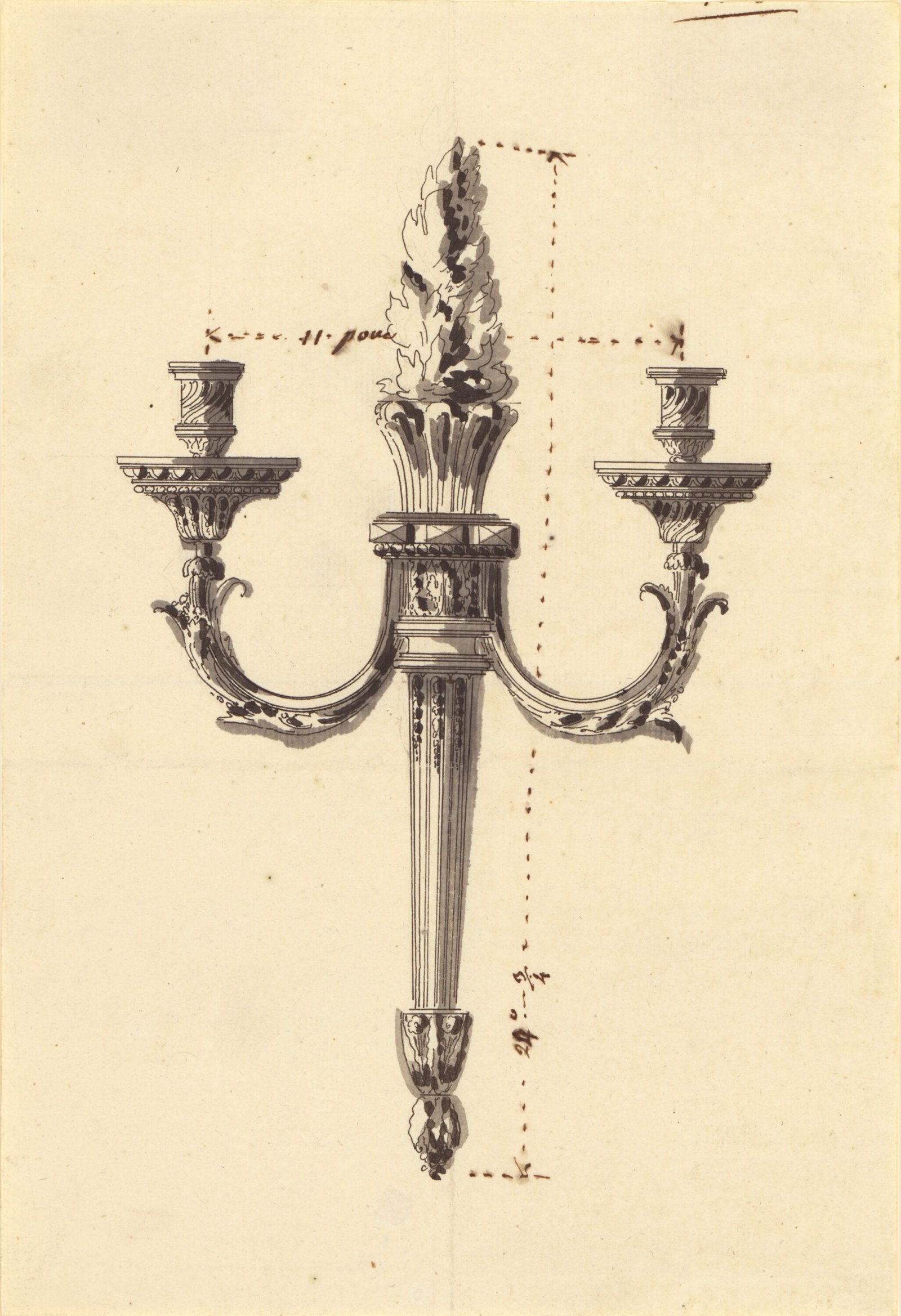
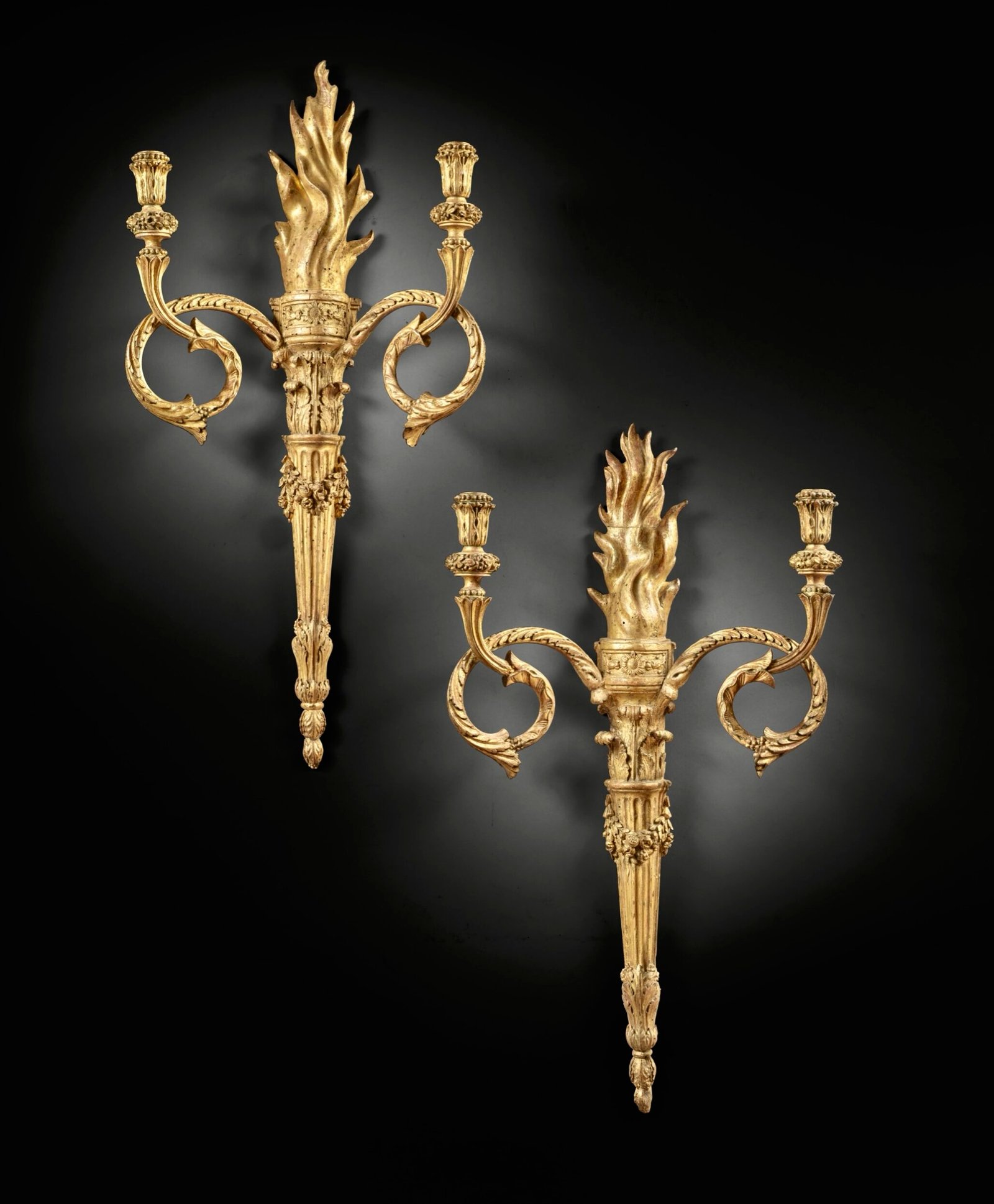
Throughout his career, Jean-Louis Prieur explored different phases of Neoclassicism. He first cultivated a distinctive Greek taste, evident in a design for a polished-iron console intended for the portrait room of the Royal Castle in Warsaw, based on a model originally conceived by the locksmith Deumier (1705–1785). The combined use of silver-toned metal and gilt bronze, together with motifs drawn directly from the antique vocabulary, attests to a confident Greek taste. An example of this console, in silvered and gilt bronze, is today held at the Musée Nissim de Camondo. In the 1780s, Neoclassicism evolved toward a lighter, more playful arabesque idiom, which Prieur, in turn, made brilliantly his own. His engraved collections feature numerous vases, uprights, overdoors, and pieces of furniture combining frolicking putti, delicate interlacing, and flowering garlands. They were taken up by his contemporaries—bronze makers, decorative painters, and wallpaper manufacturers alike.
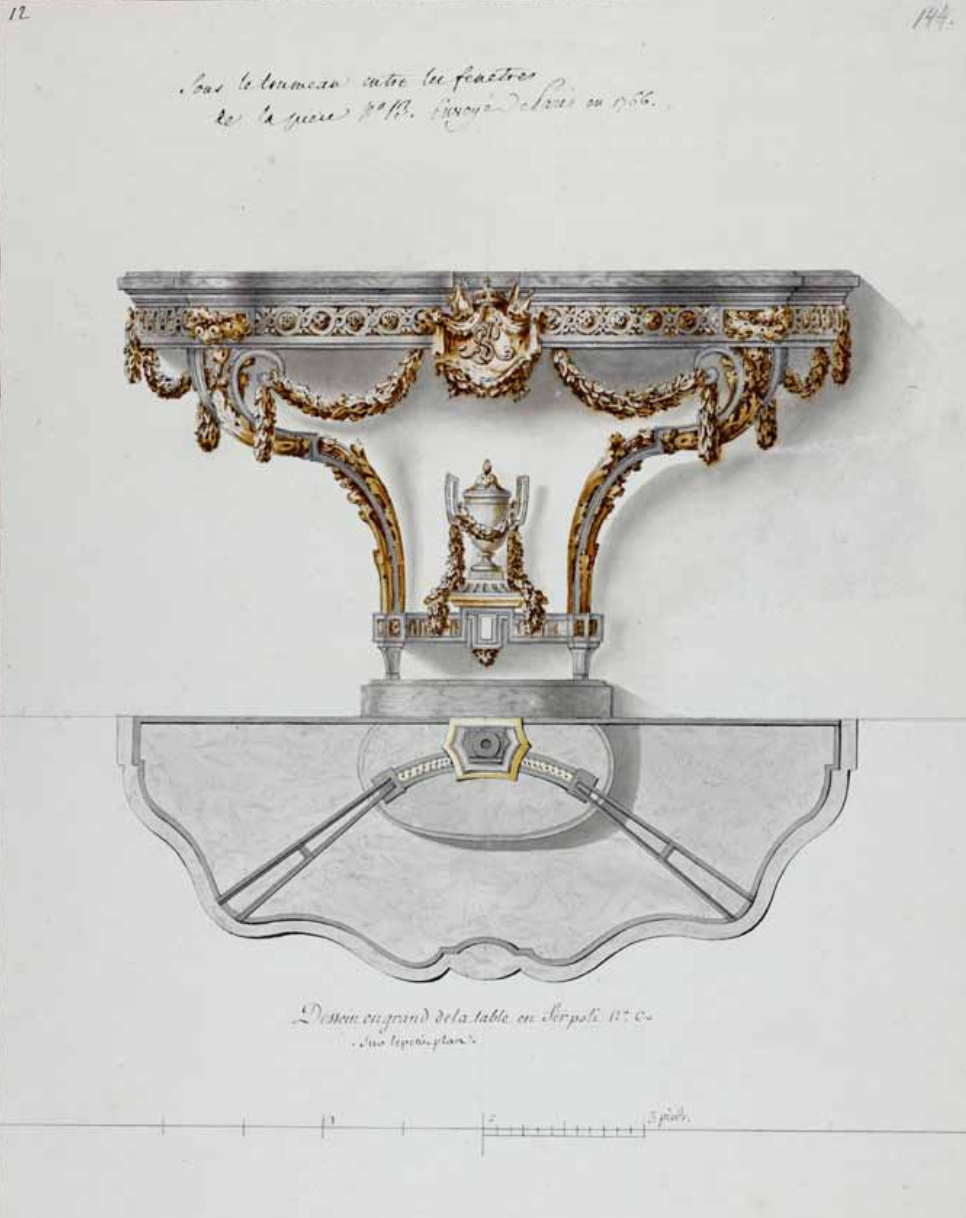
© Bibliothèque de l’Université de Varsovie
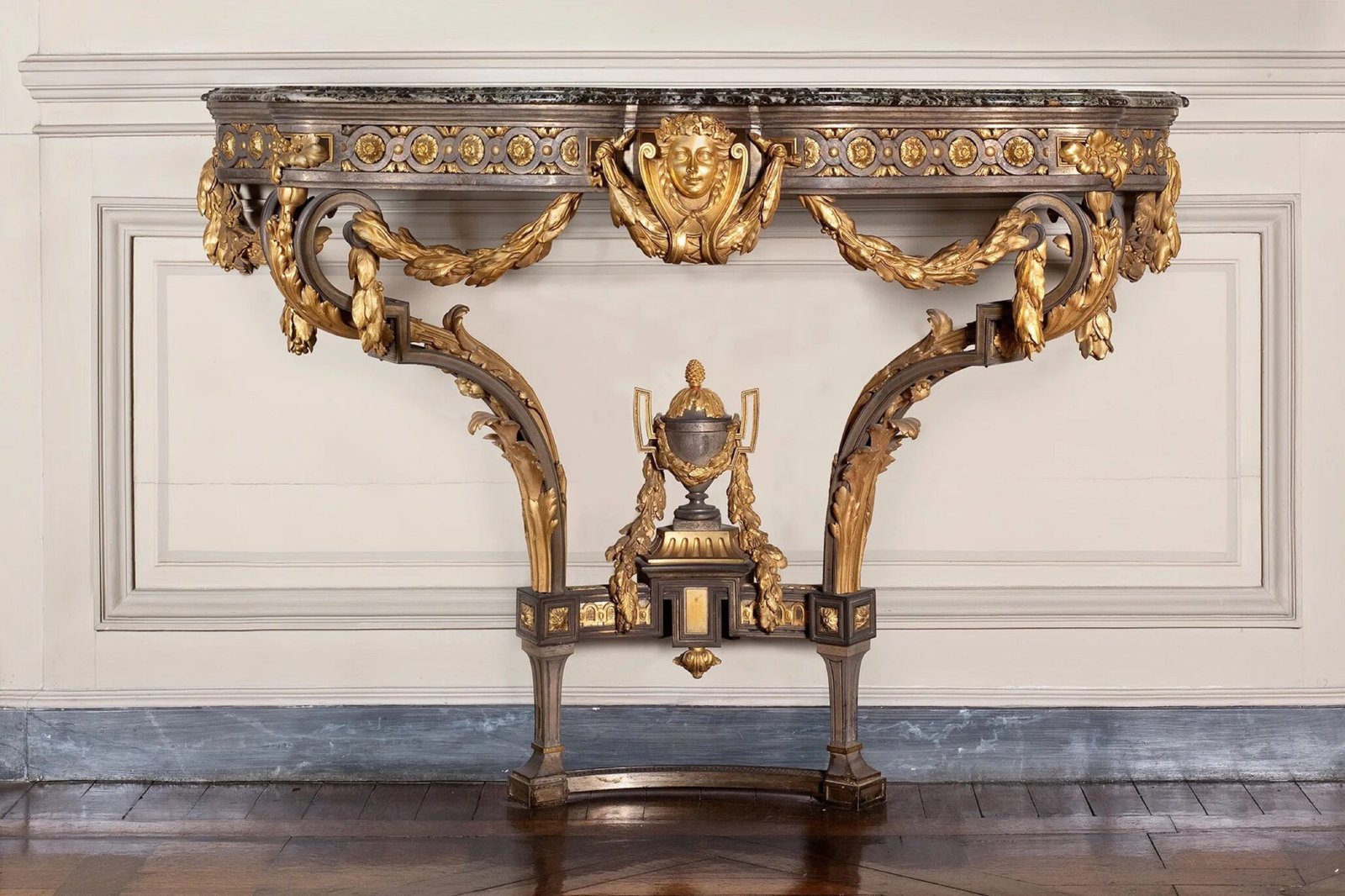
© Musée des Arts décoratifs
By turns sculptor, bronze maker, and designer, Jean-Louis Prieur embodies the richness of French Neoclassicism, from an assertive Greek taste to the airy arabesques of the 1780s. Disseminated through his engraved collections, his work left a lasting imprint on the decorative arts of the late eighteenth century—of which our gallery today preserves precious testimonies.
Bibliography:
Christian Baulez, “Jean-Louis Prieur, une vie au service du bronze doré”, Dessiner et ciseler le bronze. Jean-Louis Prieur (1732−1795), document consultable en ligne.
Sylvie Legrand-Rossi, “Dessins de modèles pour le bronze et la gravure attribués à Jean-Louis Prieur (1732−1795)”, Dessiner et ciseler le bronze. Jean-Louis Prieur (1732−1795), document consultable en ligne.
Sylvie Legrand-Rossi, “Les bronzes d’ameublement attribués à Jean-Louis Prieur (1732−1795) au musée Nissim de Camondo, Dessiner et ciseler le bronze. Jean-Louis Prieur (1732−1795), document consultable en ligne.
Pierre Verlet, Les bronzes dorés français du XVIIIe siècle, Picard, 1999
Calouste Gulbenkian Museum, Designing the décor. French drawings from the eighteenth century, Calouste Gulbenkian Foundation, 2005

