
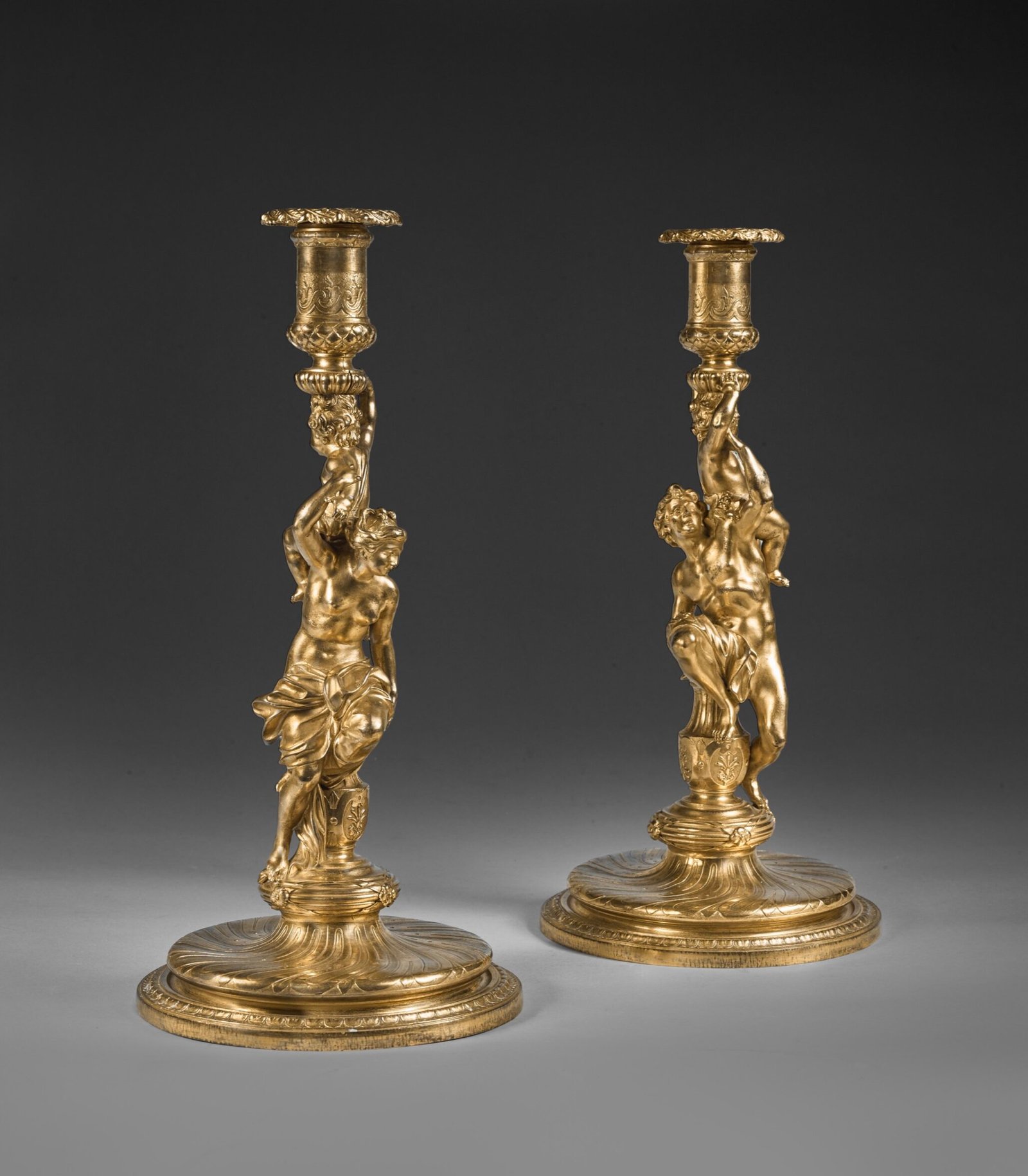
Attributed to Corneille Van Clève (1645−1732)
Chased and gilt bronze
Provenance: Philippe de Nicolay-Rothschild’s collection.
Height: 42,5 cm – 16 ½ inches
Width: 20,5cm – 8 inche
Created in the final years of Louis XIV’s reign, this pair of candlesticks belongs to the tradition of the great furnishings commissioned by the Sun King. Executed after a model originally delivered to the king for Versailles and Marly, it embodies the bold and noble taste favored by the sovereign. Attributed to some of the king’s foremost craftsmen, the model enjoyed sustained success throughout the eighteenth century and figured in some of the most distinguished collections of the period.
A DESIGN FOR THE KING
On November 10, 1702, the goldsmith Nicolas Delaunay (1646–1727) delivered to the Château de Versailles six silver-gilt candlesticks depicting “a nude man seated on a baluster […] and carrying on his shoulder a child holding the socket on his head […] set upon a round foot chased above with twisting gadroons.” They were intended for the new bedchamber that Louis XIV had just had arranged at the center of the façade overlooking the Marble Court. In 1708, the goldsmith delivered a further series of similar candlesticks, this time destined for the king’s apartments at the Château de Marly, and now augmented with a female counterpart.
By then, Delaunay had already been working for the Crown for many years. Trained under the great goldsmith Claude Ballin (1615–1678), whose niece he married, he stands, alongside his uncle, among the most celebrated craftsmen of Louis XIV’s reign (Fig. 1). He assisted Ballin in producing several pieces of the silver furniture that ranked among the sovereign’s most ambitious artistic undertakings (Fig. 2). Executed from the 1660s onward, this body of work comprised ewers, tables, torchères, vases, and mirrors, all of solid silver.
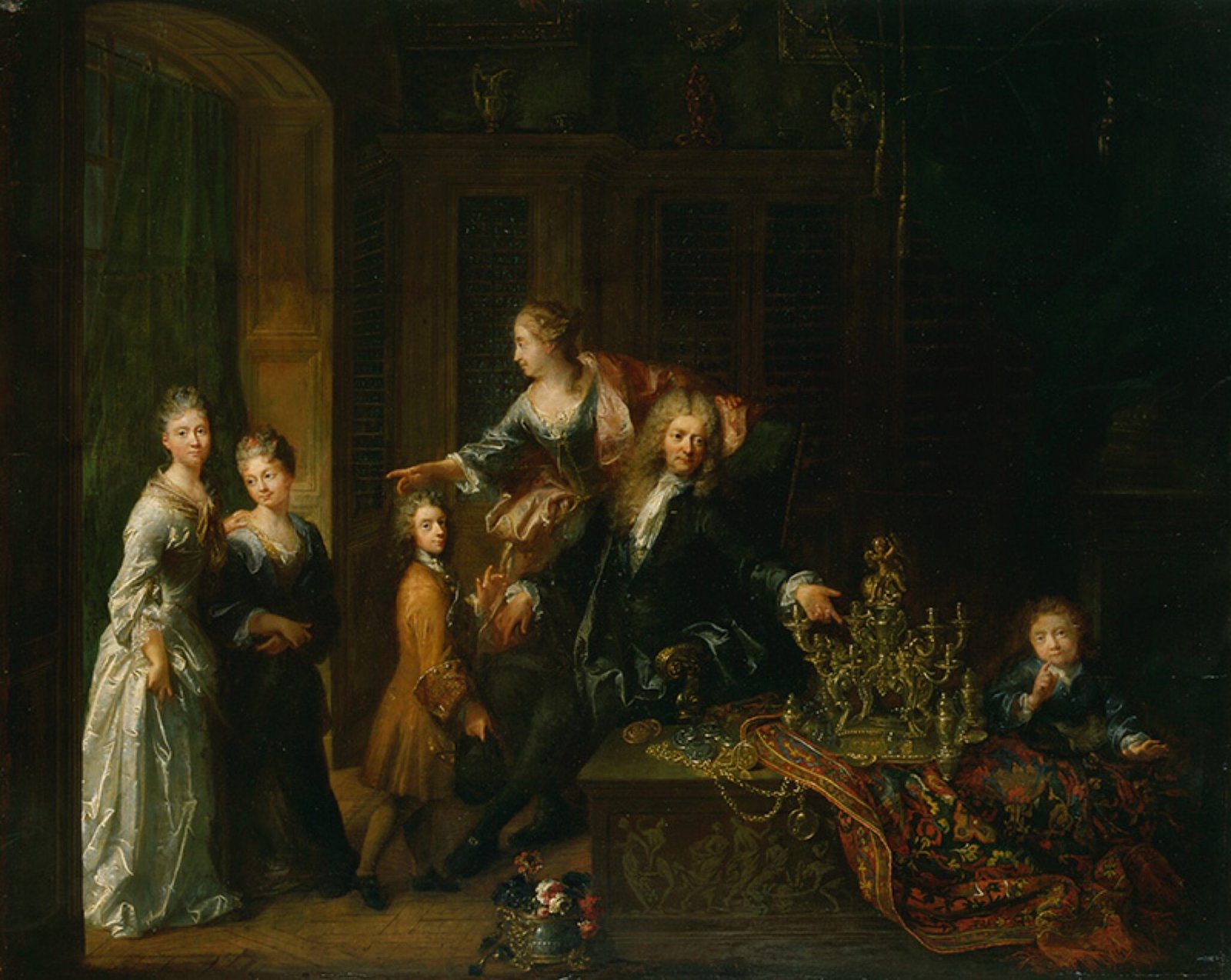
Many designs were created within the scope of this commission, notably by Ballin and Delaunay themselves. Together they helped shape the grand Louis XIV taste, with its monumental, powerful, and noble forms enhanced by lavish ornamental richness.
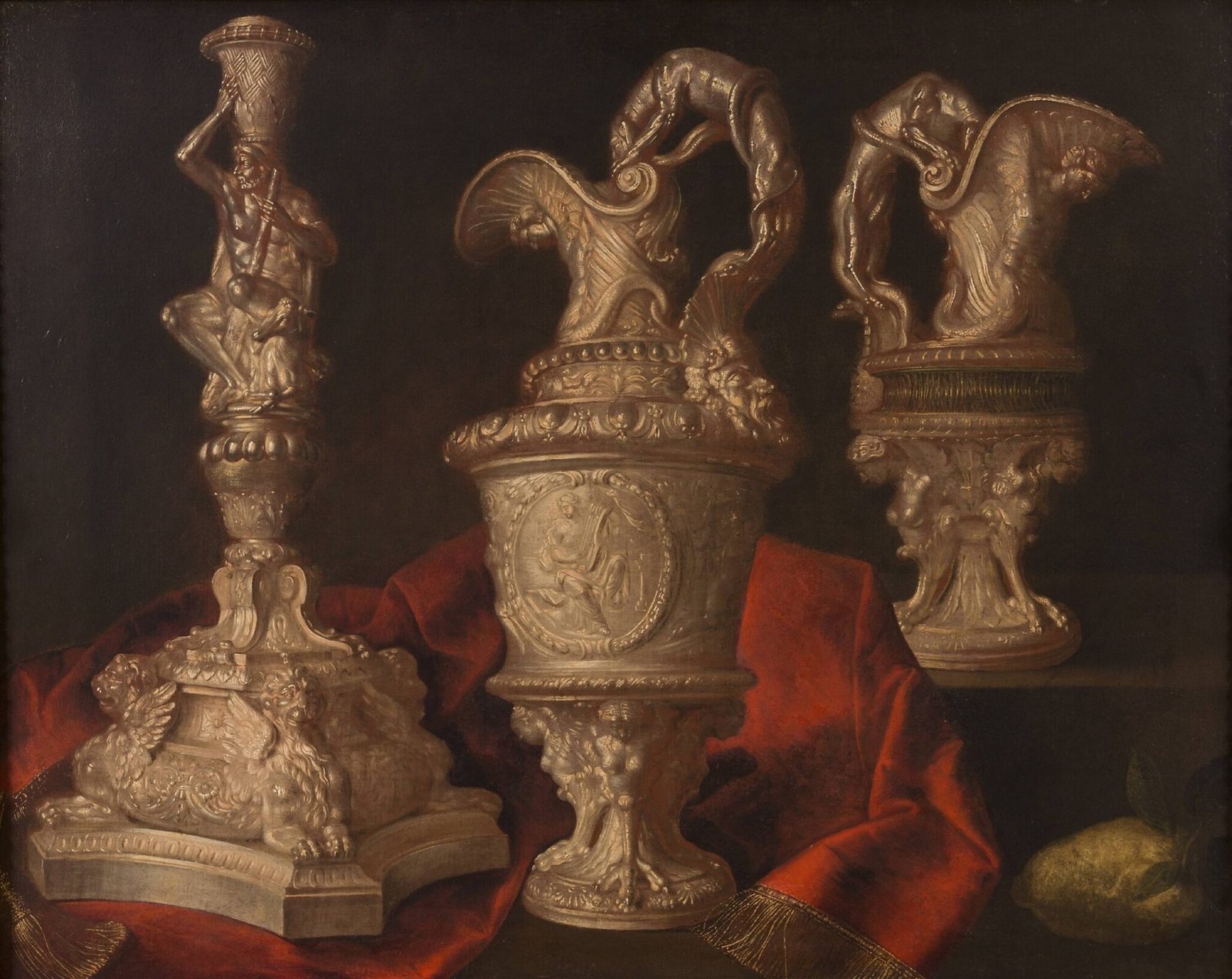
© Château de Versailles, Dist. RMN / © Christophe Fouin
In 1685, faced with the economic strain of a kingdom at war, Louis XIV resolved to have the silver furniture melted down. Goldsmiths were severely affected by this measure, which was followed by numerous sumptuary restrictions, particularly on the production of gilt and silvered objects.
These restrictions eased at the beginning of the eighteenth century, and new commissions were once again entrusted to craftsmen. Goldsmiths sometimes collaborated with bronze makers for the chasing of their works, and new models were developed. This pair of candlesticks is thus a direct heir to that great body of furnishings. Its sculptural, balanced lines reflect the taste of the Sun King, who, seventeen years after the melting down of his silver, found in this model the very spirit of what had been lost.
NICOLAS DELAUNAY AND CORNEILLE VAN CLÈVE
The attribution of this model remains a matter of debate. The design clearly reflects the influence of Charles Le Brun (1619–1690), the great arbiter of Louis XIV taste. His large “Months” candlesticks, drawn in 1669, feature a shaft formed by a man draped in a simple cloth, bearing the socket on his head (Fig. 3).
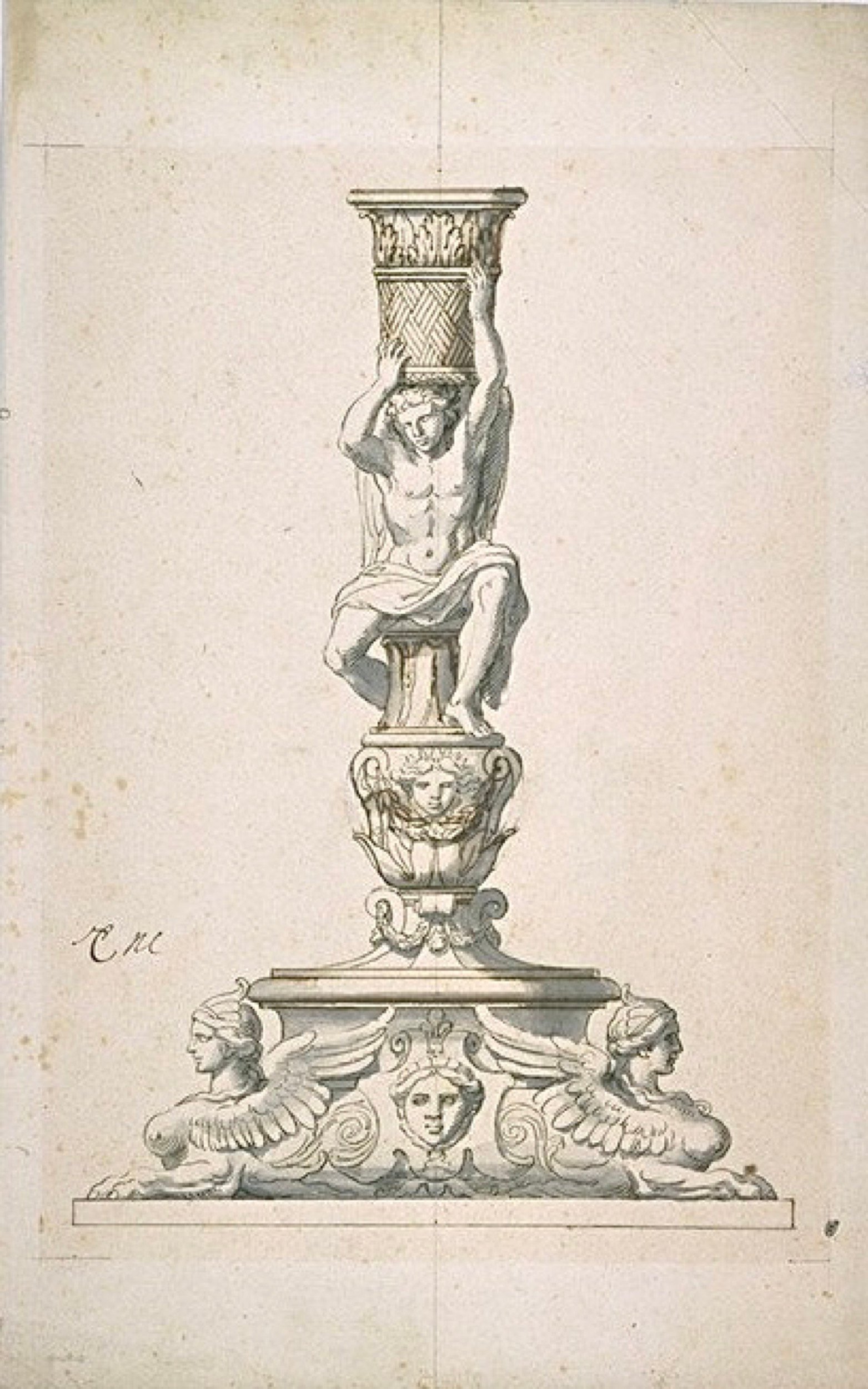
© GrandPalaisRmn (Musée du Louvre) / Thierry Le Mage
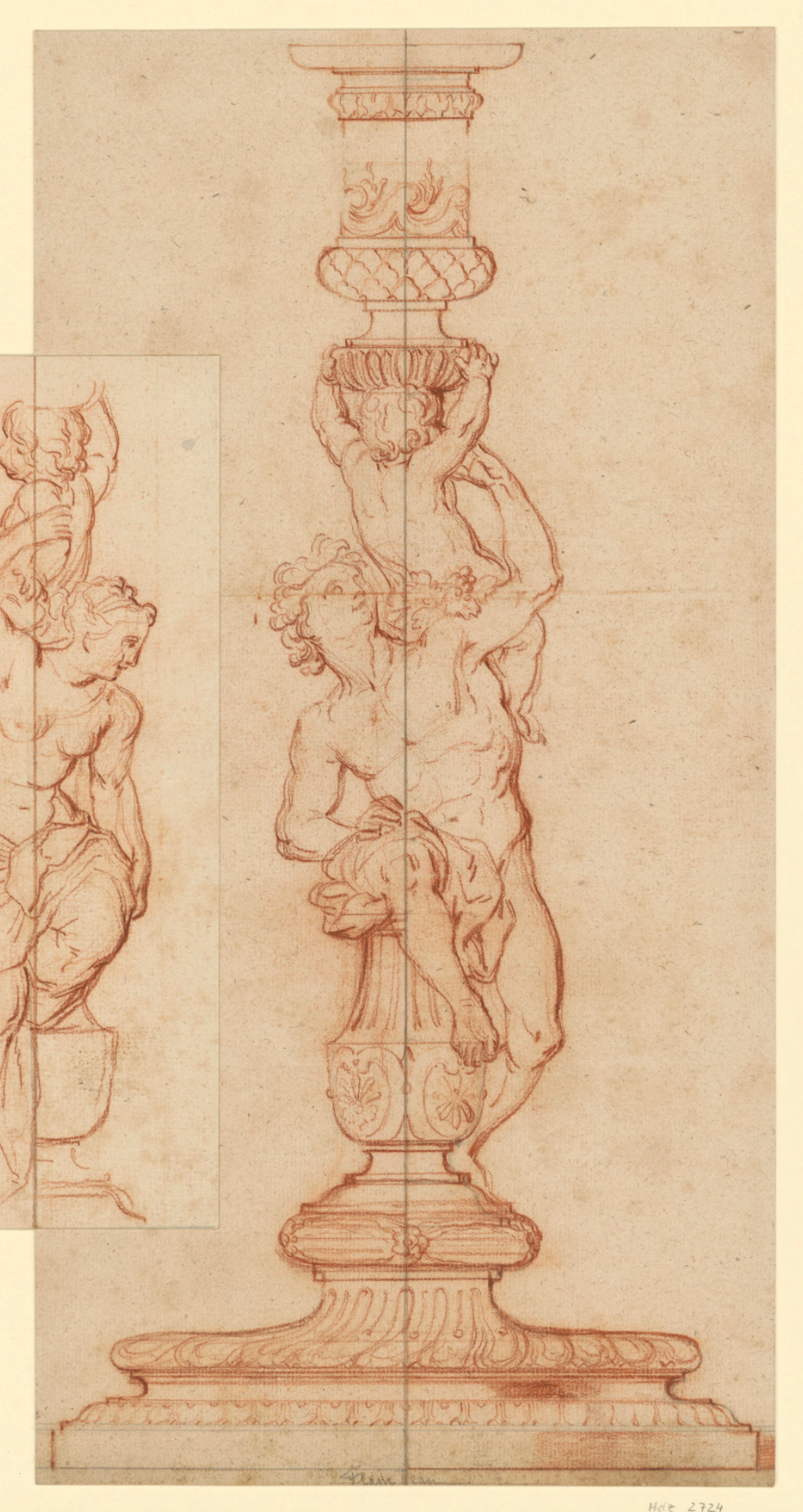
Two drawings, nearly identical to our pair of candlesticks, are today preserved at the Staatliche Museen in Berlin (Fig. 4). The figures in the round, the form, and the ornamentation of both foot and socket correspond precisely between the two.
Initially attributed to Le Brun, these drawings are now frequently given to the sculptor Corneille Van Clève (1645–1732). Born into a family of Flemish goldsmiths who had settled in Paris during the reign of Henri IV, Van Clève was received as a master at the Académie royale de peinture et de sculpture in 1681. He took an active part in the work at Versailles and became especially known for his bronze production. Working equally on sculpted groups, decorative elements, and furniture, he delivered works for Versailles, Marly, and Meudon. Van Clève was also the brother-in-law of Nicolas Delaunay, with whom he collaborated regularly and to whom he sometimes supplied designs.
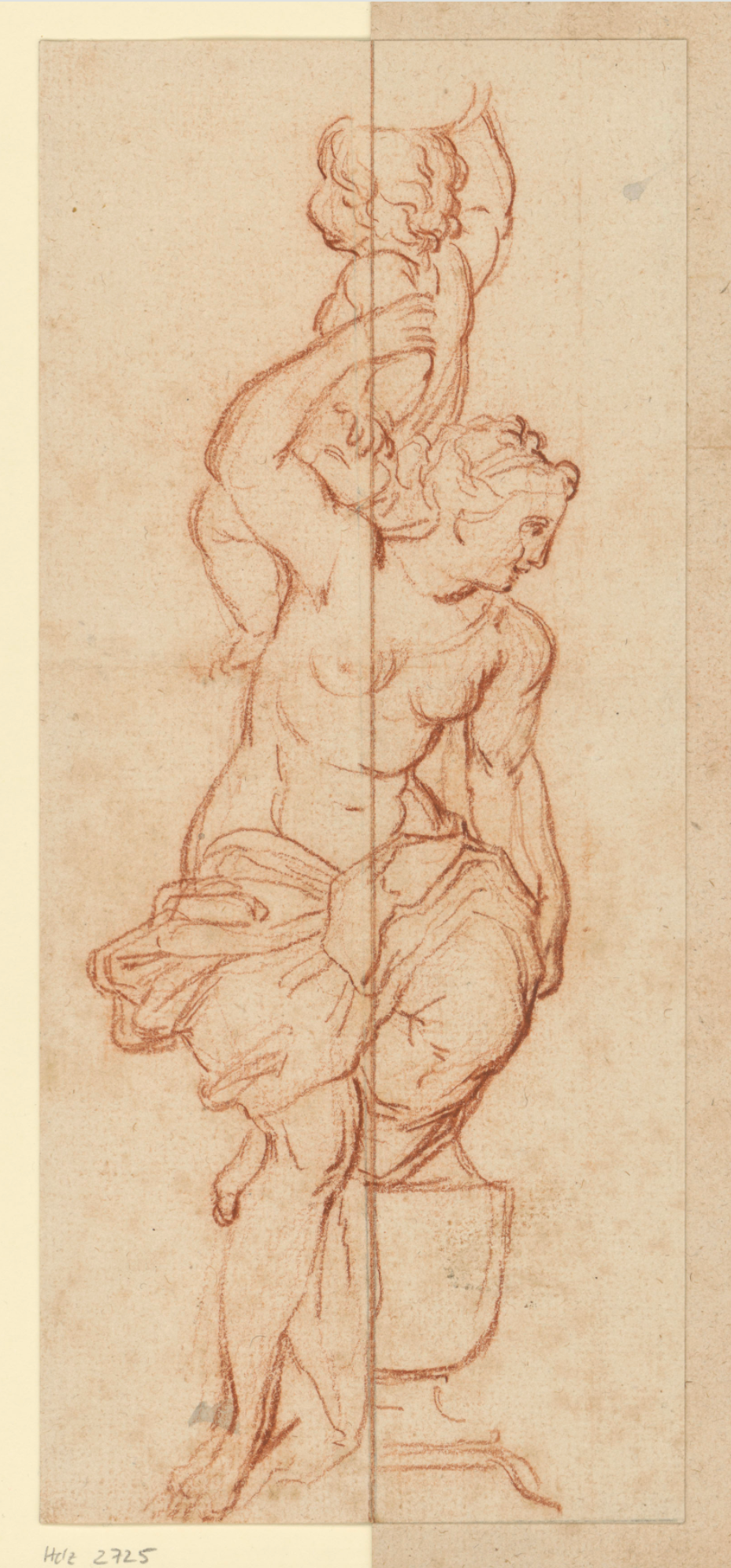
Likely conceived by Van Clève, the first candlesticks were probably cast by Delaunay, who then delivered them to the king. Beyond those delivered to Marly in 1708, additional examples after this model were produced later, including our own pair, though the circumstances of their making and dissemination remain to be fully established.
A DESIGN FOR COLLECTORS
This model was widely admired throughout the eighteenth century and was reworked in several variations. The earliest examples, delivered to Versailles and Marly, were of silver-gilt. A number of gilt bronze versions followed, including the pair in our collection, a pair recorded in the collection of the Marquise de Pompadour at the time of her death in 1764 and subsequently bequeathed to her brother, the Marquis de Marigny, as well as another now held in the Wallace Collection (Fig. 5). Slight differences in the chasing and casting point to different hands at work.
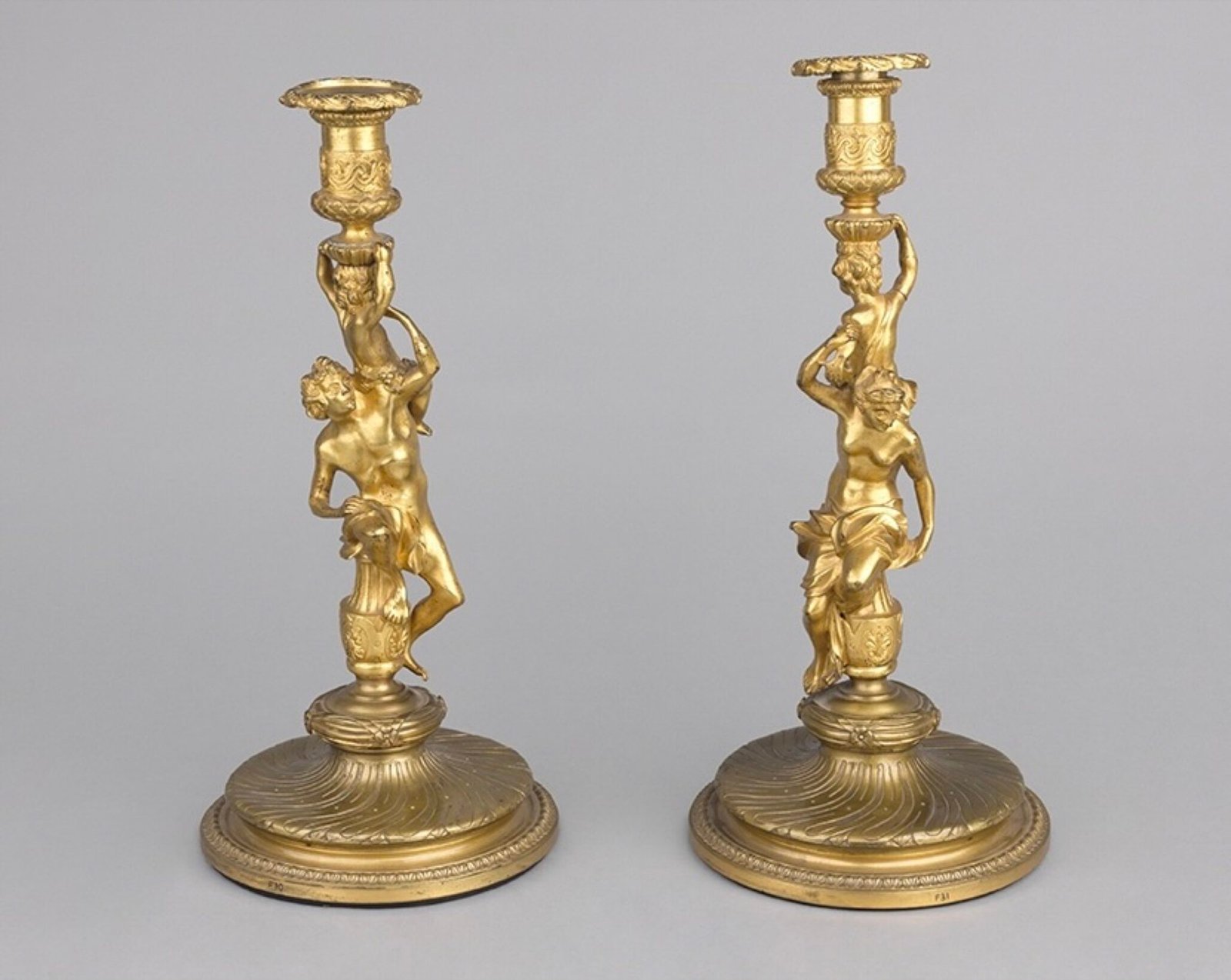
© The Wallace Collection
A further variant combining patinated and gilt bronze appears in the collections of Crozat de Thiers in 1772, of Randon de Boisset in February 1777, and of the Comte du Luc in December of that same year. It is likely that the same pair passed successively through the hands of these refined connoisseurs.
The Wallace Collection also holds a pair of candlesticks combining patinated and gilt bronze with a socket and base in the Rocaille style, the latter pointing to a slightly later execution, in the course of the 1730s (Fig. 6).
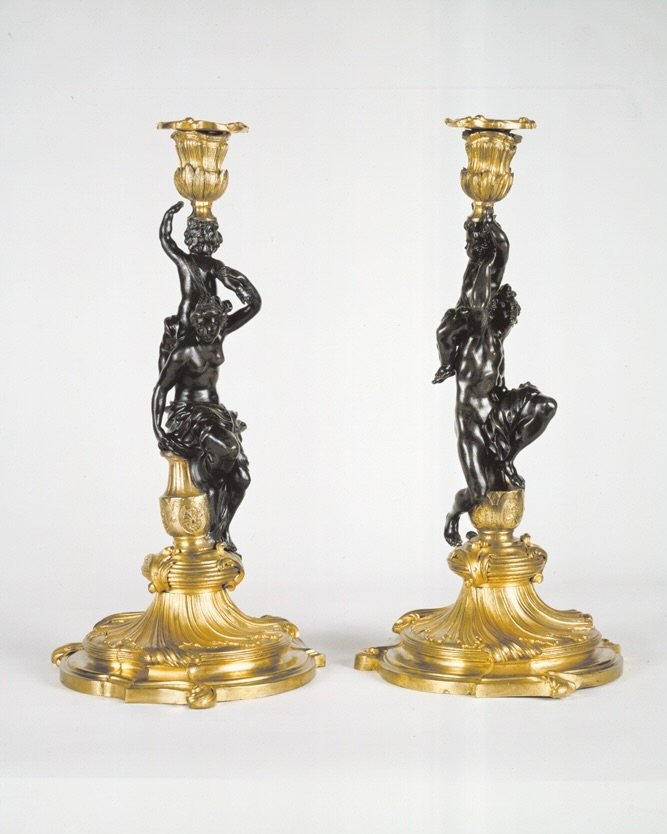
© The Wallace Collection
Enthusiasm for this model carried on undiminished into the nineteenth and twentieth centuries. The Wallace Collection examples mentioned above were acquired by Richard Seymour-Conway, 4th Marquess of Hertford, in the second half of the nineteenth century. More recently, the couturier and art collector Hubert de Givenchy owned an identical pair. Our own example, finally, comes from the collection of Philippe de Nicolaÿ-Rothschild, the son of Marie-Hélène de Rothschild.
Bibliographie
Michèle Bimbenet-Privat, « Le maître et son élève : Claude Ballin et Nicolas Delaunay, orfèvres de Louis XIV », Bibliothèque de l’École des chartes, t. 161, 2003, pp. 221–239.
Yves Carlier, « Sur quelques modèles de flambeaux en usage à la cour de France au XVIIIe siècle », Versalia. Revue de la Société des Amis de Versailles, n°2, 1999. pp. 60–65.
Peter Hughes, The Wallace Collection. Catalogue of Furniture, III, London, Wallace Collection, 1996, pp. 1193–1195.
Gérard Mabille, « Le mobilier d’argent de Louis XIV », Quand Versailles était meublé d’argent, Paris, Réunion des musées nationaux, 2007, pp. 78–79 ; fig. 65, 66 et 67 ; et pp. 234–235, cat. 9 et 10.

