
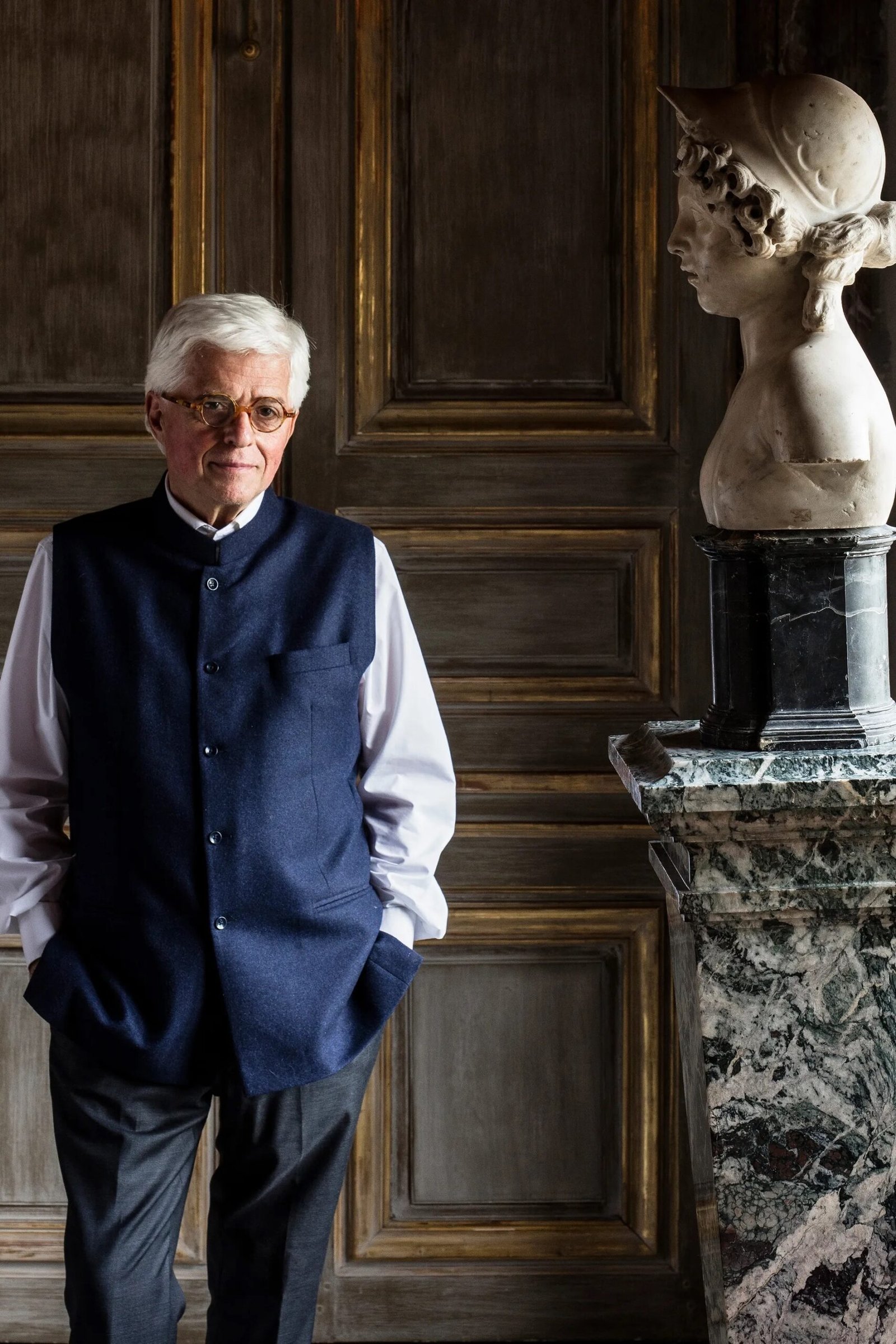
Ten years ago, interior designer Jacques Garcia came to the gallery to celebrate the release of Twenty Years of Passion. Le Château du Champ de Bataille. On May 27, he will return to sign Thirty Years of Passion, which chronicles the latest developments of this monumental undertaking.
© Bruno Ehrs
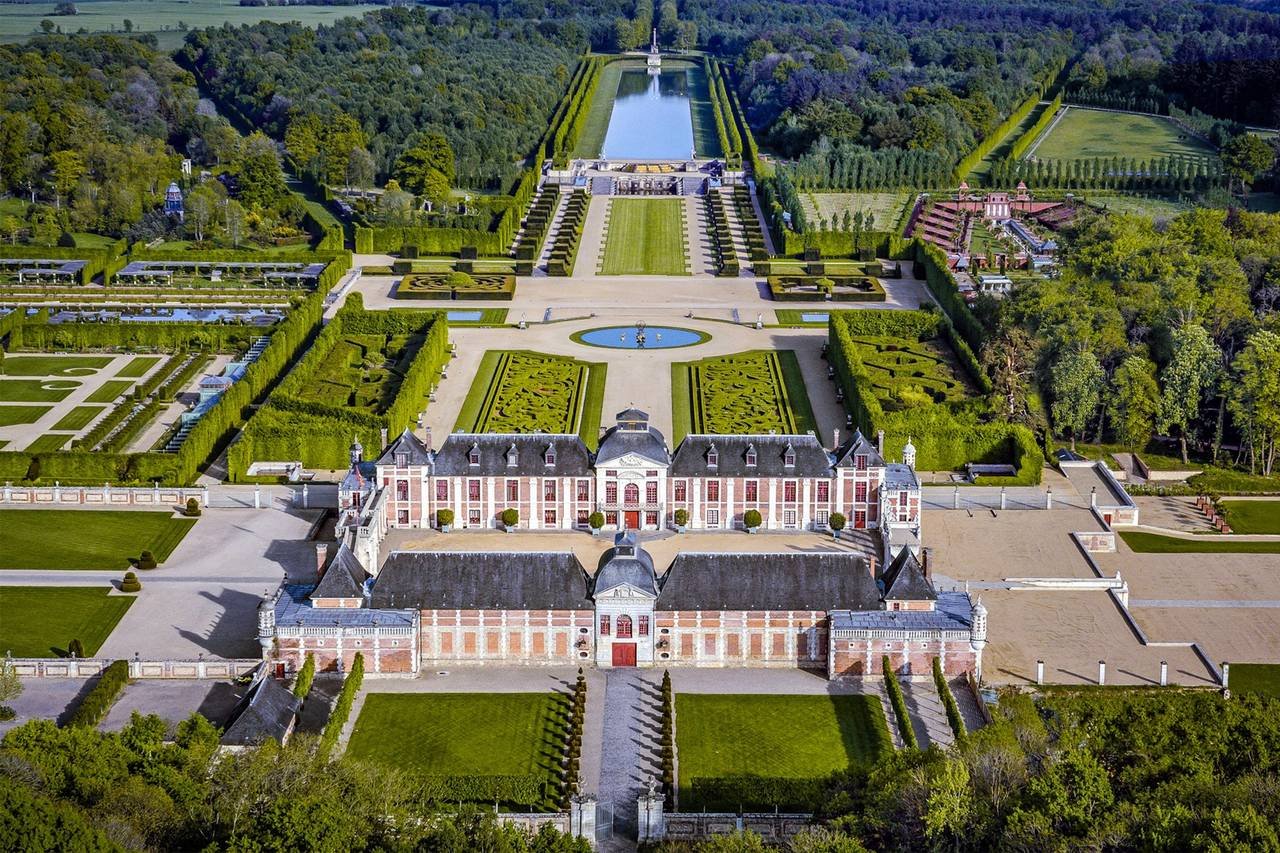
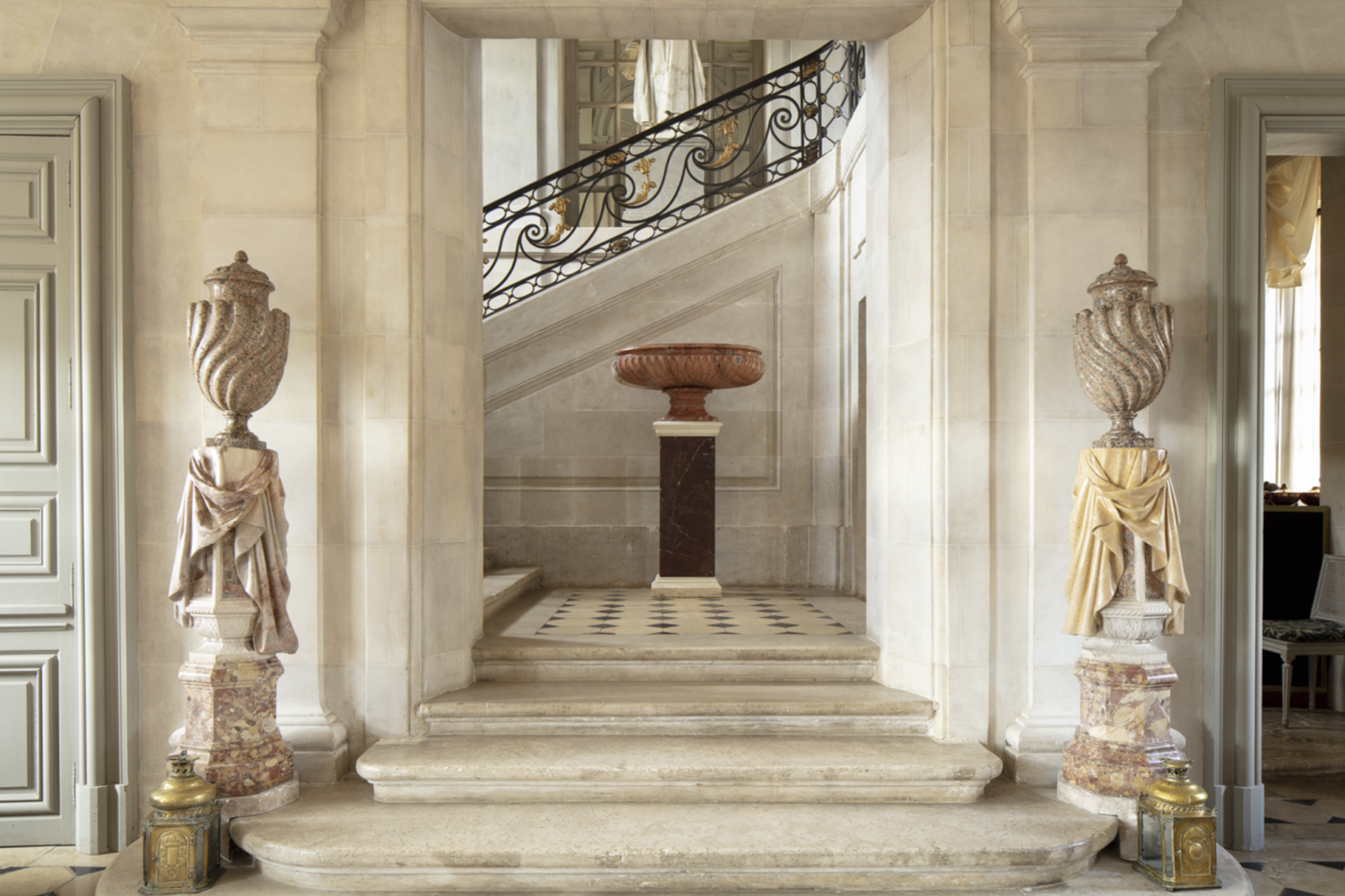
The Château du Champ de Bataille was built in the second half of the 17th century, on the site of a hunting lodge belonging to the former Marquises of Neubourg, which gave it its name. Alexandre de Créqui began its construction in 1651. A bold and daring figure, he took part in the Fronde against the royal authority and was exiled to these lands by Cardinal Mazarin. He then devoted himself to building his residence and commissioned the architect Louis Le Vau (1612–1670) to design a château of grandiose architecture. Laid out on a quadrangular plan, marked by towers at its corners and central projecting pavilions, it is preceded by a triumphal arch in the antique style. In the 18th century, Anne François d’Harcourt, Marquis and later Duke of Beuvron, a close associate of Louis XVI, redesigned the interiors—most notably the grand entrance, the main staircase, the great vestibule, and the drawing room. He thereby endowed the château with all the refinement of the aristocratic residences of the Age of Enlightenment.
© Domaine du Champ de Bataille
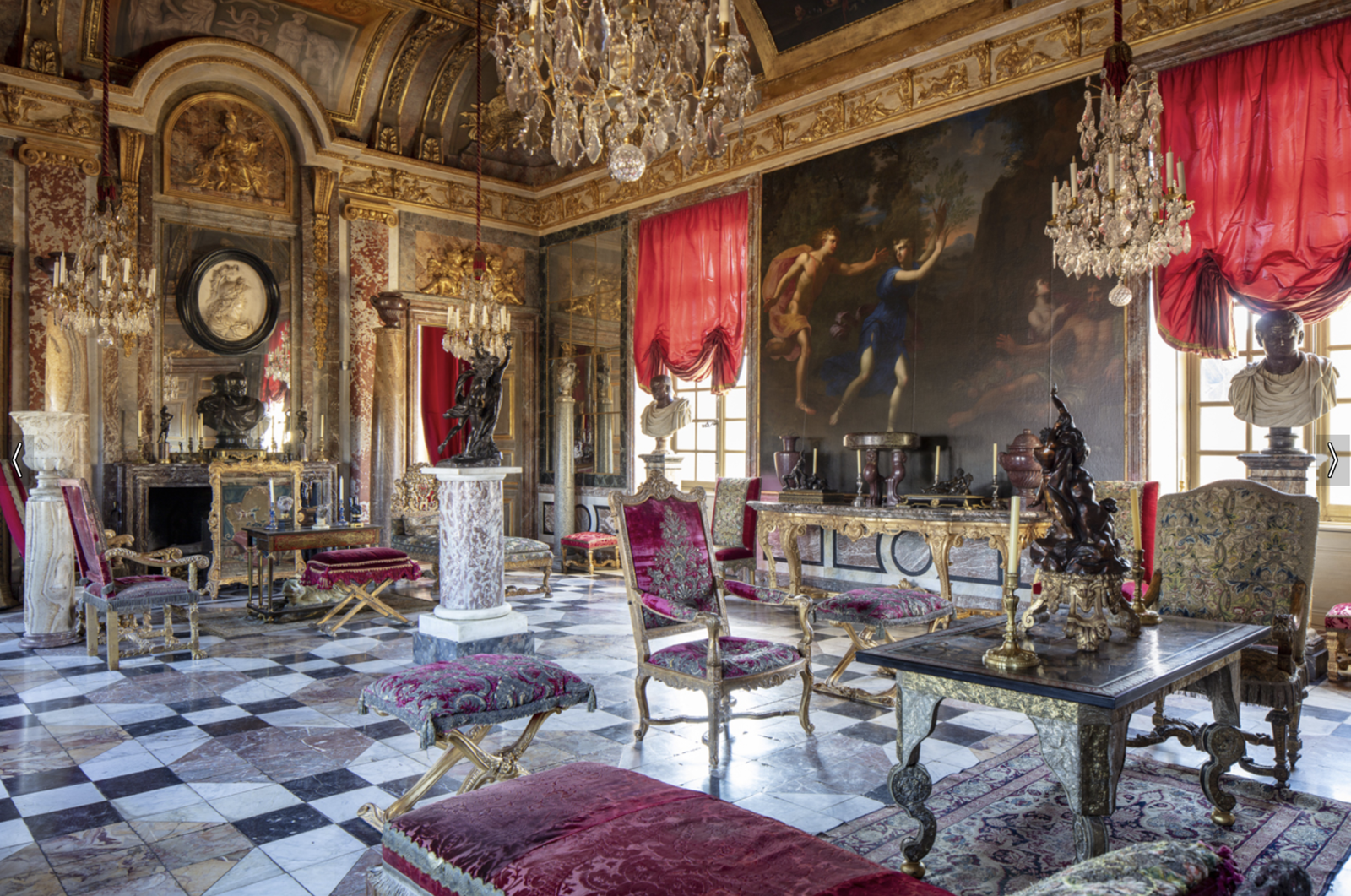
The estate changed hands several times in the 19th century before being converted into a hospital in the 1930s. A period of decline followed, during which the château became, in turn, an internment camp, a summer camp, and a golf course. In 1992, Jacques Garcia acquired it and resolved to bring Champ de Bataille back from the ashes. Drawing on 18th-century inventories and on elements he uncovered beneath more recent decor, he undertook a colossal project that combined archaeological rigor with reinvention informed by a deep knowledge of art history. While equipping the château with modern electrical and plumbing systems, he tore down the corridors, staircases, walls, and ceilings that had disfigured the original plan. In certain rooms, he installed elements acquired long before the château itself, such as the 17th-century marble flooring and paneling of the Salon d’Apollon. In doing so, he restored to the château the proportions and architectural decor of its most illustrious periods, from the reign of Louis XIV to that of Louis XVI.
© Domaine du Champ de Bataille
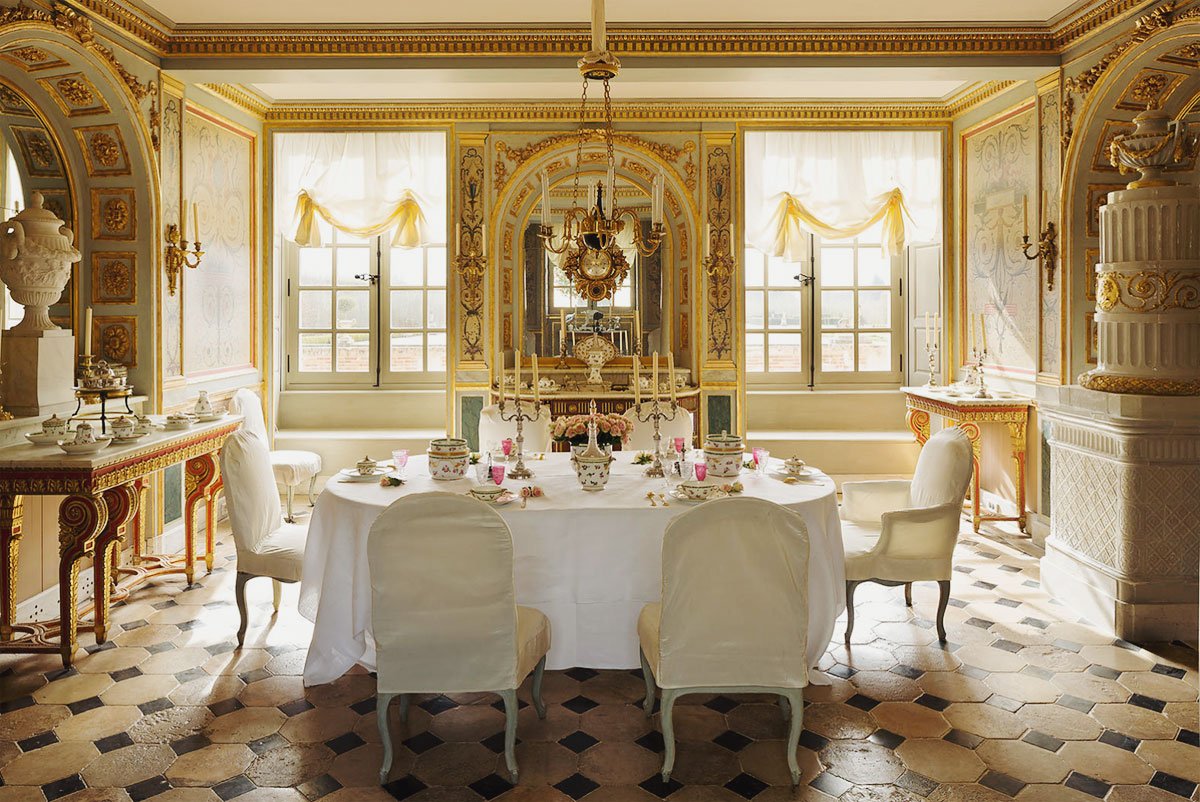
Within this setting, Jacques Garcia has assembled a remarkable art collection, the fruit of ceaseless forays into flea markets, fairs, and auction houses—pursuits he has engaged in since his earliest years. Endowed with vast cultural knowledge and a discerning eye, he spots works whose provenance is sometimes wholly unsuspected. A persevering and patient collector, he acquires exceptional ensembles over long stretches of time. The dining room chairs, for instance—crafted by the great cabinetmaker Nicolas Quinibert Foliot (1706–1776) and originating from the royal châteaux of Fontainebleau, Versailles, Compiègne, and Saint-Cloud—were acquired one or two at a time over the years. The Sèvres porcelain service known as “with roses and myrtle motifs,” which came from Louis XV’s private apartments at Versailles, was assembled in the same manner.
© Eric Sander
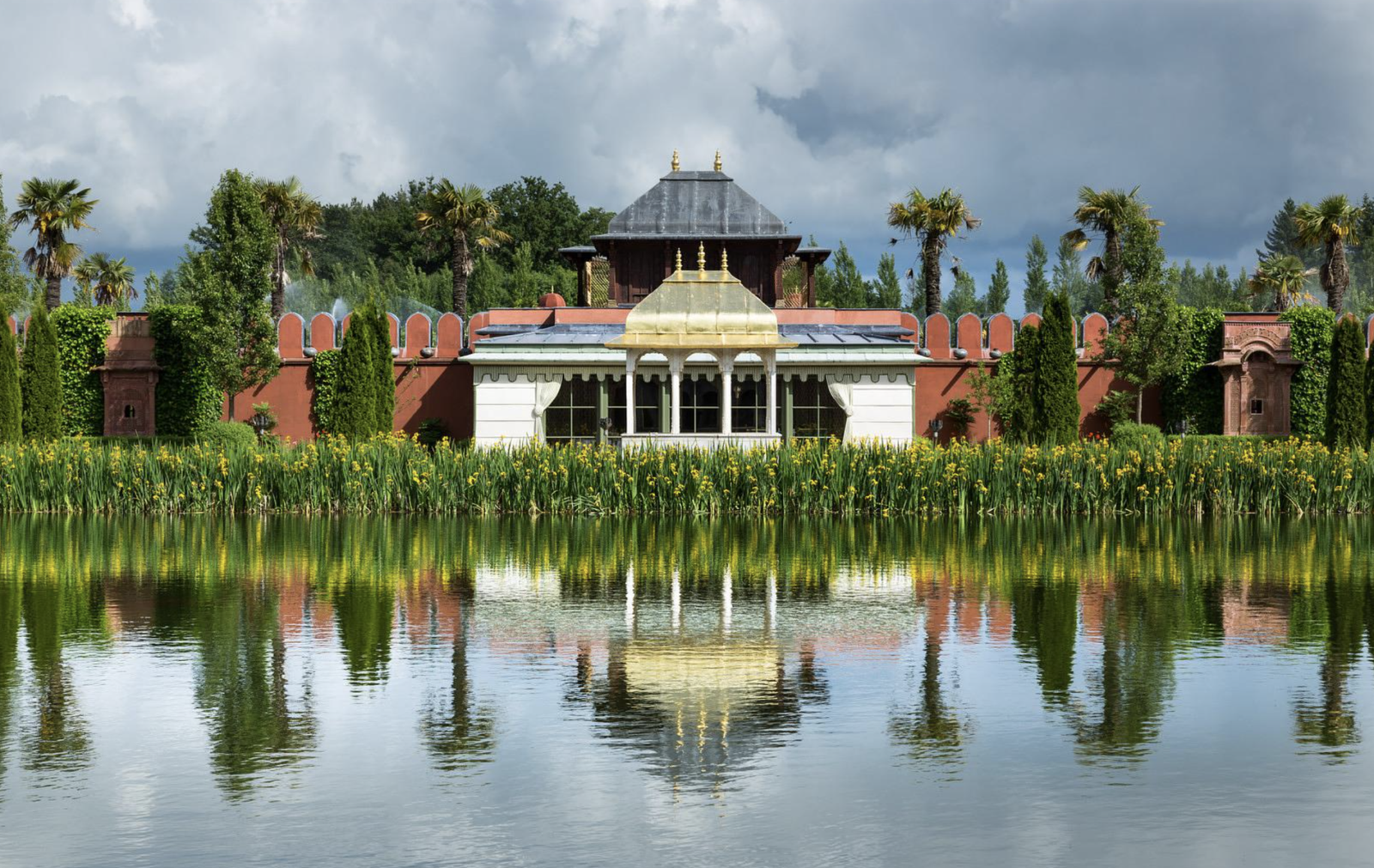
Outside, the garden is Jacques Garcia’s other great achievement. Severely damaged by the storms of 1993 and 1999, it was entirely rethought and redrawn by the decorator. A drawing of the garden attributed to André Le Nôtre (1613–1700), the great gardener of the Sun King, served as the foundation for the new park. Embroidered boxwood parterres were planted at its center, drawing the eye toward a grand canal. Around them, surprising the visitor at the turn of every grove, gardens of varied influences were laid out. The Anglo-Indian, Egyptian, and Roman gardens take the visitor to the four corners of the world while creating intimate spaces along the way. Heightening the sense of surprise still further, several follies punctuate the path: the Pavilion of Leda, the spectacular Grotto of Cybele, and the exotic greenhouse. After thirty years of work and development, the garden has now reached the scale Jacques Garcia originally envisioned.
© Eric Sander
Today, Jacques Garcia’s dream is rewarded by the rare distinction of three Michelin stars for Travel & Culture and by the admiration of his many visitors. Thirty Years of Passion recounts the story of this transformation and reflects the beauty and ambition of an extraordinary project.

