
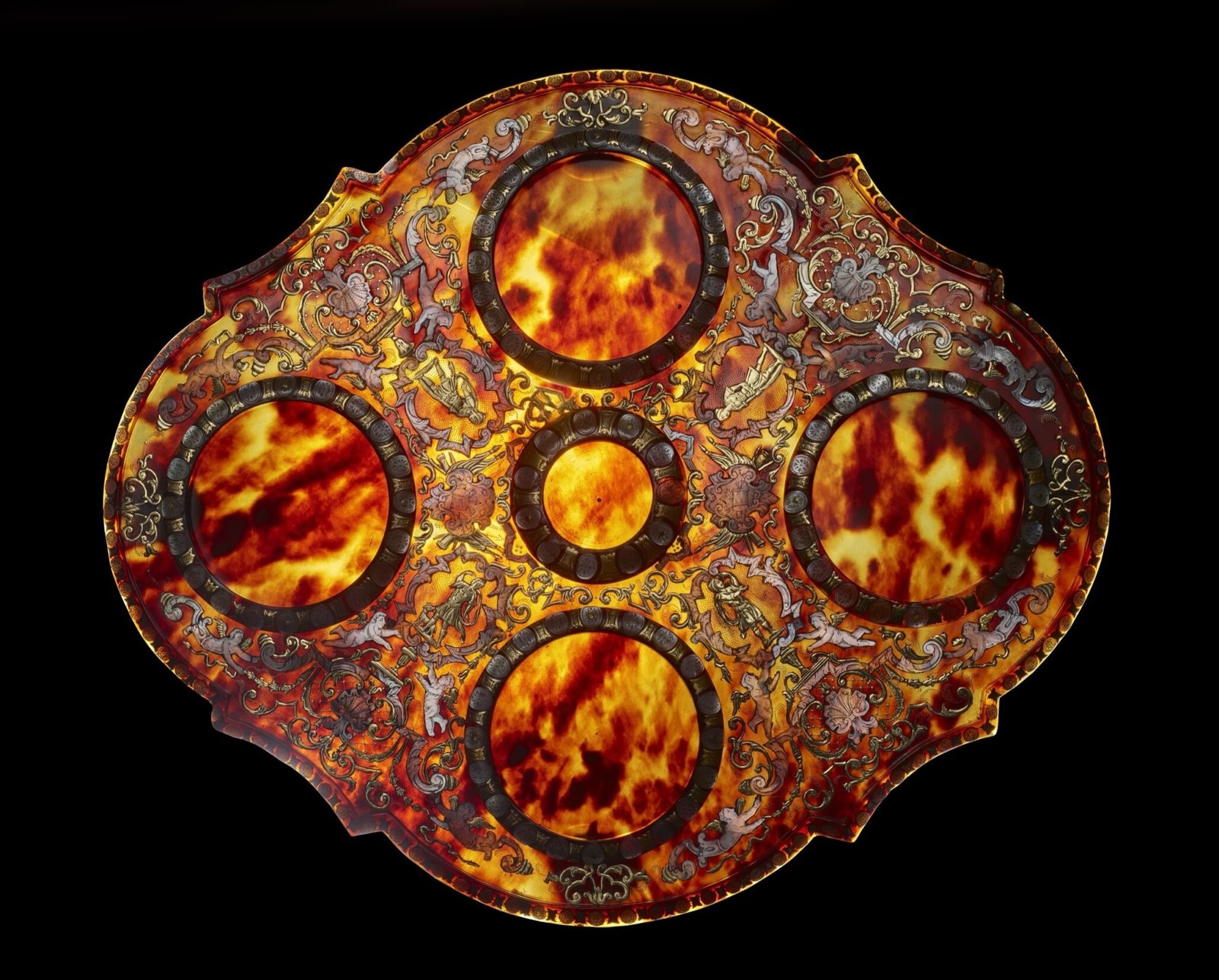
A luxurious material prized for its translucency and warm tones, tortoiseshell was, in the seventeenth and eighteenth centuries, a material of choice for cabinetmakers and tabletiers.
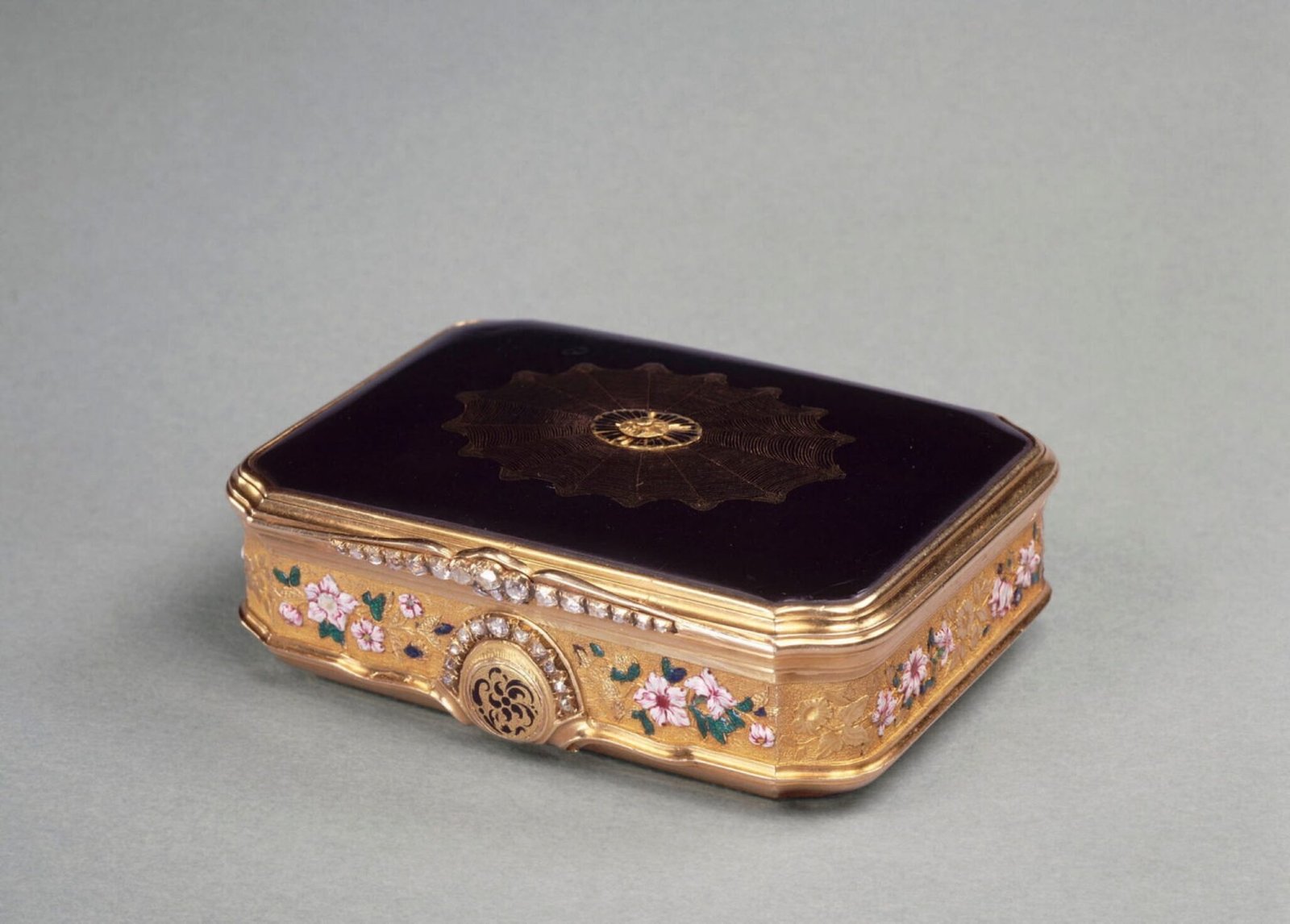
The back of the snuffbox is decorated with a turtle in piqué work.
© 1979 GrandPalaisRmn (musée du Louvre) / RMN Agence photo
Applied as a veneer to furniture or shaped into small objects, tortoiseshell became, under the reign of Louis XIV, one of the luxury materials par excellence. In the Antilles, sea turtles of the loggerhead, hawksbill, and green species were hunted for their meat and their shells. The latter traveled to Europe along the same trade networks as sugar and tobacco. In France, the shells arrived at the ports of Bordeaux, Nantes, and also Le Havre and Honfleur. They then made their way to the Parisian workshops of cabinetmakers and tabletiers, where they were cut into sheets and worked. Tortoiseshell was a material particularly valued for its translucency, the softness of its blond and brown tones, and its pliability. Made malleable after being immersed in a bath of boiling water and oil, it could be molded and even fused. It thus allowed a wide variety of objects and decorative work to be produced.
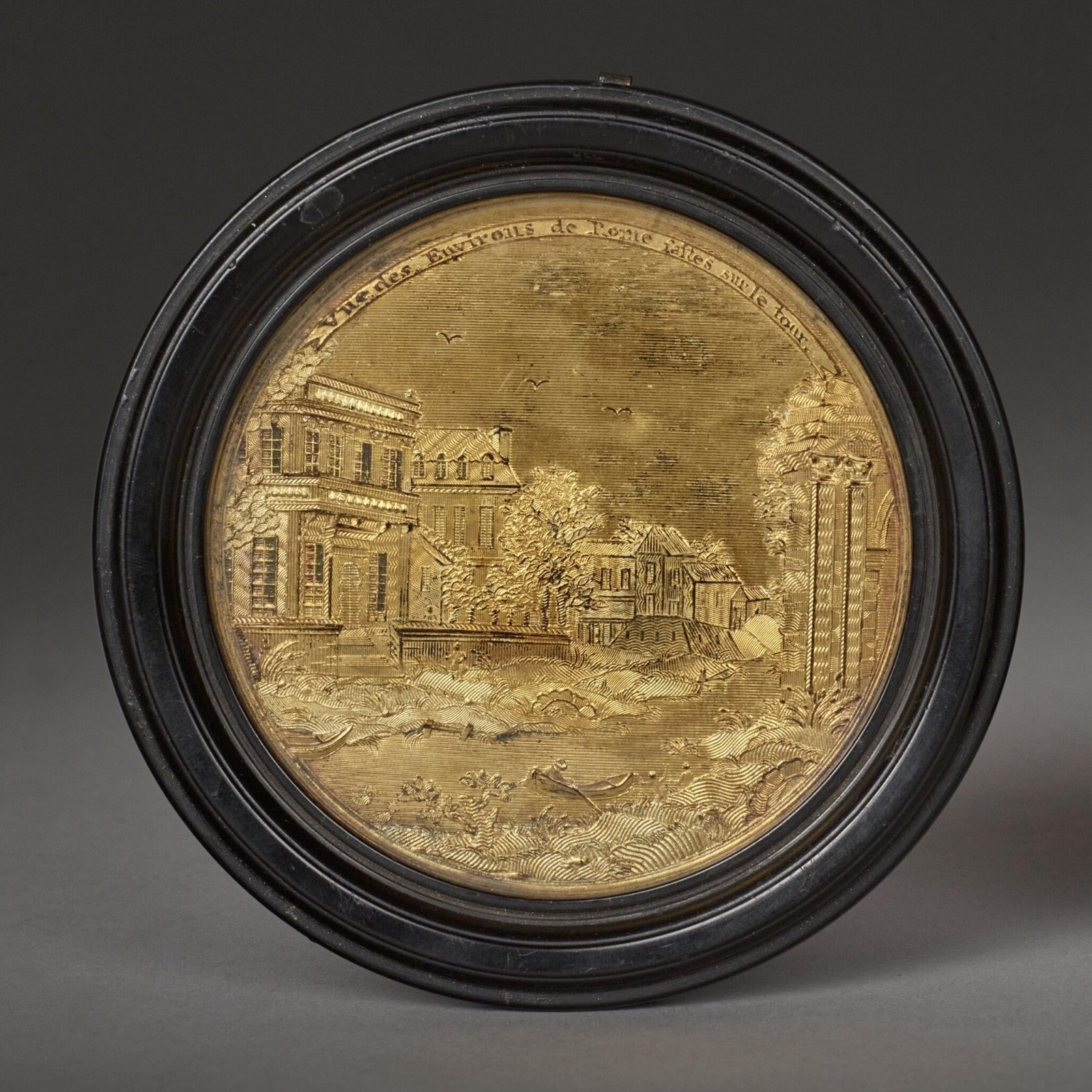
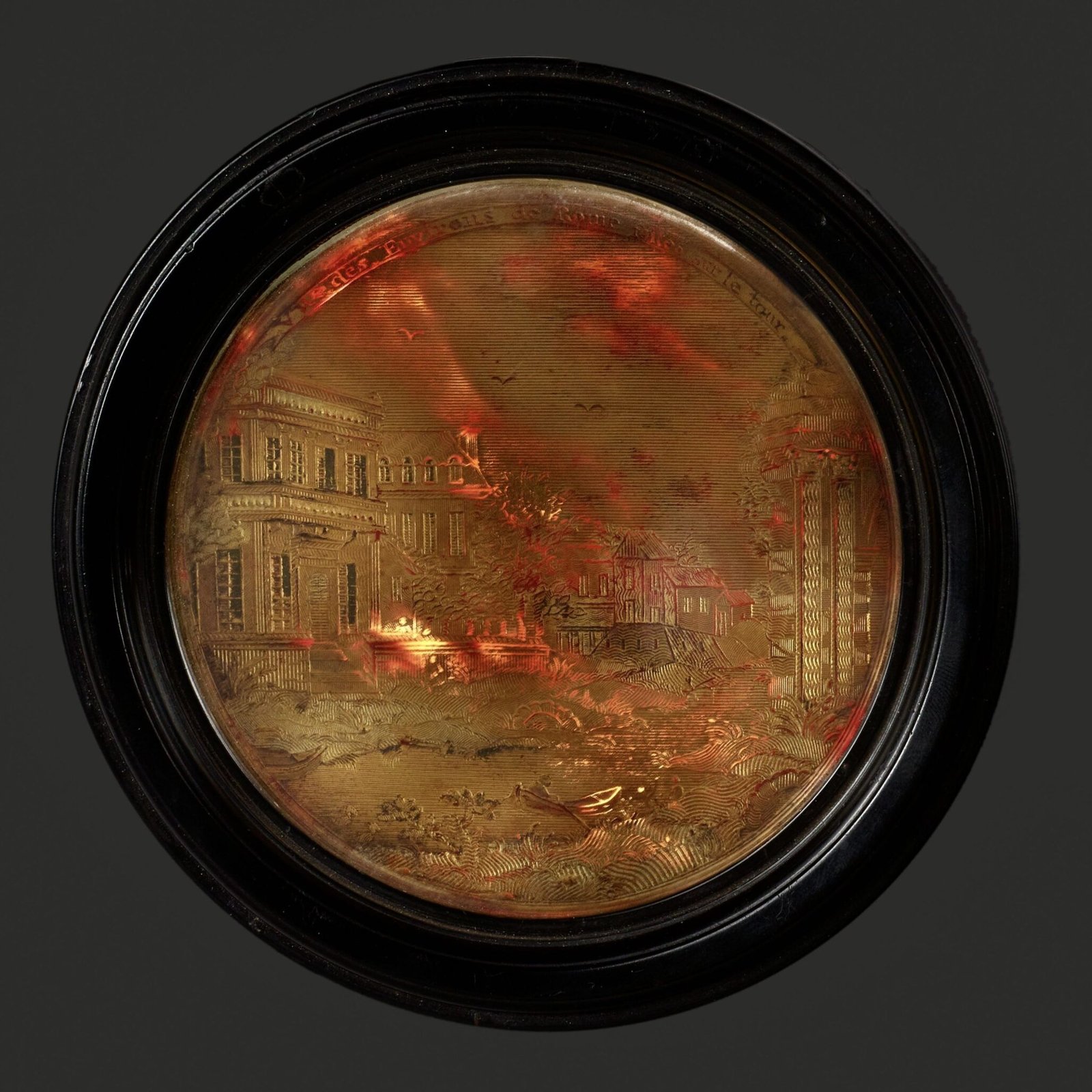
In Paris, in the Halles district, the tabletiers were among the principal craftsmen working in tortoiseshell. They produced a wide range of objects: gaming counters and boards for chess, tric-trac, or checkers, cane pommels, combs, knives, carnets de bal (dance cards), snuffboxes, and other cases. Love tokens, gifts, or trinkets, these “objets de vertu” were a mark of refinement and reflected the taste of their owner, who used them daily. Turned, molded, tinted, tortoiseshell was worked in every form by the tabletiers to make them. Thomas Compigné (active from 1748 to 1778) even conceived the idea of making small pictures from it. Molded in a bronze matrix carved in intaglio on a guilloché lathe, they were then painted and gilded. In December 1772, the tabletier presented to the king at Versailles two large “pictures in blond tortoiseshell,” depicting “the one a view of the Château de Saint-Hubert from the entrance side, and the other the same château seen from the pond side.”
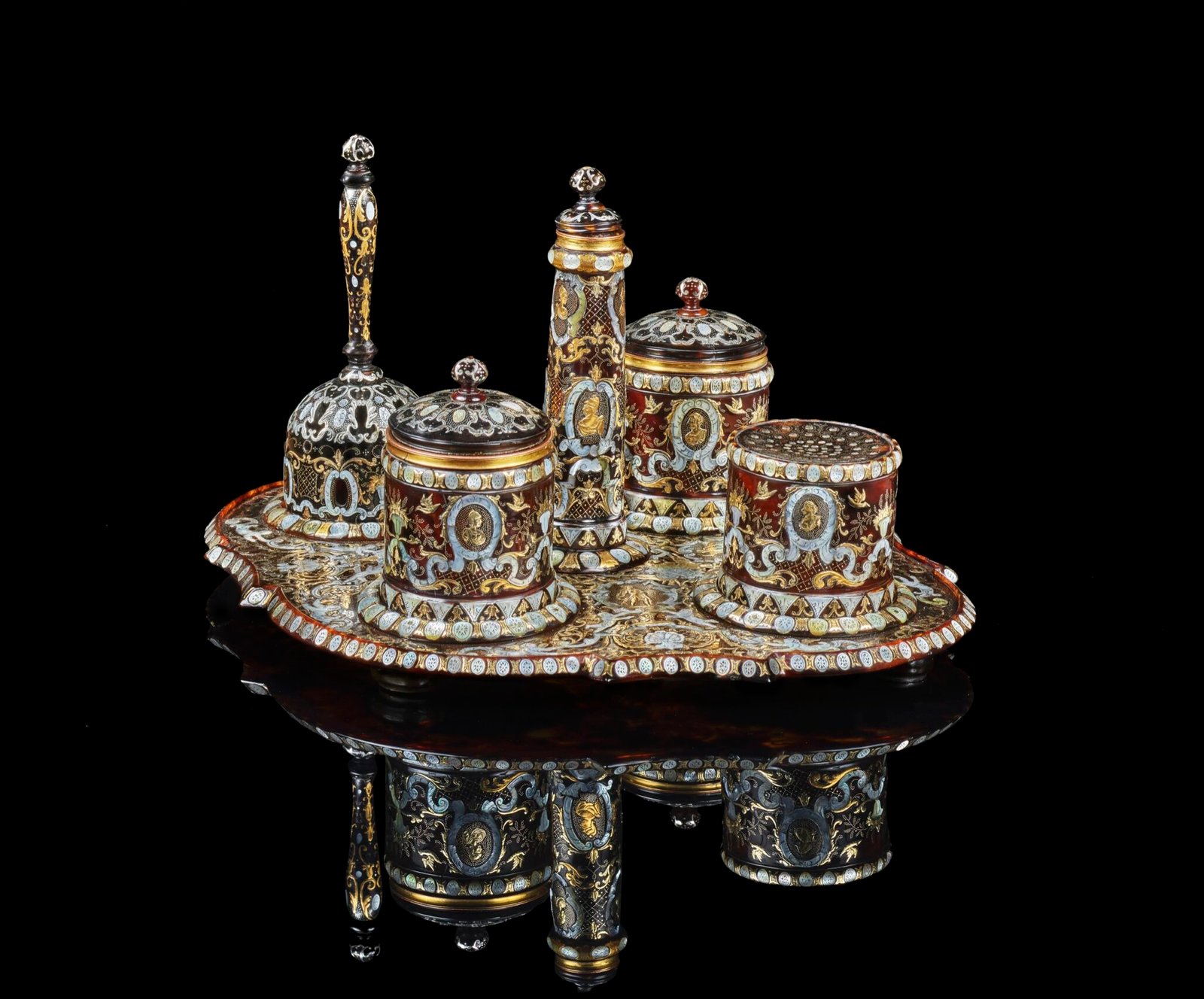
The tabletiers also combined tortoiseshell with precious materials using the techniques of piqué. Small elements of gold, silver, and mother-of-pearl were inlaid into the tortoiseshell to form delicate ornament. Practiced throughout Europe, piqué was brought to its height by the Neapolitan tartarugari. In the eighteenth century, renowned craftsmen such as Giuseppe and Gennaro Sarao, Antonio de Laurentii, and Nicola de Turris produced pieces of extreme luxury destined for the court and the highest aristocracy. European nobility stopping in Naples during the Grand Tour marveled at these objects, contributing to the renown of Neapolitan piqué. Toilet articles, caskets, vases, and even very rare pieces of furniture were made.
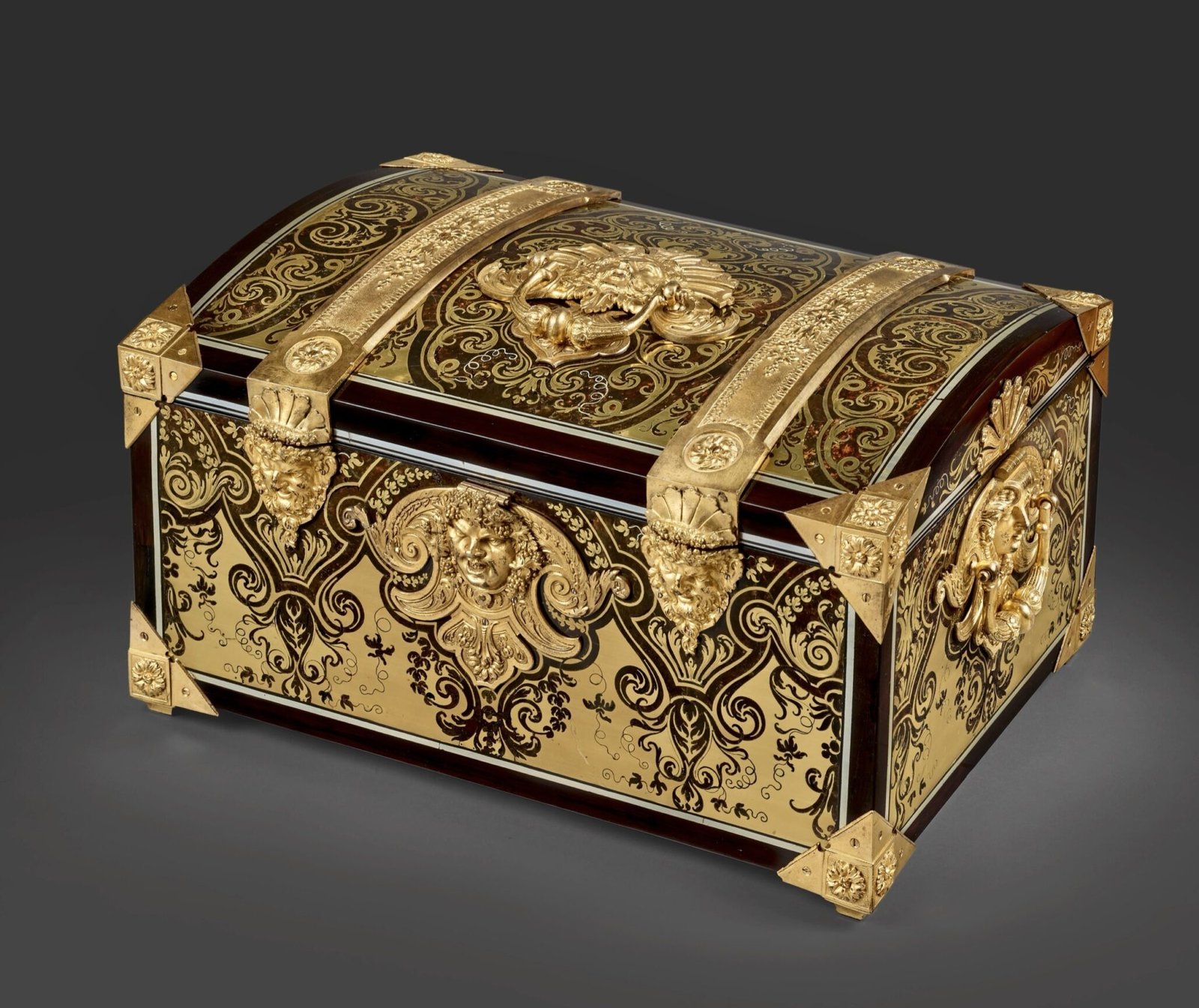
Tortoiseshell was likewise used by cabinetmakers for the decoration of furniture. From the second half of the seventeenth century, Pierre Gole (c. 1620–1684) used it in solid veneers on his cabinets. In the 1680s, André-Charles Boulle (1642–1732) chose it for his marquetry cut from superimposed sheets. Combined with pewter, brass, or ebony, it formed arabesque compositions inspired by the engravings of Jean Bérain (1640–1711) or Boulle’s own models. To heighten the red of the tortoiseshell, the cabinetmaker sometimes laid it over a layer of vermilion. The excavations of the Cour Napoléon at the Louvre, from 1981 to 1986, brought to light—in the remains of the 1720 fire that destroyed Boulle’s workshop—numerous fragments of tortoiseshell, worked and unworked, attesting to the cabinetmaker’s working methods and to the transformation of tortoiseshell within the workshop itself. Many of Boulle’s contemporaries also adopted this marquetry technique, which today bears his name. In the second half of the eighteenth century, cabinetmakers such as Étienne Levasseur (1721–1798) and Gaspard-Joseph Baumhauer (1747–?) took up the technique in turn and perpetuated the taste for tortoiseshell.
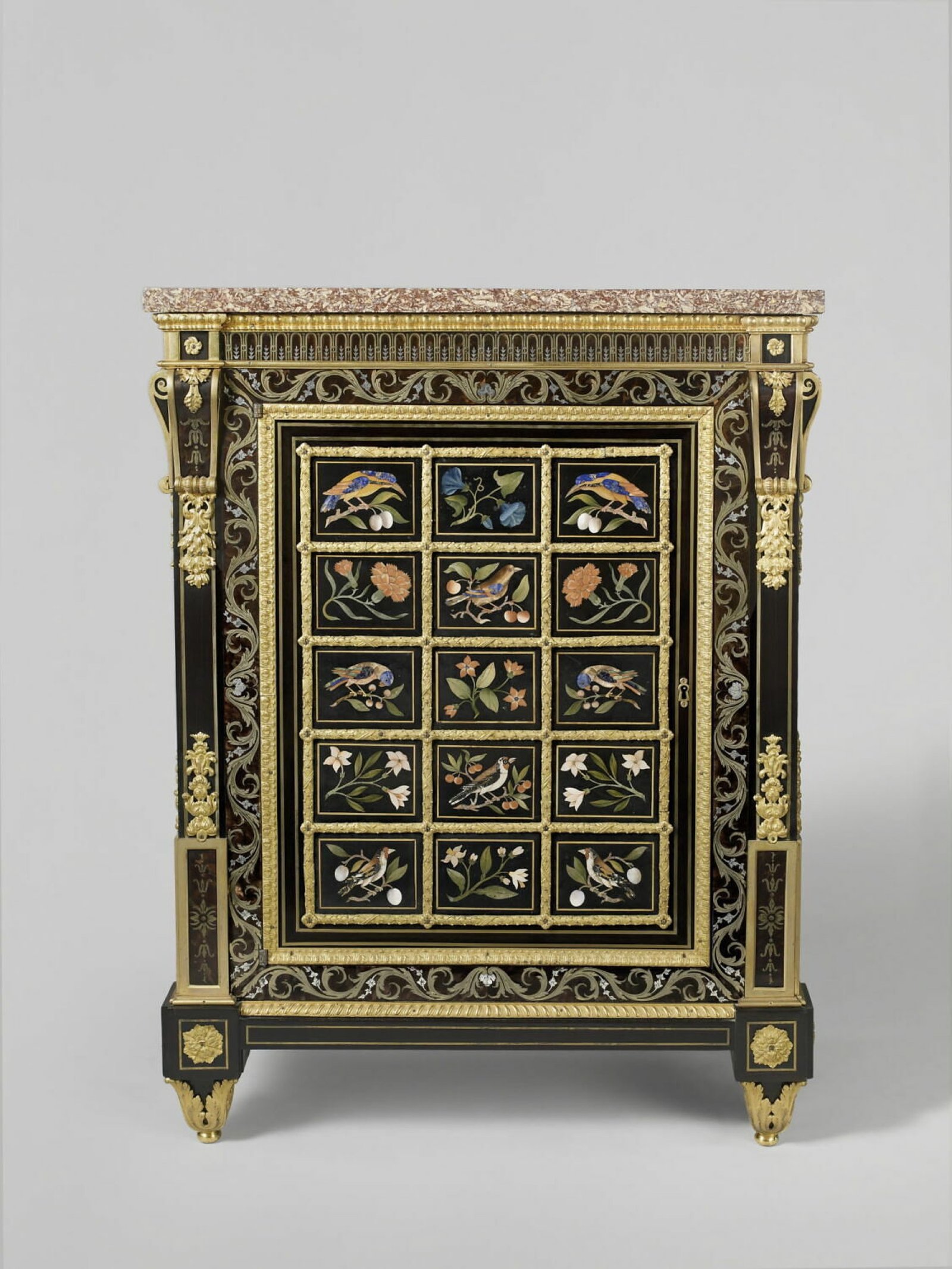
© 2012 Musée du Louvre, Dist. GrandPalaisRmn / Martine Beck-Coppola
An exotic and precious material with brown and blond highlights, tortoiseshell entered, in the seventeenth and eighteenth centuries, into the composition of numerous pieces of furniture and objets d’art. Celebrated through the art of piqué and Boulle marquetry, it was also the material of luxurious objects of everyday life.
Bibliography:
José de Los Llanos, Christiane Grégoire, Boîtes en or et objets de vertu, Paris-Musées, 2011
Jean Soulat, « Identification et provenance de l’écaille de tortue marine en circulation au début du xviiie siècle », Technè, 49 | 2020, 56–59.
Jean Nérée Ronfort (dir.), André Charles Boulle (1642−1732). Un nouveau style pour l’Europe, Somogy Éditions d’art, 2009
Mathieu Deldicque (dir.), André Charles Boulle, Éditions Monelle Hayot, 2024
Alexis Kugel, Complètement piqué. Le fol art de l’écaille à la cour de Naples, Éditions Monelle Hayot, 2018

