
Still largely overlooked today, Jean-Ferdinand-Joseph Schwerdfeger was the author of one of the most sumptuous pieces of furniture ever delivered for Marie-Antoinette. Active from the end of the eighteenth century into the beginning of the next, he produced cabinetwork poised at the turning point between the Ancien Régime and the Empire.
Jean-Ferdinand-Joseph Schwerdfeger (1734–1818) was one of the many German cabinetmakers established in Paris. Born in Steinbrück, in Lower Saxony, in 1734, he reached the French capital at barely eighteen years of age and settled in the faubourg Saint-Antoine. Like his fellow Germans, he was able to practice his trade there as a free craftsman, exempt from the constraints of the Parisian jurande. Schwerdfeger worked there for many years, moving in the same circles as Jean-Chrysostome Stumpff (1731–1806) and probably Jean-Henri Riesener (1734–1806). The cabinetmaker lived through the upheavals of the Revolution in the company of the sans-culottes. Engaged as an intelligence agent, he was ultimately troubled by the authorities himself and imprisoned at the Conciergerie for a brief period. After the Terror, he returned to his workbenches and appears to have enjoyed a certain prosperity, as shown by the inventory drawn up after the death of his wife in 1803.
© Château de Versailles, Dist. RMN / © Christophe Fouin
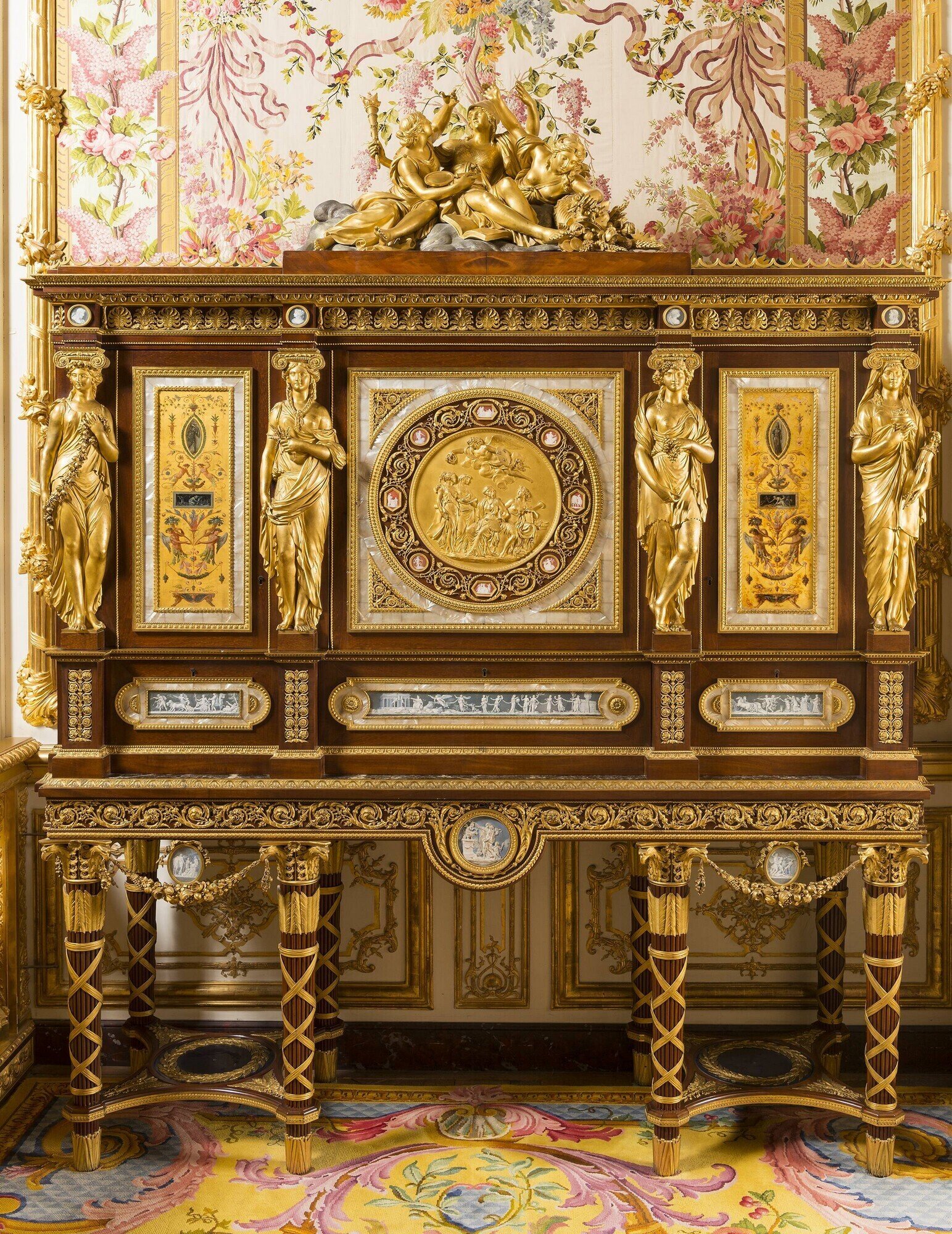
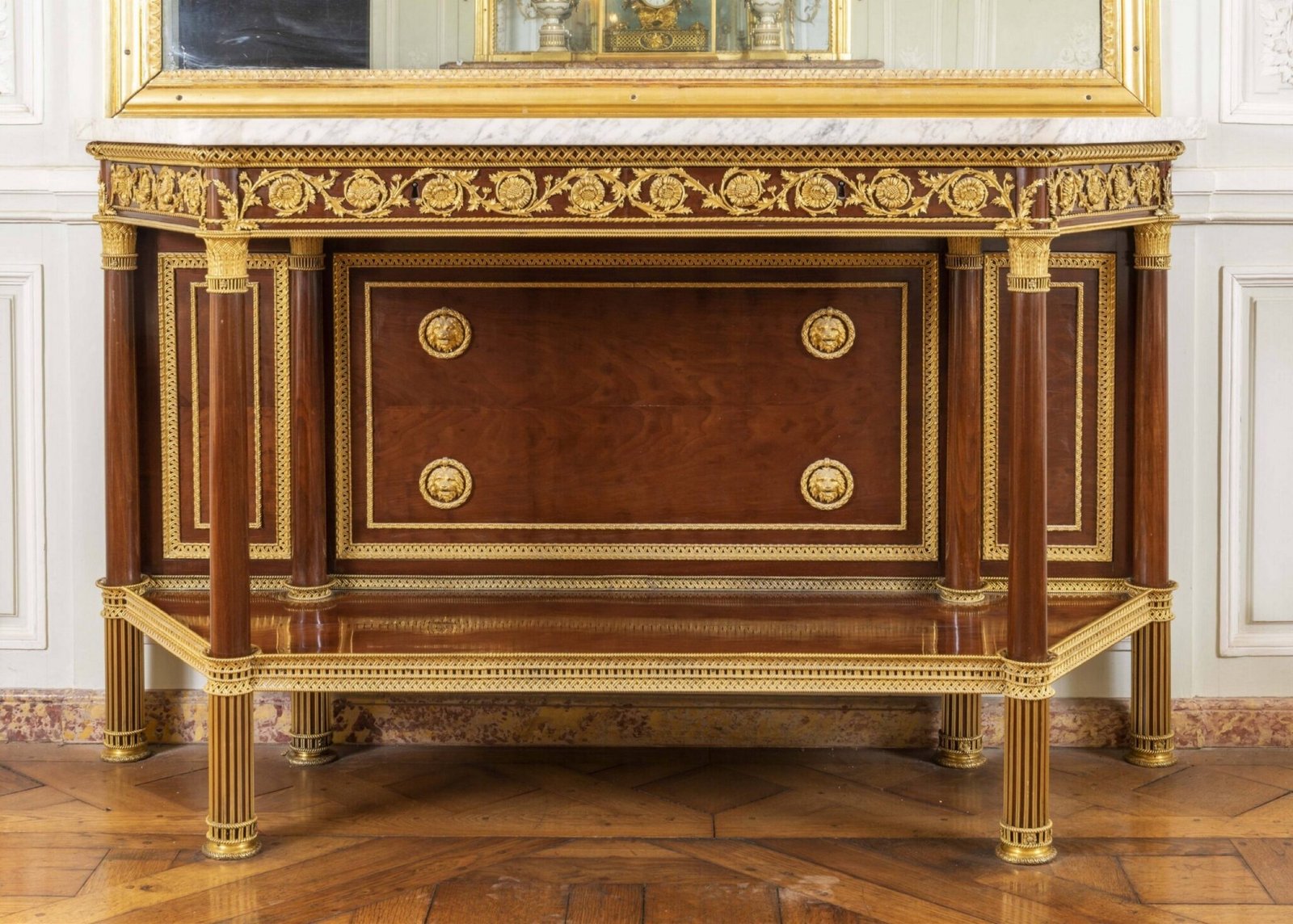
In 1787, a year after receiving his maîtrise as a cabinetmaker, Jean-Ferdinand-Joseph Schwerdfeger entered the prestigious circle of craftsmen serving Queen Marie-Antoinette. The queen wished for a new jewel coffer in which to keep her personal jewels in the alcove of her bedchamber at the château de Versailles. She entrusted this commission to her garde des meubles, Pierre-Charles Bonnefoy du Plan (1732–1824), who was charged with choosing the craftsmen called upon to carry it out: the sculptor Louis-Simon Boizot (1743–1809), director of the sculpture workshop at the Sèvres manufactory; the bronze makers Étienne Martincourt and Pierre-Philippe Thomire (1751–1843); and our cabinetmaker. Of extraordinary richness, this magnificent piece, veneered in mahogany, was adorned with inlays of mother-of-pearl, porcelain plaques, gouaches, and gilt bronzes in the Etruscan taste. The following year, Schwerdfeger delivered a suite of furniture — table, console, chest of drawers, and secretary — for the queen’s bedchamber at the Petit Trianon. Particularly original, its gilt bronzes featured dogs’ heads and a caning trellis reflecting the queen’s rustic and naturalistic tastes.
© Château de Versailles, Dist. RMN / © Christophe Fouin
Apart from these deliveries for Marie-Antoinette, few pieces by Schwerdfeger are known. The cabinetmaker appears to have specialized in clock cases, particularly from the revolutionary period onward. He contributed to the making of the geographical clock that Antide Janvier (1751–1835), clockmaker to the king, presented to Louis XVI in 1791. He also produced the case for the same clockmaker’s astronomical masterpiece and supplied him with a great many mahogany cases. Renowned for the quality of his clock cases, Schwerdfeger worked with other leading clockmakers, such as Bailly l’Aîné, Robert Robin (1741–1799), and Jean-Simon Bourdier (died 1839). In the Étrennes chronométriques, Janvier described “the clock by M. Robin known as the Pyramid: we cite it as a masterpiece of taste and execution. Few men are able so much as to appreciate the case, whose fittings, the fruit of the rare ingenuity of M. Ferdinand Schwerdfeger, were not even known to M. Robin before the work was finished.”
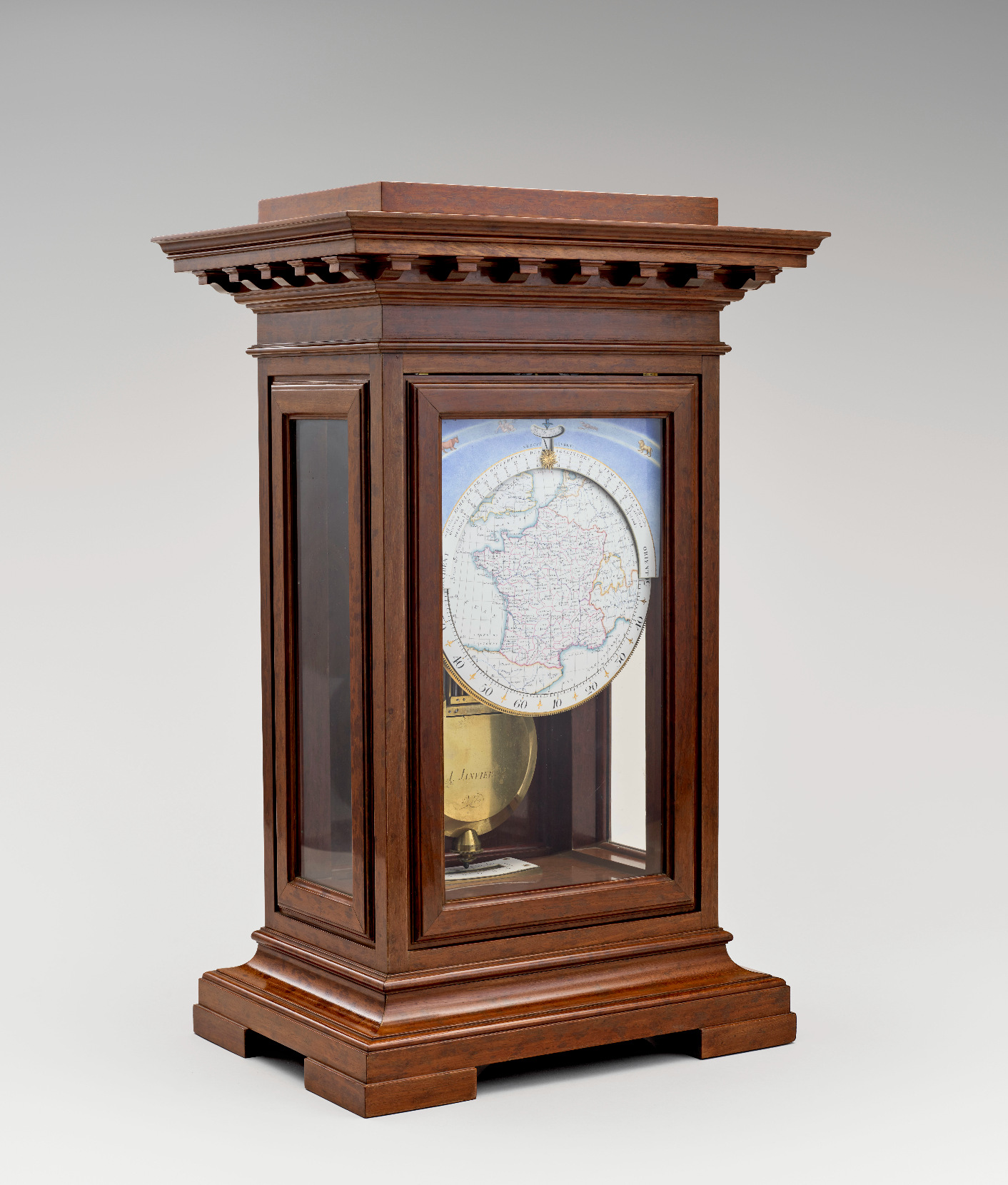
© RMN-Grand-Palais (Fontainebleau) / Adrien Didierjean
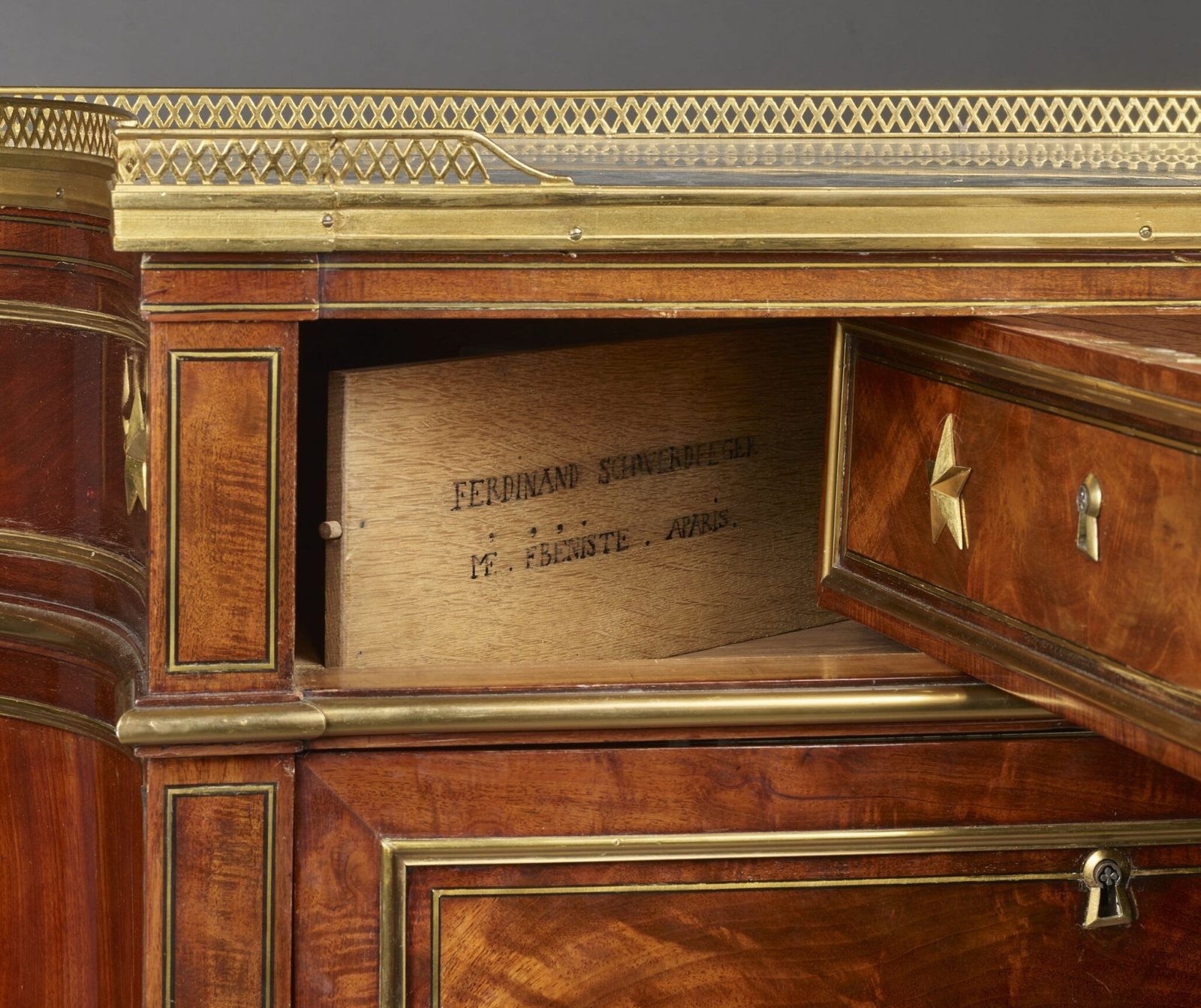
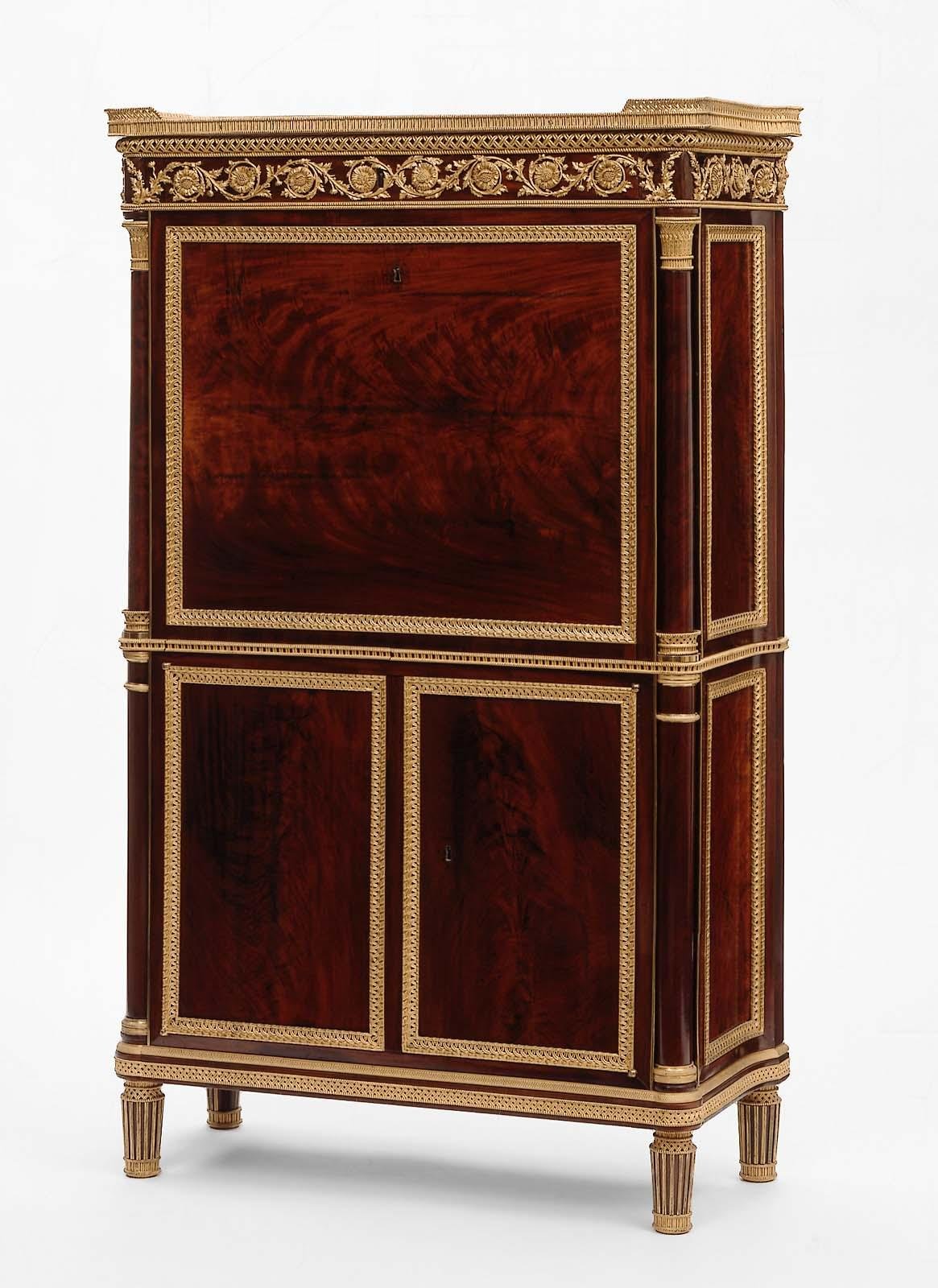
Schwerdfeger’s work remains difficult to define today, and his manner has yet to be studied. His stamp and signature are rare: the first is known only on the chest of drawers at the Bordeaux museum, while the second appears inlaid in the queen’s serre-bijoux and the Petit Trianon table, and inked on our secretary. Spanning the reigns of Louis XVI, the Directoire, the Consulat, and the Empire, Schwerdfeger’s works stand out for the very high quality of their execution. The cabinetmaker used a fine mahogany with delicate graining, veneered over an oak carcass, and lent all his pieces a certain monumentality. He developed a distinctive technique of an “unattackable polish to eau seconde” cited in the archival records, which made the mahogany veneer exceptionally durable. Schwerdfeger was likewise fond of complex, precise mechanisms: the serre-bijoux of Marie-Antoinette, like our fall front secretary, contained numerous secret compartments concealed within the carcass of the piece.
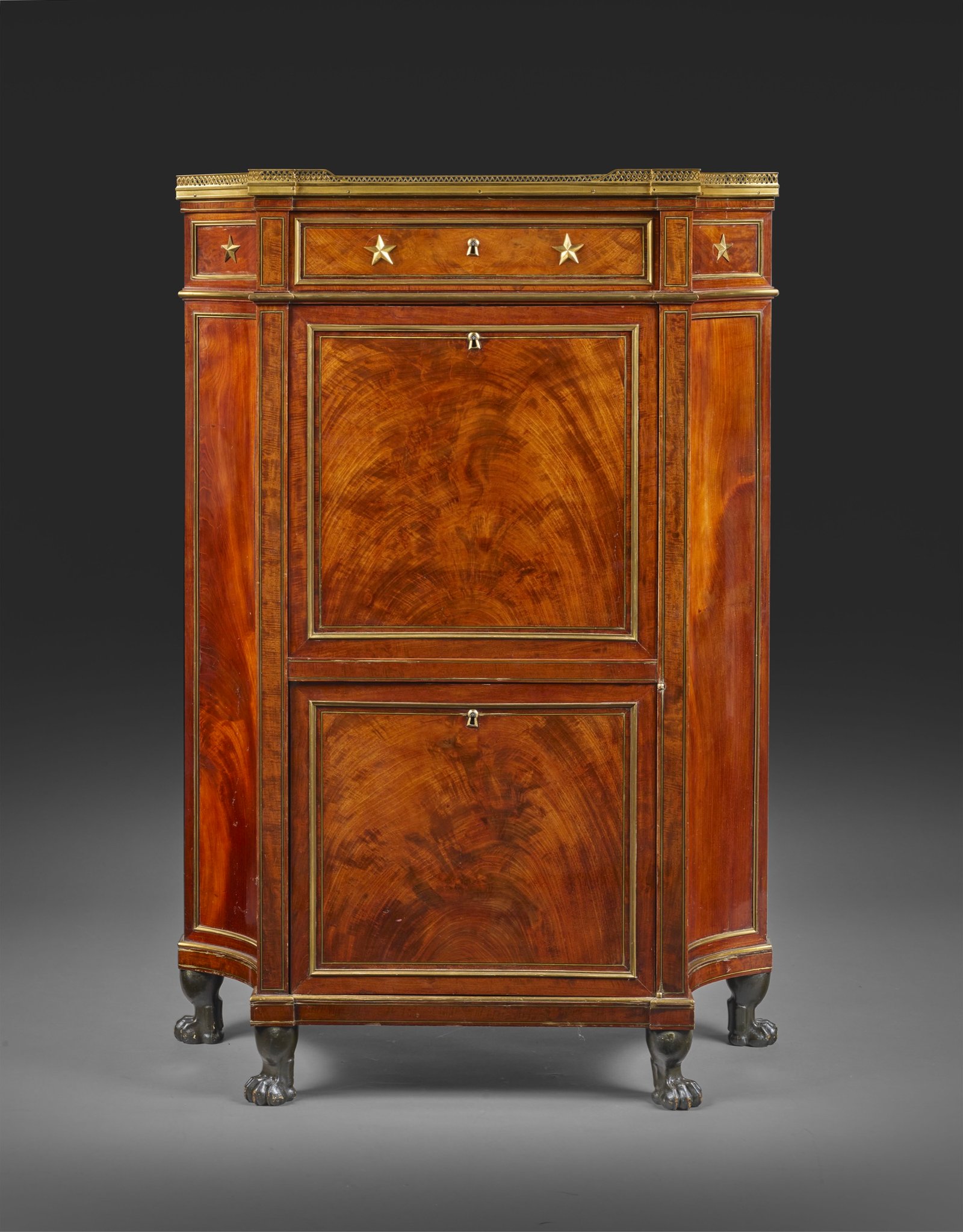
Working by turns for the queen and for the greatest clockmakers, Schwerdfeger left behind an œuvre of remarkable technical exigency. The fall-front secretary in the galerie Léage — one of the very few pieces that can be attributed to him today — sums up his art entirely: the beauty of the veneer, the durability of the polish, and the ingenuity of its secret compartments.
Bibliography:
Marc-André Paulin, « Schwerdfeger, ébéniste de Marie-Antoinette », L’Estampille / L’Objet d’art, n° 384, octobre 2003
Béatrice Mura, « Secrétaire Louis XVI signé Schwerdfeger », L’Estampille / L’Objet d’art, n° 235, avril 1990
Jean-Dominique Augarde, Jean Nérée Ronfort, Antide Janvier, Mécanicien-astronome. Horloger ordinaire du Roi, Éditions du Centre de Recherches Historiques sur les Maîtres Ébénistes

