
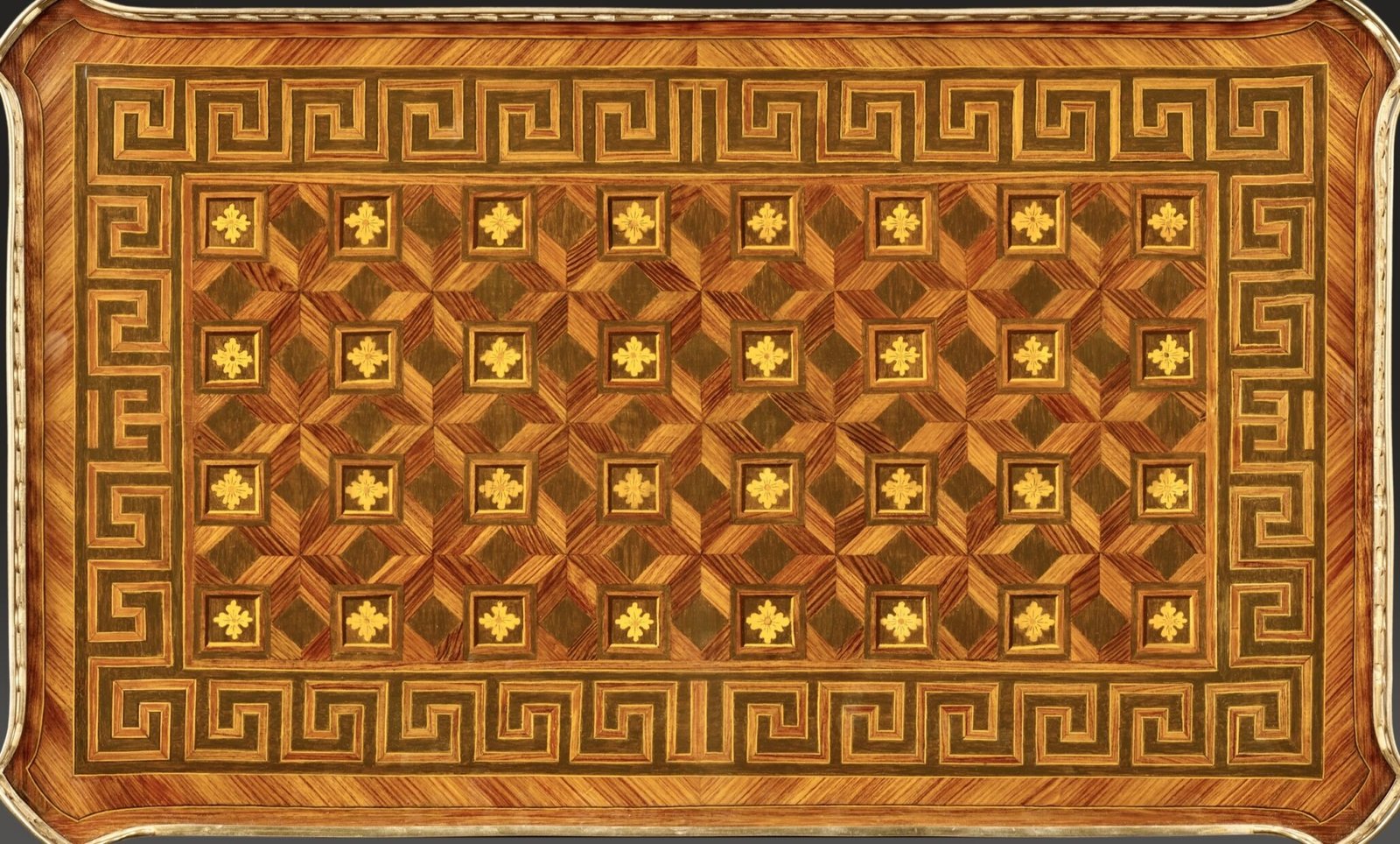
Pierre Pioniez (cabinetmaking attributed to), Léonard Boudin (stamped and delivered by), “à deux fins” table, detail of the top, circa 1765, Galerie Léage
A cabinetmaker and later a dealer, Léonard Boudin enjoyed remarkable success and social ascent. Trained in the heart of the Faubourg Saint-Antoine, he gradually established himself as one of the most prominent dealer of his time, serving a distinguished clientele.
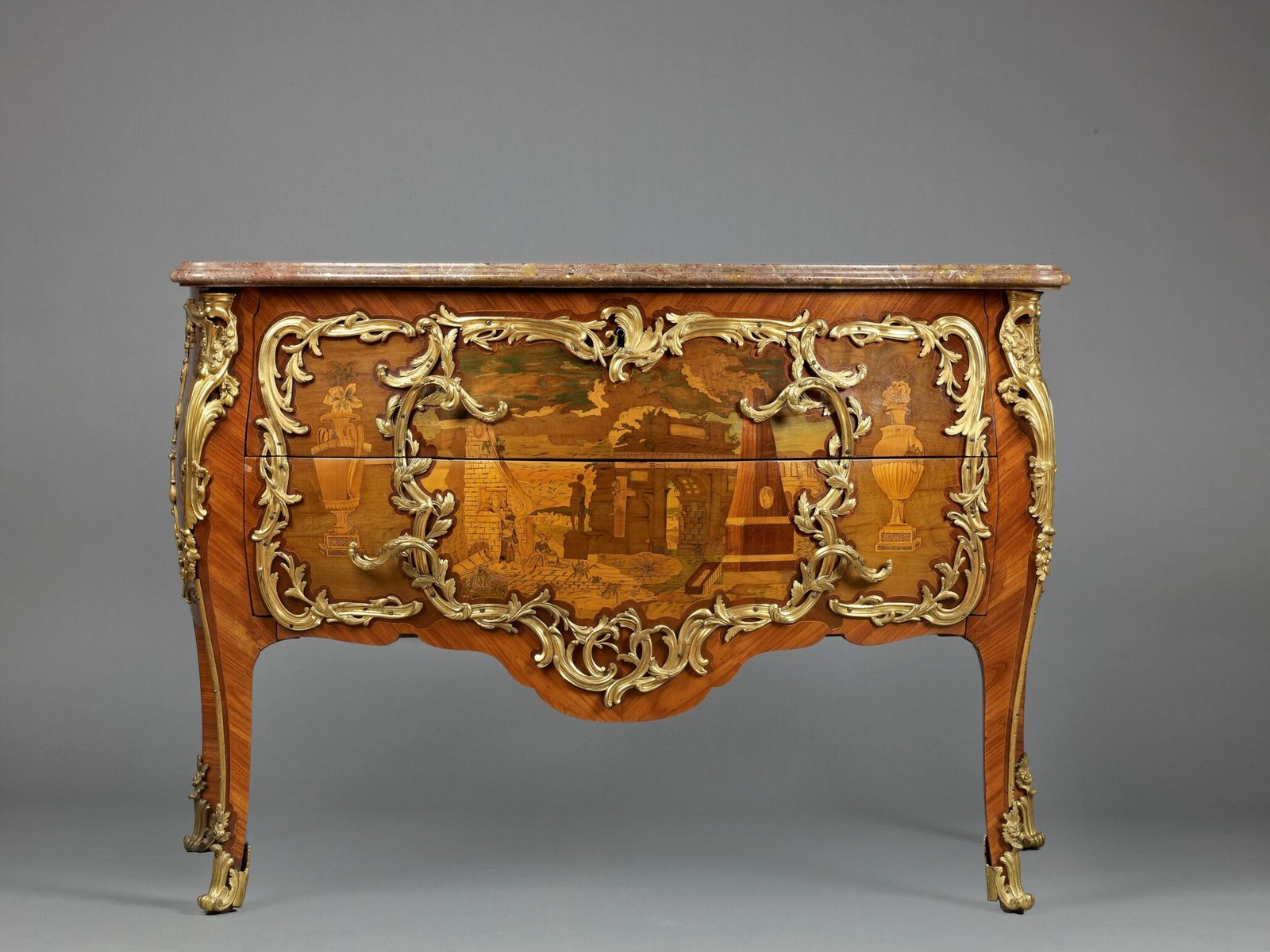
Léonard Boudin (cabinetmaking attributed to), Pierre-Antoine Foullet (marquetry), Chest of drawers, circa 1765–1770, New York, Metropolitan Museum of Arts (inv.
1975.1.2033)
Of modest origin, Léonard Boudin was the son of Claude Boudin, a tabletierfrom the Faubourg Saint-Antoine in Paris. Received as a Master cabinetmaker in 1761, he began his career as an independent craftsman working for dealer-cabinetmaker, notably Pierre IV (1696–1758) and Pierre V Migeon (1733–1775). Between 1758 and 1762, he supplied these eminent dealers with secretaries, desks, chests of drawers, and chiffonniers. The Migeons quickly recognized his talent and introduced him to an elite clientele. In 1759, Boudin delivered for the chevalier d’Arcq—natural son of the comte de Toulouse—a suite in Asian lacquer comprising a « secrétaire en armoire », a chest of drawers, and a desk. His work was also appreciated by other dealer-cabinetmakers, including Antoine Foullet (master in 1749) and Pierre Macret (1727–1806). In 1771, Gilles Joubert (1689–1775), cabinetmaker to the Crown, commissioned from him a flat desk and a chest of drawers for the comte de Provence, attesting to the high level his production had reached.
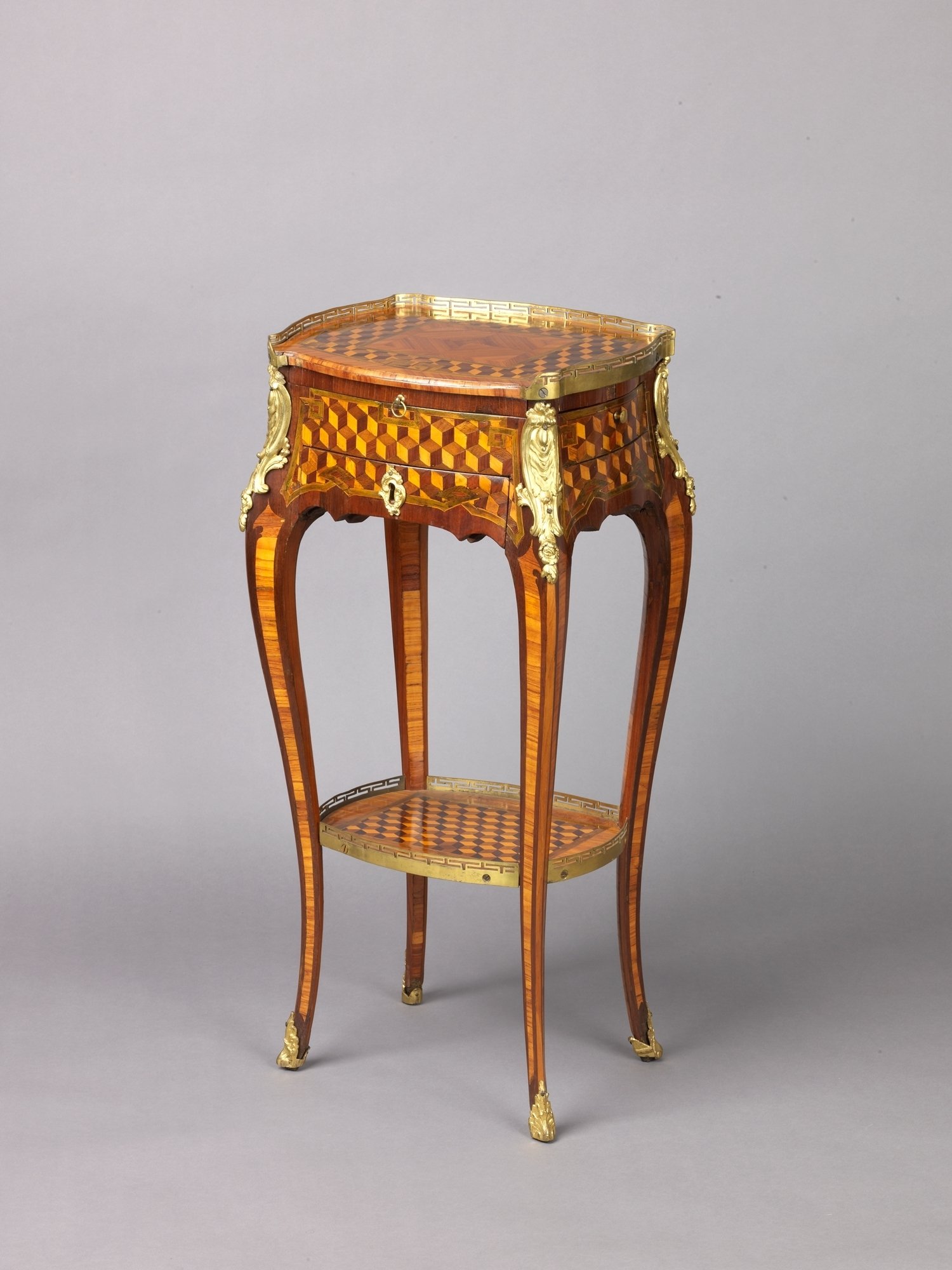
Léonard Boudin, Writing table, circa 1761–1770, New York, Metropolitan Museum of Arts (inv. 1975.1.2023), former Baron Henri de Rothschild collection then Robert Lehman collection
Initially established on rue Saint-Nicolas, Boudin later moved slightly further south within the faubourg, to rue Traversière, where he developed both his workshop and his business. His reputation grew rapidly: in 1772, only eight cabinetmakers were listed in the Almanach Dauphin—which recorded Parisian merchants and craftsmen—including Léonard Boudin. The 1777 edition even described his establishment as “one of the most renowned cabinetmaking shops,” noting that he “ships to the provinces and abroad.” By this time, his activity had shifted: from cabinetmaker, Boudin had become a dealer. An inventory drawn up upon his wife’s death in 1777 does not even mention a workbench, suggesting he no longer produced furniture himself. That same year, Boudin left the faubourg and settled in Saint-Germain‑l’Auxerrois, an area already home to many furniture dealers.
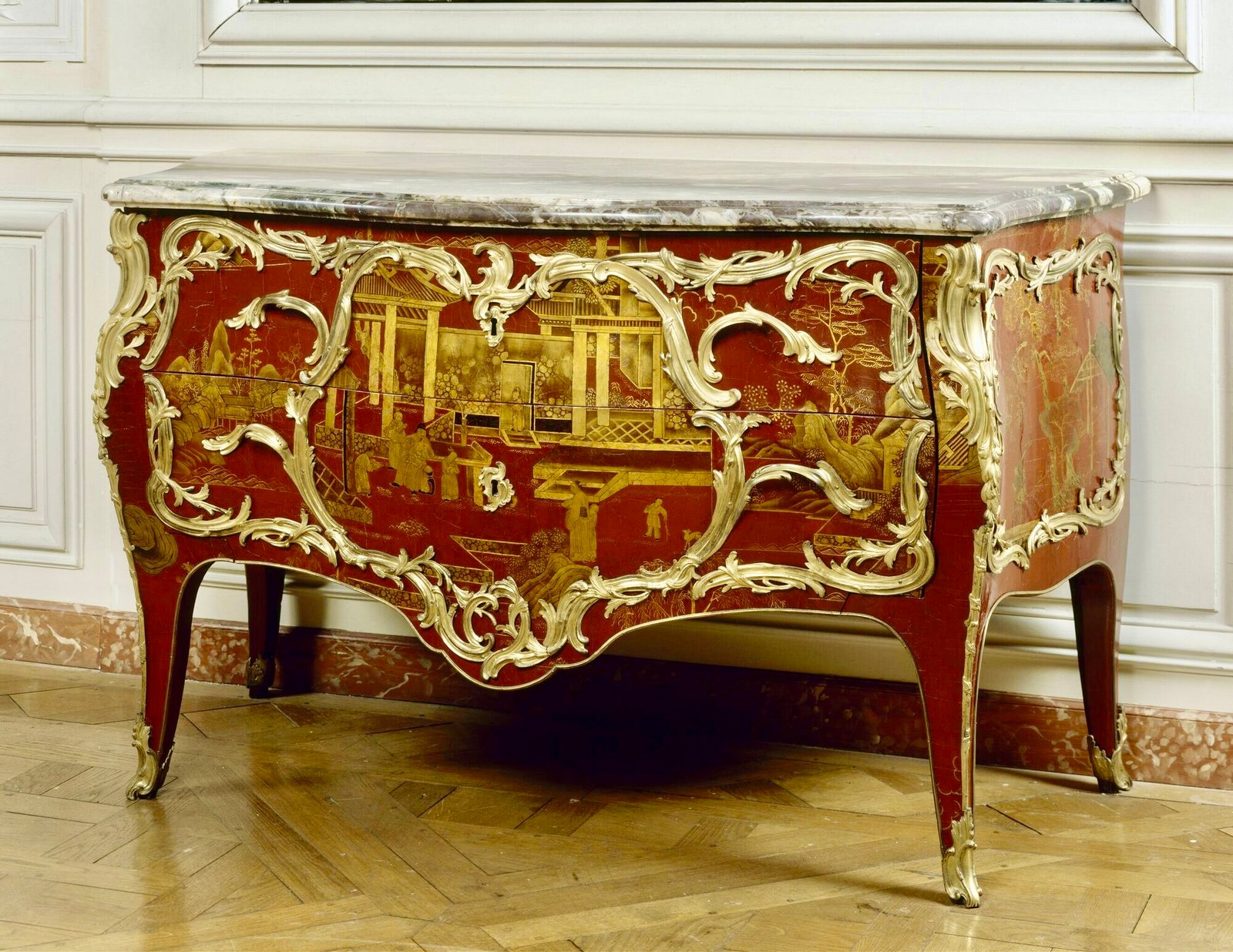
Léonard Boudin, Chest of drawers, circa 1761–1765, Versailles, Châteaux de Versailles et de Trianon (inv. OA 9600, dépôt du musée du Louvre)
© RMN-GP (Château de Versailles) / © Gérard Blot
Boudin then established himself as a marchand-tapissier. In the 18th century, such dealers sold textiles but also dealt in furniture and a wide variety of decorative objects. The Journal des Petites Affiches of December 1777 describes the goods in Boudin’s shop as follows: “furniture of all kinds in the latest taste, namely chests of drawers, secretaries, and other cabinet work; firedogs, wall lights and clocks gilt in ormolu; clocks with white marble bases; mirrors, chandeliers, and works from China, including ships and castles in mother-of-pearl.” Like the marchands-merciers, he coordinated the work of several craftsmen and could sell pieces he had not made himself. André-Louis Gilbert (1746–1809), Charles Topino (c. 1742–1803), Pierre-Antoine Foullet (master in 1765), and Pierre Pioniez (master in 1765) were among the cabinetmakers who supplied him. Their stamps are frequently found alongside Boudin’s on surviving pieces. He also occasionally resold older furniture: a corner cupboard in a private collection bears both his stamp and that of Jean-Pierre Latz (1691–1754), who had died several years before Boudin began his career as a dealer.
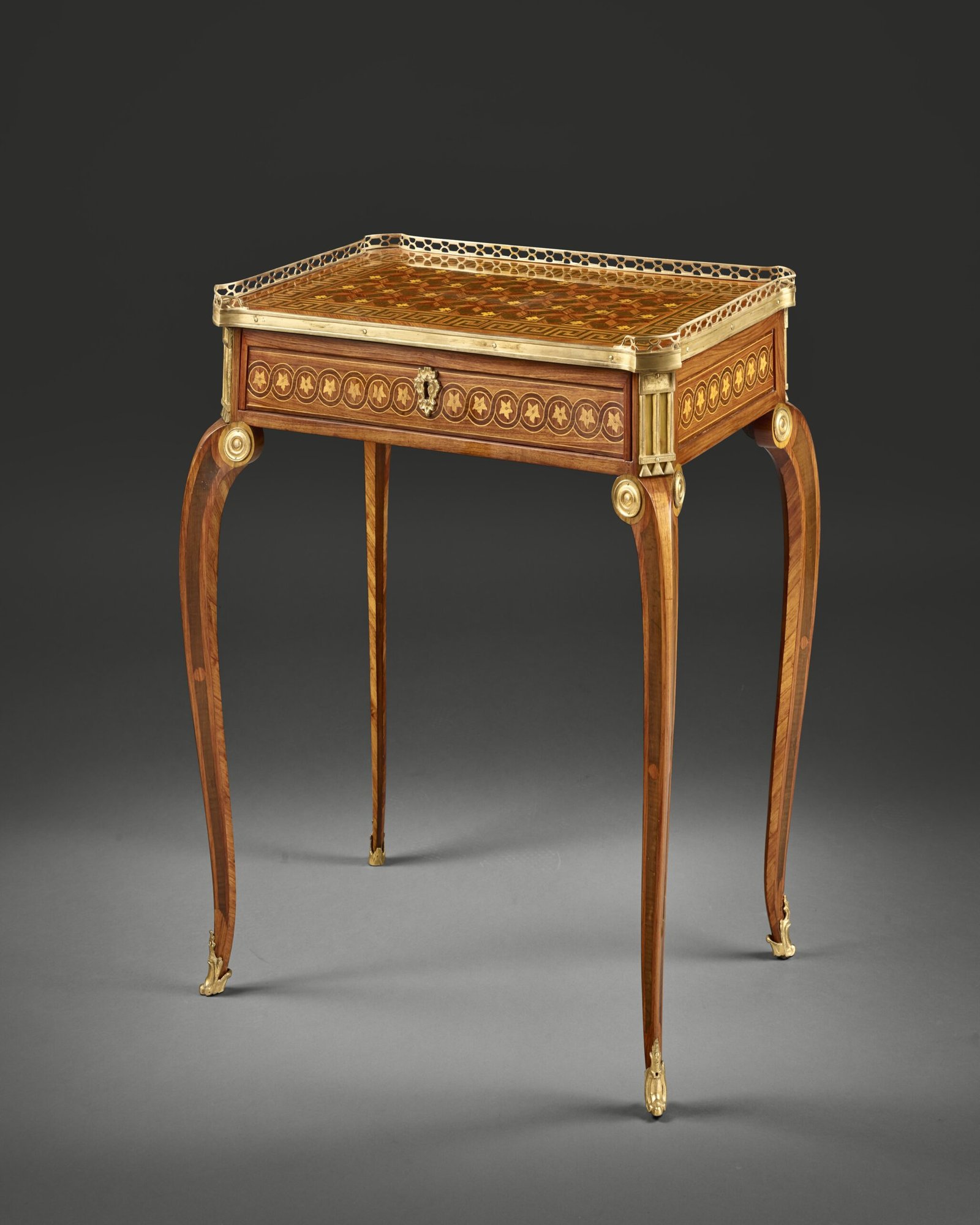
Pierre Pioniez (cabinetmaking attributed to), Léonard Boudin (stamped and delivered by), “à deux fins” table, circa 1765, Galerie Léage
Balancing his own production with that supplied by other cabinetmakers, Léonard Boudin’s personal taste can be difficult to define. Early in his career, he produced Transition-period furniture featuring distinctive marquetry of cubes framed by Greek key motifs. He later encouraged this type of decoration among the craftsmen he commissioned. A « à deux fins » table in the Galerie’s collection, attributed to Pierre Pioniez and stamped by Boudin, features the same cube marquetry enriched with trefoil motifs seen in his early works. Although no single material or form appears to have been favored by the dealer, certain recurring elements can be observed. Several fall-front secretaries attributed to Gilbert and stamped by Boudin display similar shapes and gilt-bronze mounts. Among them, two feature a rare European varnish decoration in vivid colors imitating Chinese lacquer, one of which is currently in the Galerie’s collection.
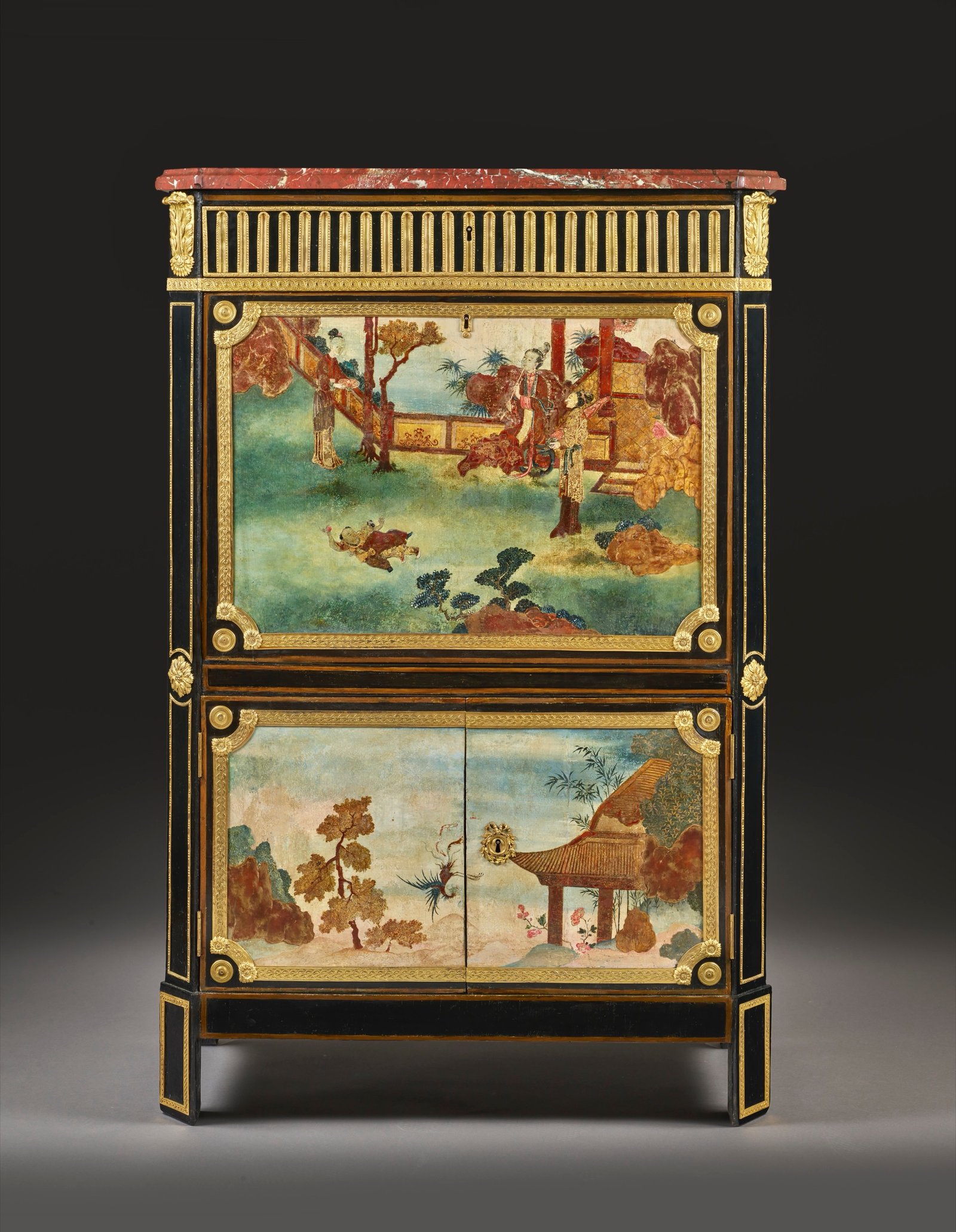
André-Louis Gilbert (cabinetmaking attributed to), Léonard Boudin (delivered by), Drop-front secretary with a European varnish décor, circa 1775, Galerie Léage
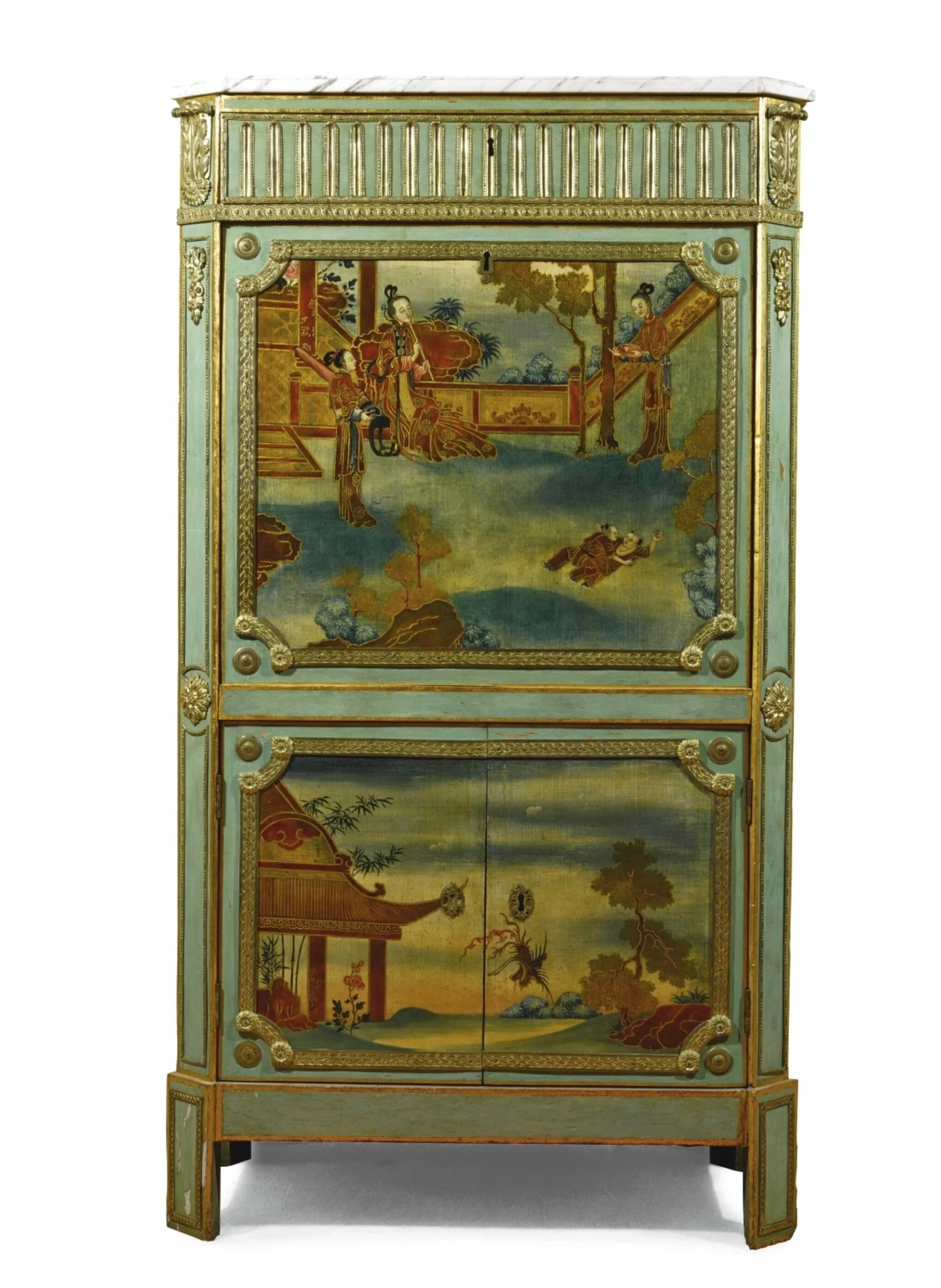
Léonard Boudin, Drop-front secretary in European varnish with a Chinese décor, Louis XVI period, circa 1775–1780, former Philip Sasson collection at Houghton Hall, private collection
From the Faubourg Saint-Antoine to the vicinity of the Palais-Royal, Léonard Boudin built a remarkable career. First a cabinetmaker, then a dealer, he orchestrated the production of some of the finest craftsmen of his time and contributed to the dissemination of a refined and innovative taste.
Bibliography:
Patricia Lemonnier, “Boudin ébéniste et marchand”, L’Estampille, n°226, juin 1989
Claude Frégnac, Les ébénistes du XVIIIe siècle français, Hachette, 1963
Alexandre Pradère, Les ébénistes français de Louis XIV à la Révolution, Nouvelles éditions du Chêne, 1989
Ouvrage collectif, 18e aux sources du design, Faton, 2014

