
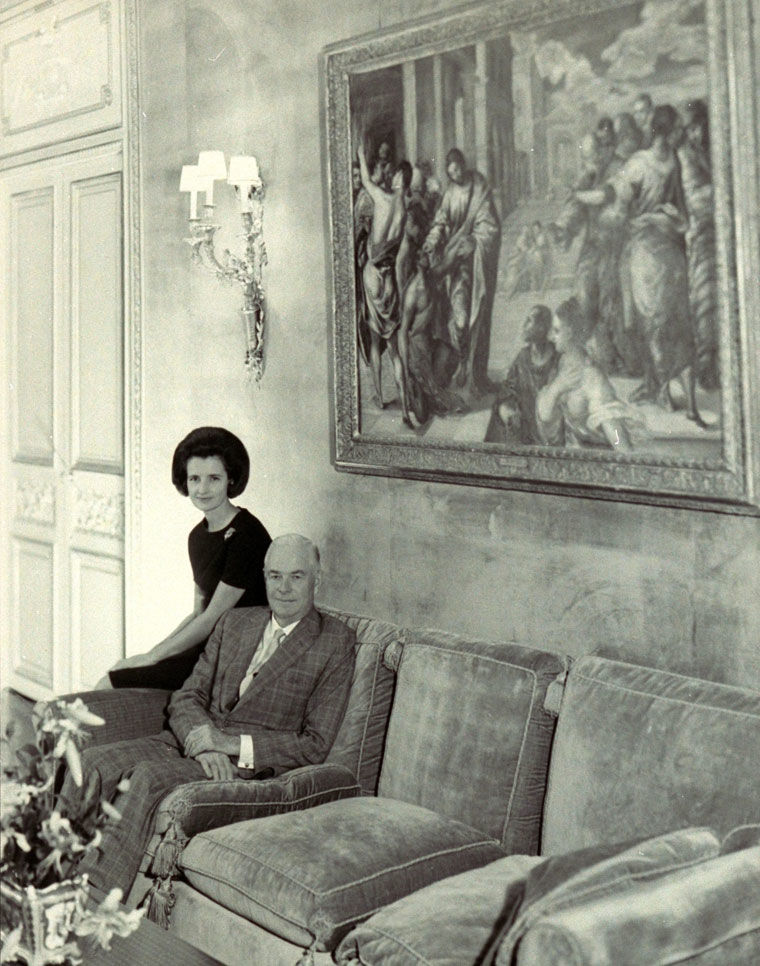
© Cecil Beaton / Vogue; Condé Nast
In 1949, Charles Wrightsman visited the Metropolitan Museum for the first time, on the occasion of the exhibition Masterpieces of European Porcelain. In the museum’s galleries, the Meissen birds lent by the collector Irwin Untermyer caught his attention. This decisive moment would lead Charles and Jayne Wrightsman to become one of the most important couples of collectors and philanthropists of the twentieth century.
The son of an Oklahoma oil magnate, Charles B. Wrightsman (1895–1986) expanded the family business across the southern United States before being elected president of the Standard Oil Company of Kansas in 1932. Following a divorce in 1938, he settled in Florida and took up polo. It was during one of his regular stays in Los Angeles that he met Jayne Larkin (1919–2019), twenty-four years his junior. The couple married in 1944 and, three years later, acquired Blythedunes, a majestic villa in Palm Beach. Of modest origins, Jayne embraced her new social standing with flair and became one of the most prominent socialites of her day. She received artists, intellectuals, historians, and public figures, among them the Kennedys, to whom the Wrightsmans were close—and neighbors, in Palm Beach. Renowned for her elegance and impeccable taste, she appeared several times in Vogue before the lens of her friend Cecil Beaton. An insatiable reader, she learned French and, together with her husband, discovered a true passion for art.
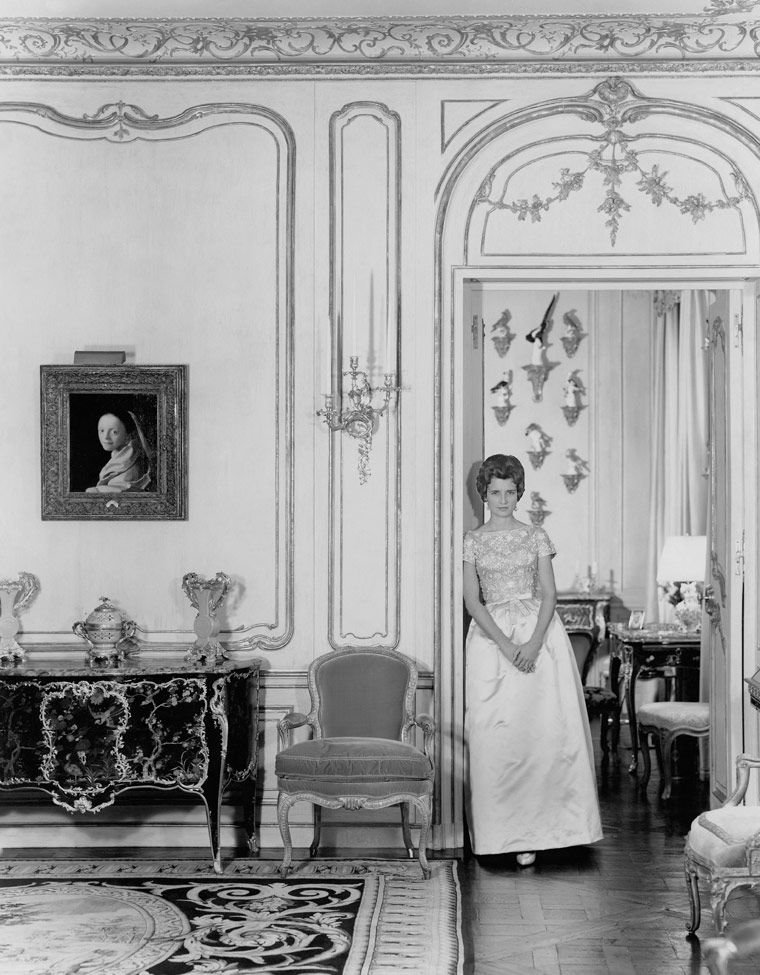
Photo by Cecil Beaton for Vogue, May 1, 1960
© Cecil Beaton / Vogue; Condé Nast
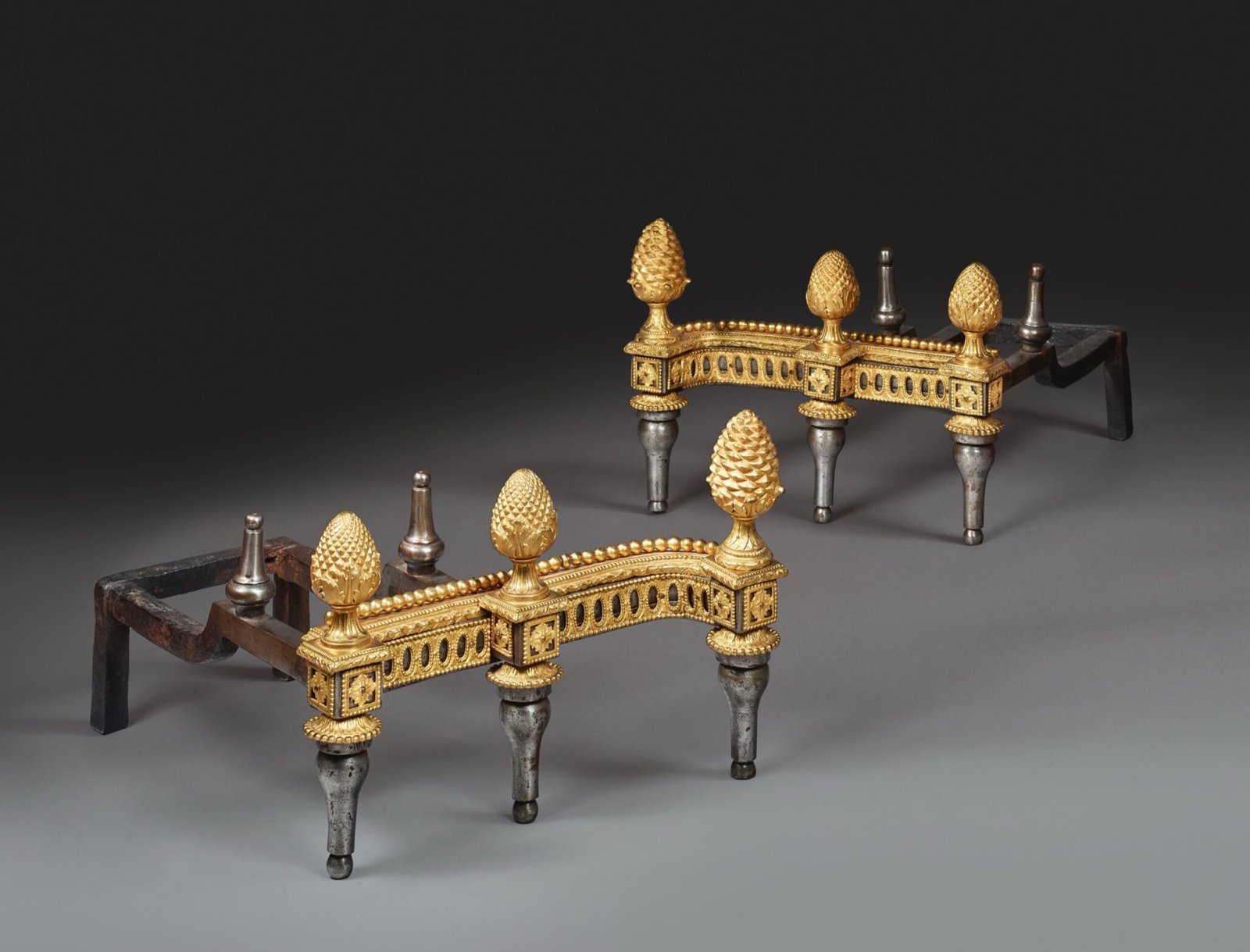
In the United States of the 1950s, eighteenth-century French decorative arts were a fixture of fashionable, affluent interiors. Charles and Jayne Wrightsman shared this taste but, unlike most of their contemporaries, selected only works of exceptional quality. For their residences in Palm Beach, at 820 Fifth Avenue in New York, and in London, they first turned to Stéphane Boudin, French decorator of the legendary Maison Jansen, to recreate interiors worthy of the finest Parisian residences of the Age of Enlightenment. Parquet de Versaillesflooring, boiseries (carved wood paneling), and chimneypieces were imported from France, and a rich array of furniture and objets d’art was installed throughout the rooms. The whole was carefully curated by Jayne, who made her home a setting for the display of museum-quality works, without sacrificing the comforts of modern life. After Boudin’s death, the Wrightsmans turned to the decorator Henri Samuel to carry on the appointment of their residences and the arrangement of their formidable collection.
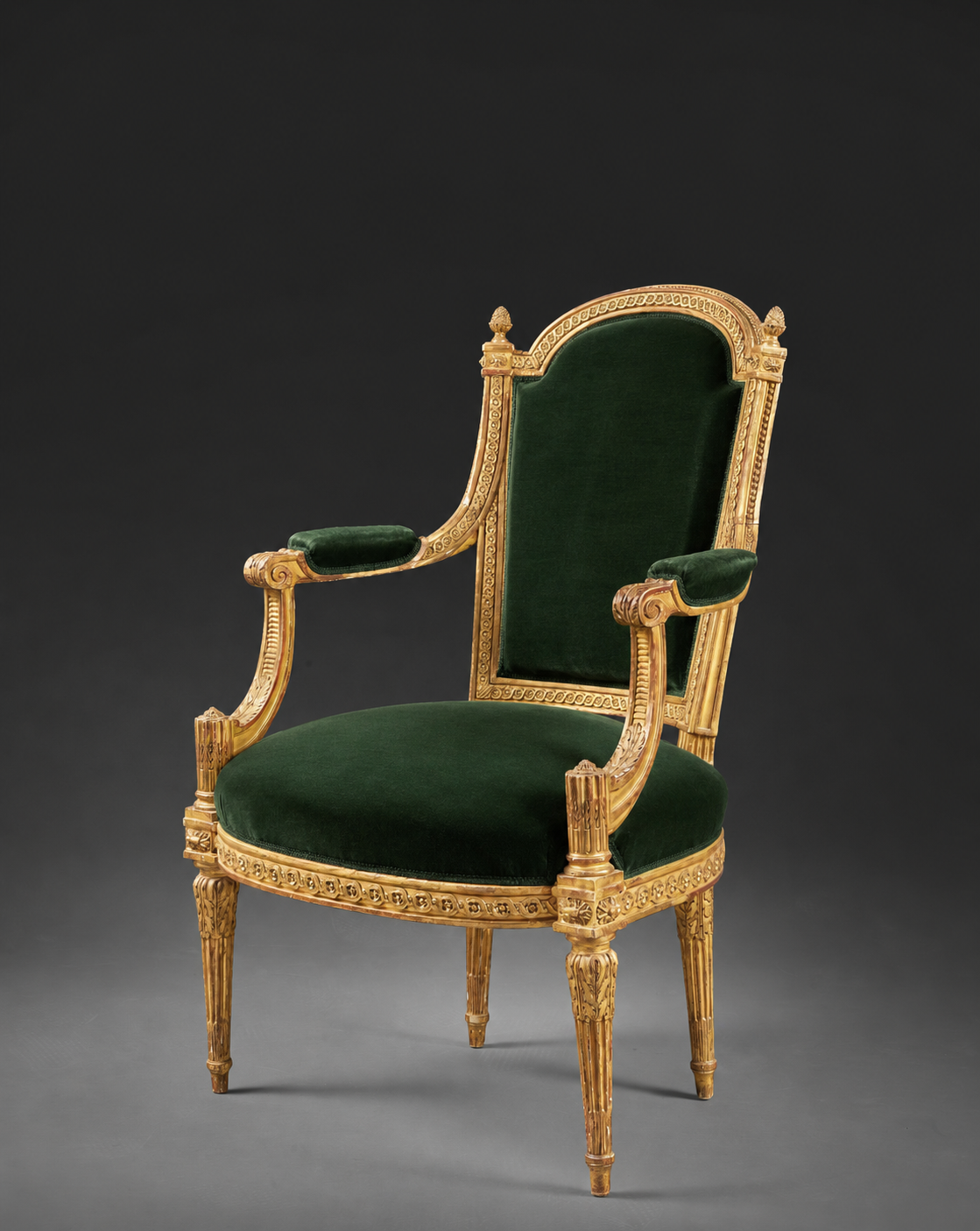
This pair of armchairs is part of a set, one pair of which is in the collection of the Metropolitan Museum.
The Wrightsmans acquired their first important painting in 1952, Two Young Peasant Women by Camille Pissarro. It was above all the seventeenth and eighteenth centuries that held their favor, and as early as 1955 they acquired a major painting, Study of a Young Woman by Johannes Vermeer. Their interest extended to old master paintings as well as drawings, rare books, sculpture, furniture, and objets d’art. They sought only the very best, advised in this by Francis Watson, director of the Wallace Collection; Sir John Pope-Hennessy of the Metropolitan Museum; and the French curator Pierre Verlet. Exceptionally erudite, Jayne became a leading authority on eighteenth-century decorative arts. True masterpieces, made by the most important craftsmen of the period, thus entered their collection. In the celebrated words of Pierre Rosenberg, former director of the Musée du Louvre, there was unquestionably a “Wrightsman taste”—learned, precise, and elegant.
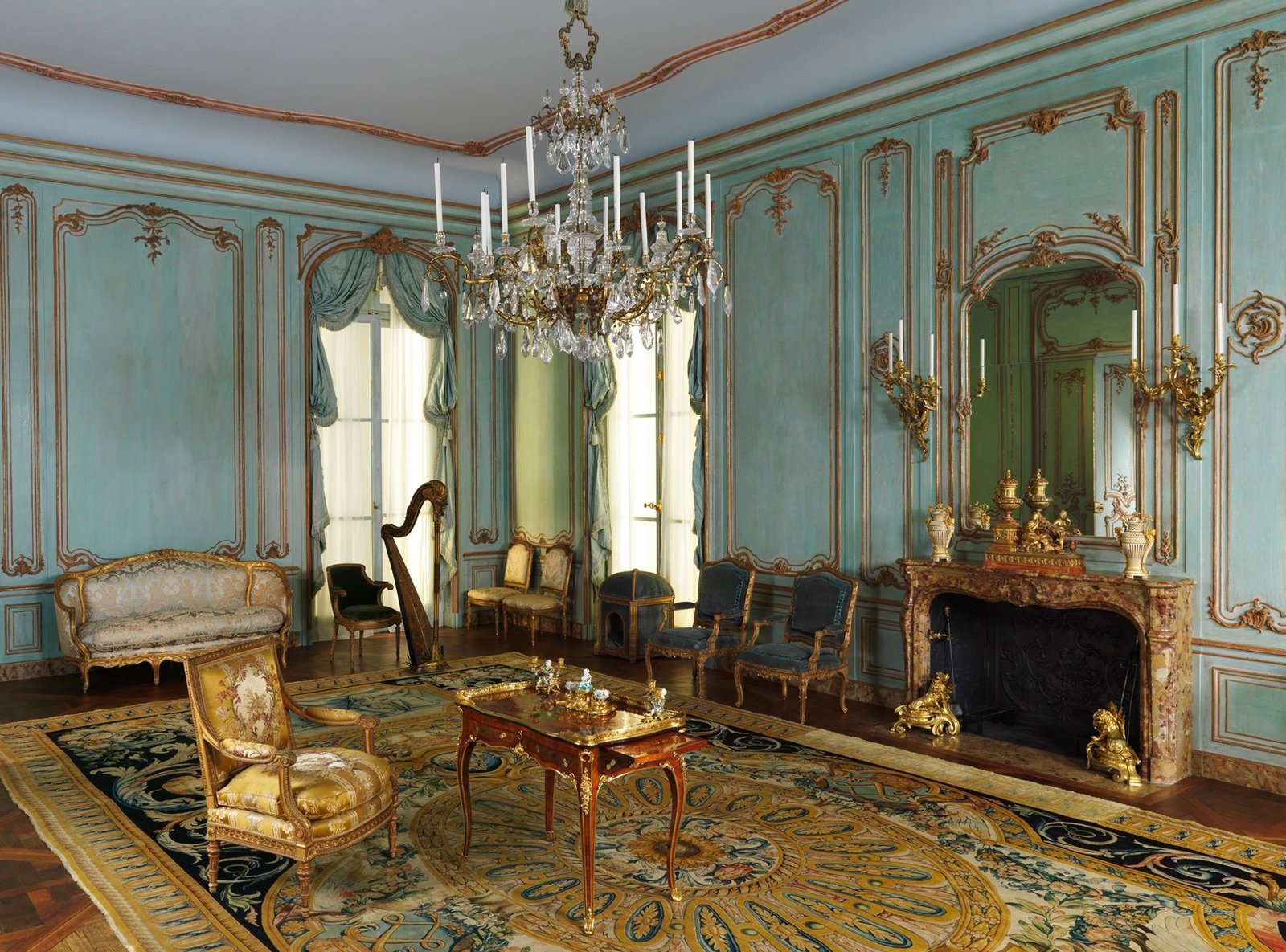
Gift of Charles and Jayne Wrightsman, 1963.
Great philanthropists, the Wrightsmans devoted themselves especially to enriching the collections of the Metropolitan Museum, their neighbor on Fifth Avenue. Charles joined the Museum’s Board of Trustees in 1956, and Jayne in 1975. The couple was actively involved in developing the collections and enhancing their presentation. As early as the 1960s and 1970s, they led the refurbishment of the period rooms devoted to eighteenth-century decorative arts. On this occasion the Wrightsmans lent numerous works to the Museum, took part in the design decisions, and generously funded the work on these galleries, which today bear their name. After her husband’s death in 1986, Jayne carried on her commitment to the Metropolitan. She supported numerous acquisitions and made significant gifts. In all, more than 1,275 works were given to the Museum by the Wrightsmans, among them major works of European art.
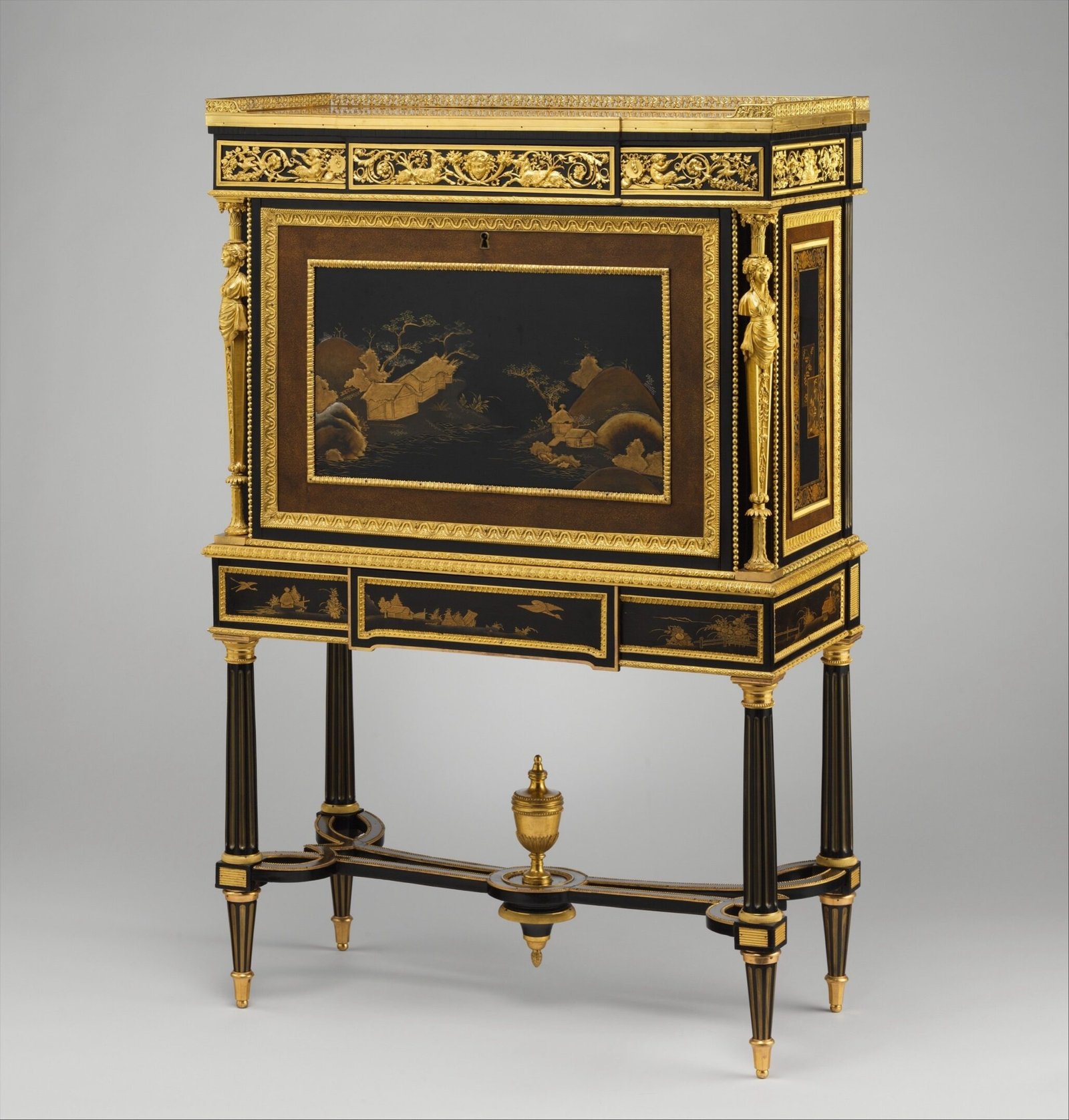
Gift of Charles and Jayne Wrightsman, 1977.
Erudite and passionate collectors, the Wrightsmans assembled over the course of their lives a remarkable ensemble. Having no heirs, they gave the greater part of their collection to the Metropolitan Museum and charities, while the remainder was dispersed in memorable auction sales.
Bibliography:
Katharine Baetjer, Charles and Jayne Wrightsman—Sublime Collectors: A Short History, Metropolitan Museum of Art website
Daniëlle Kisluk-Grosheide, Jeffrey Munger, The Wrightsman Galleries for French Decorative Arts, The Metropolitan Museum of Art, 2010

