
© Musée des arts et métiers-Cnam / Photo Dephti Ouest
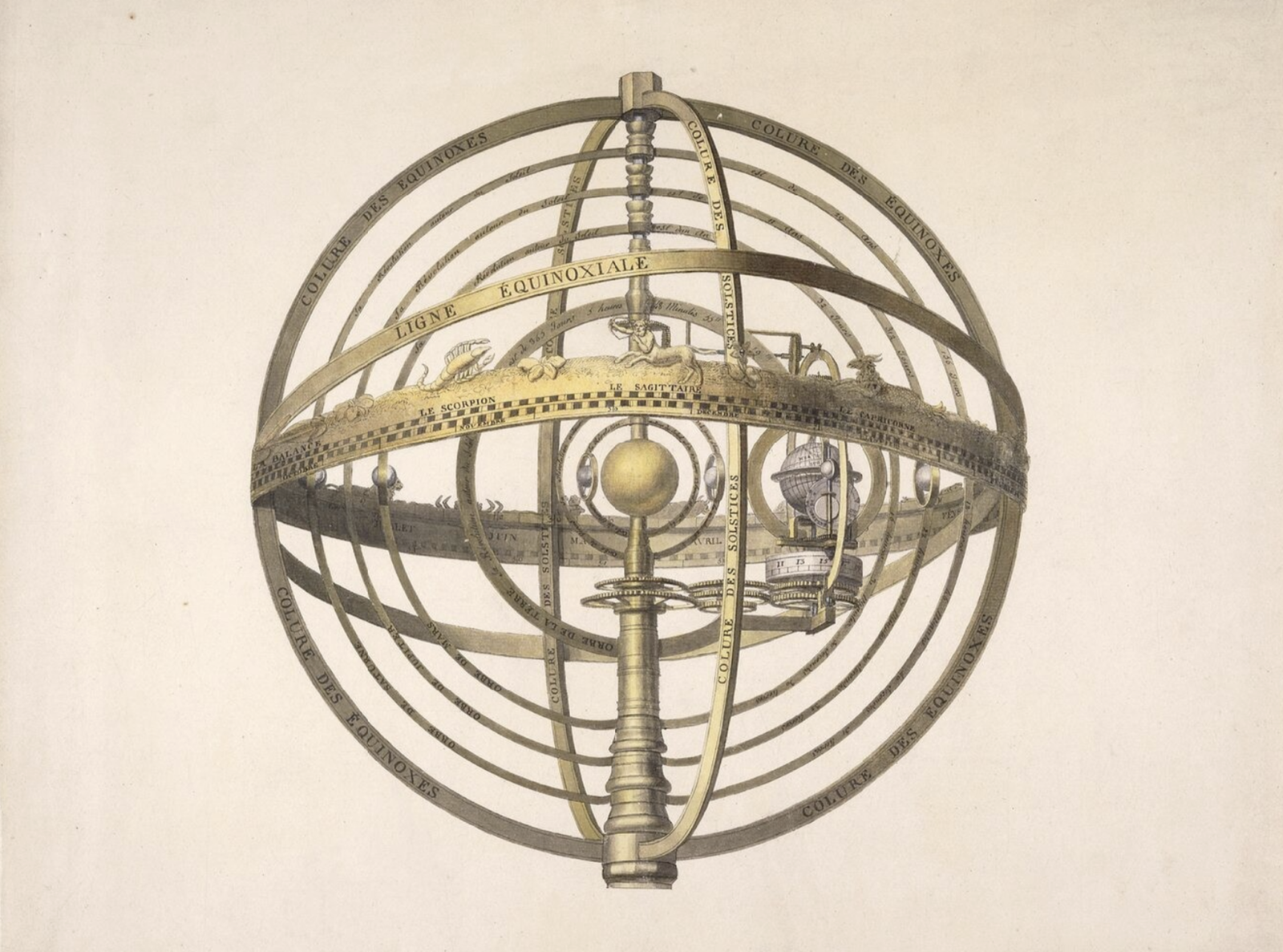
From the reign of Louis XIV to the close of the eighteenth century, high society cultivated a keen scientific curiosity: it surrounded itself with specialized objects and gathered for spectacular experiments.
MV 2074)
© Château de Versailles, Dist. RMN / © Jean-Marc Manaï
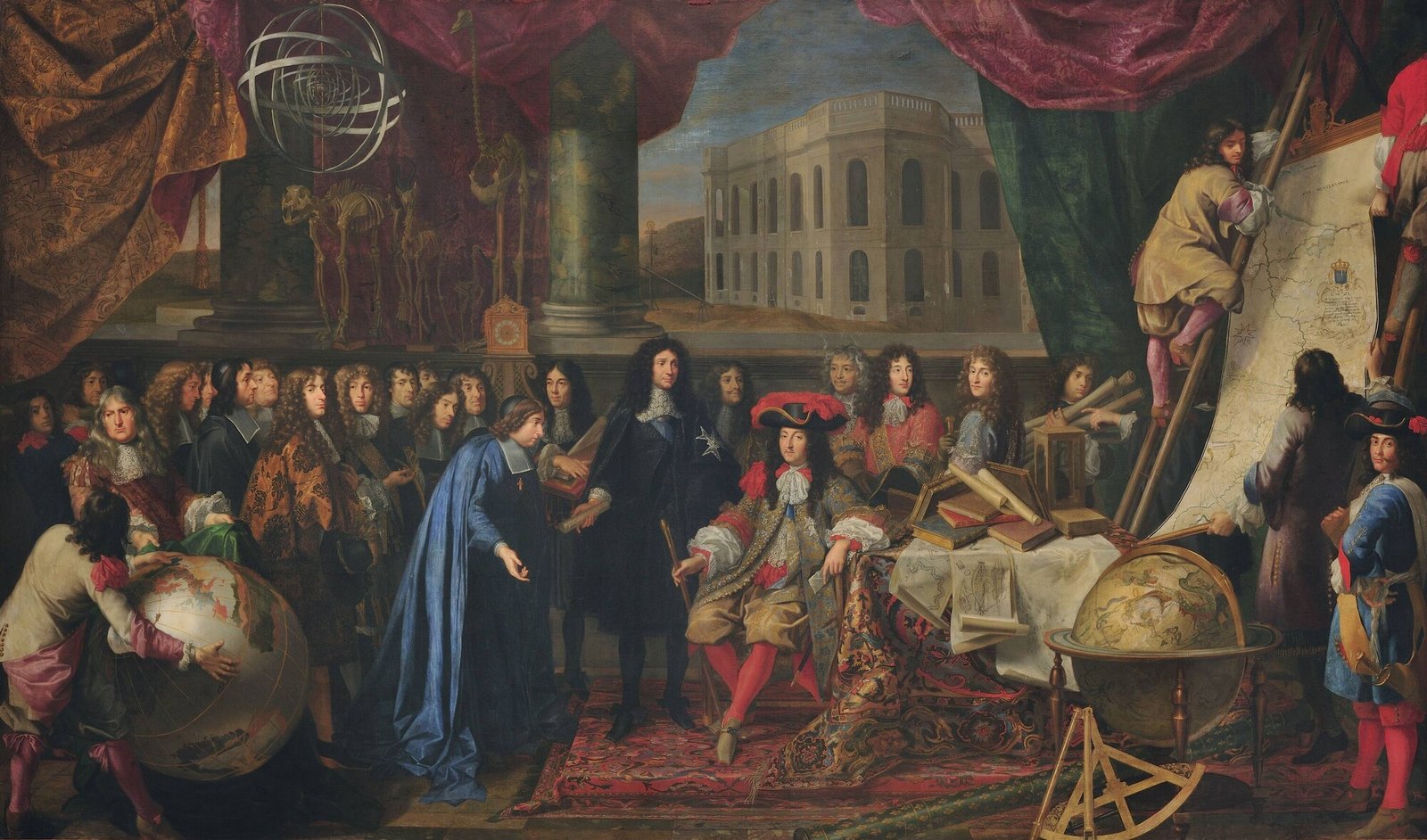
In the seventeenth and eighteenth centuries, the sciences were a major political concern. Colbert, minister to Louis XIV, was quick to grasp their importance and supported the founding of the Académie des Sciences in 1666. The institution brought together eminent scholars and drew foreign specialists to Paris. The Observatory was established in this same spirit in 1667, under the direction of the Italian Giovanni Domenico Cassini, who applied himself to the calculation of longitude—a problem whose solution conferred a decisive advantage at sea. Many disciplines flourished under the protection of the Sun King: geography, which defined the territorial holdings of the kingdom; agronomy, which secured optimal agricultural yields; and medicine and surgery as well. The construction of Versailles, masterpiece of absolute monarchy, was a magisterial demonstration of the achievements of French science. The castle’s intricate architecture, certain technical innovations—such as the mirrors of the Galerie des Glaces or the “flying chair,” forerunner of the elevator installed by Louis XV at Versailles in 1743—and above all the gardens with their sophisticated hydraulic systems were the fruit of that science.
© RMN-GP (Château de Versailles)
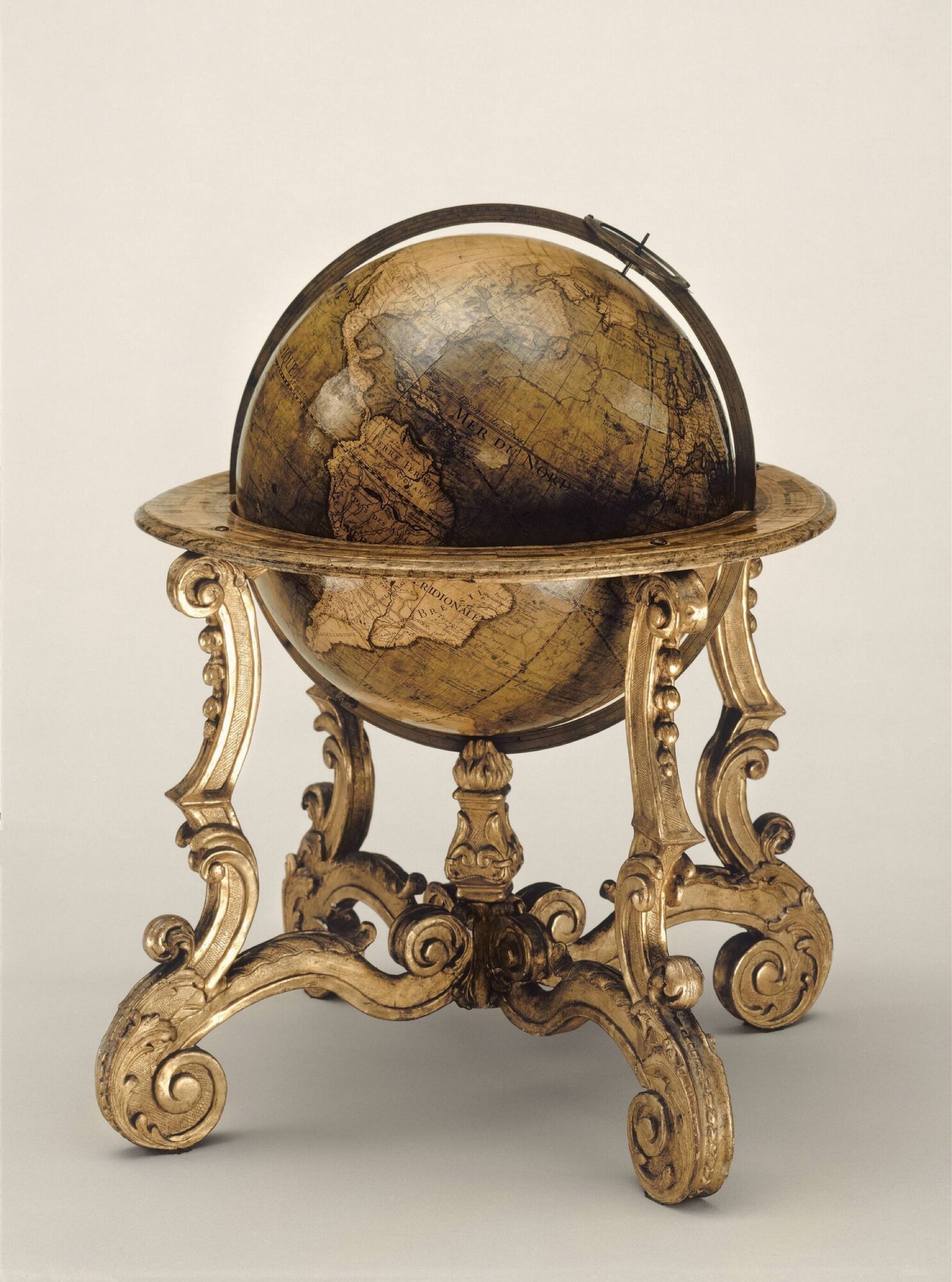
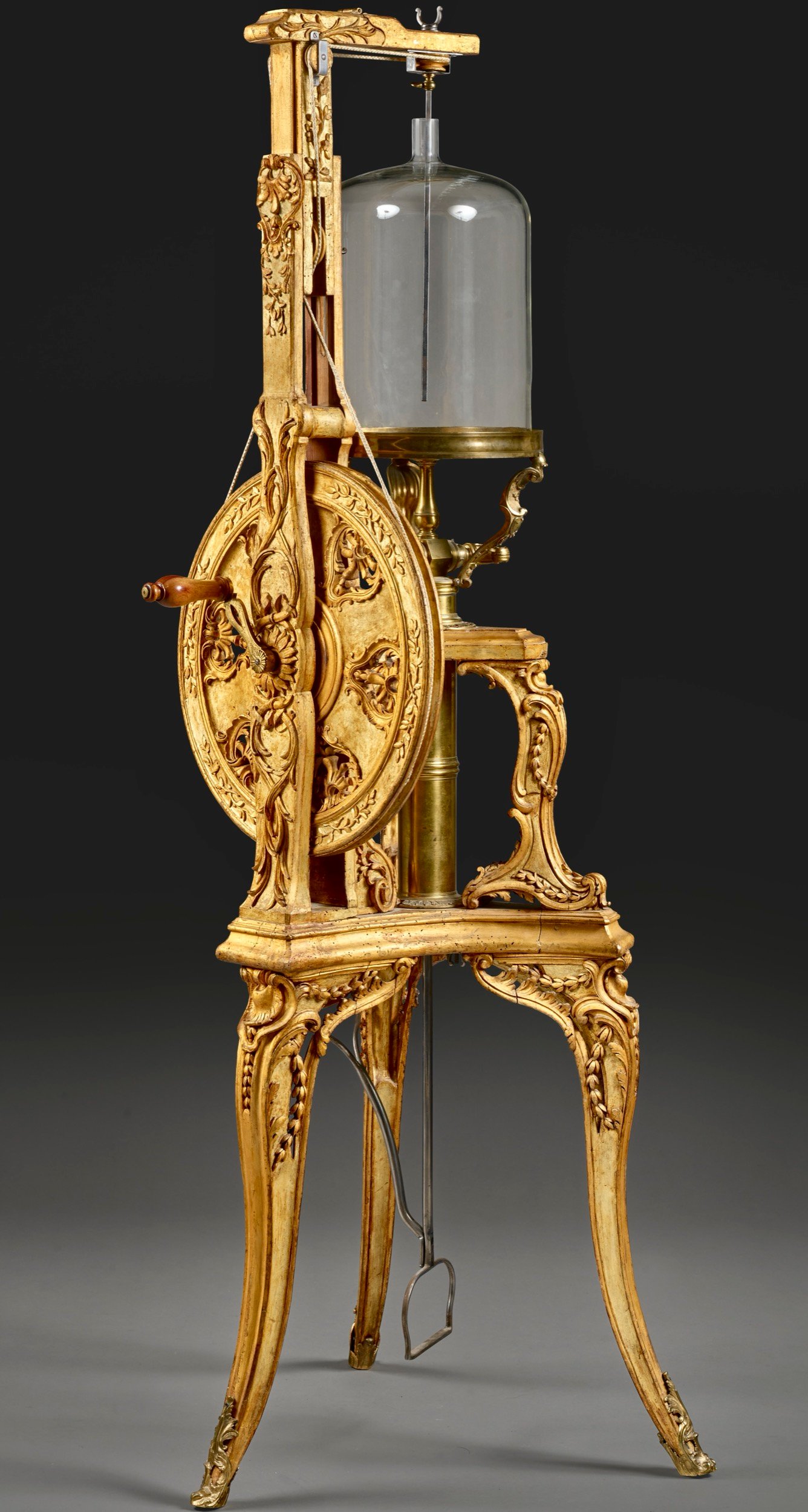
In 1699, the statutes of the Académie des Sciences divided the sciences into six classes: geometry, astronomy, mechanics, anatomy, chemistry, and botany. The sciences thus constituted vast fields of study, expanded still further in the eighteenth century by natural history and general physics. The high aristocracy was passionate about these various disciplines, discussed them in the salons, and often practiced them as well. This enthusiasm found tangible expression at mid-century in the creation of the Encyclopédie by a group of intellectuals that included Jean Le Rond d’Alembert and Denis Diderot. The work sought to document the latest scientific and technical knowledge, arranged in alphabetical order. In the libraries and cabinets of the aristocracy, the Encyclopédie stood alongside other specialized works and a variety of instruments. In Paris, several shops offered amateurs globes, barometers, and thermometers. Learned curiosity and a taste for beautiful things were, at the time, one and the same. The scientific instrument was not merely a measuring tool: it was also an object of collection, a mark of distinction, and an ornament of the cabinet.
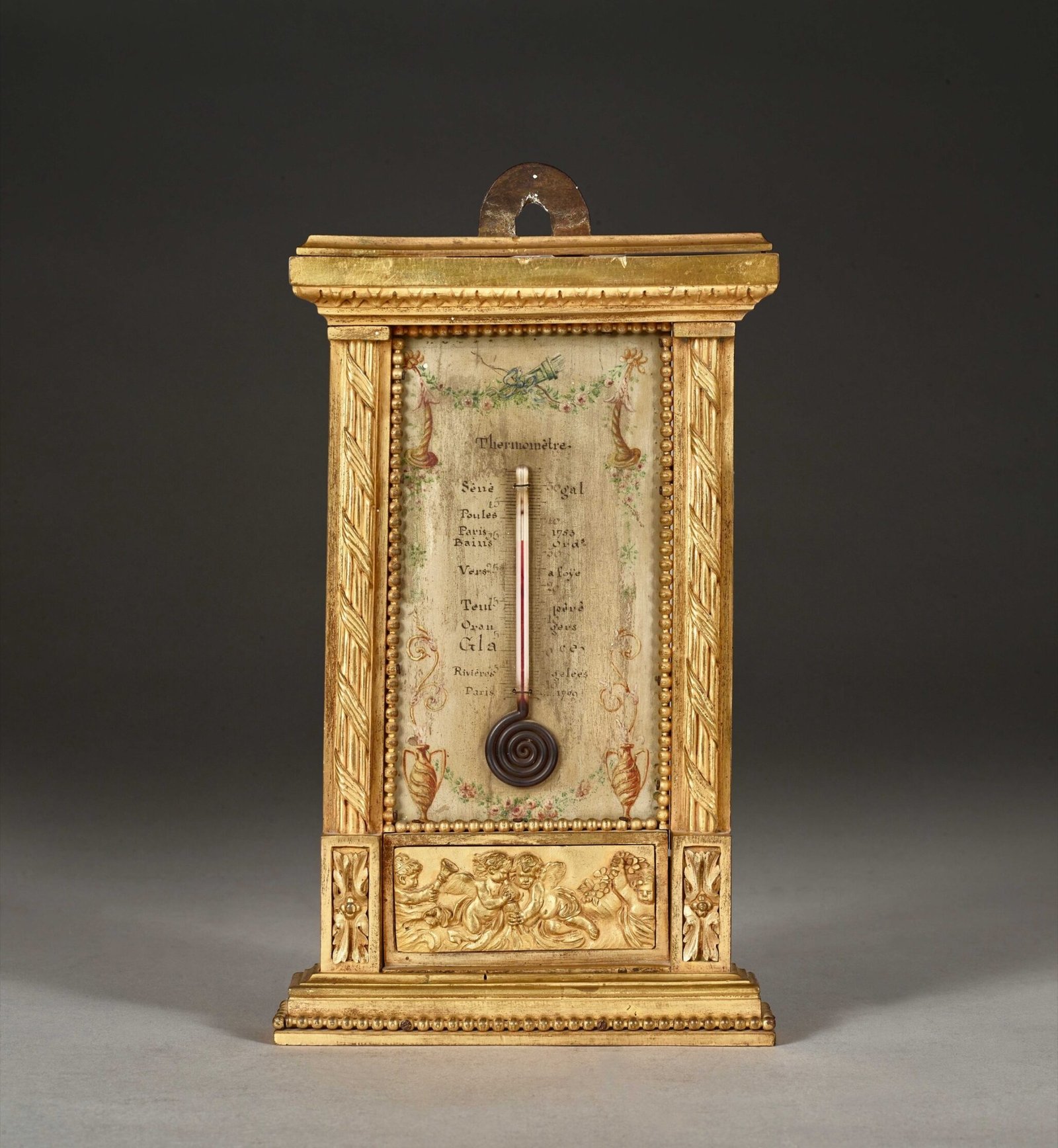
The sciences found varied expression in eighteenth-century society. Experiment came to occupy an ever-greater place in scientific discourse. In society, it gave rise to striking demonstrations, such as those staged by the Abbé Nollet in the Galerie des Glaces at Versailles in 1746. He had several dozen people join hands to feel the “shock” of an electrical charge as it traveled from one to the next. The scholar had already been celebrated in the capital for several years, offering courses in physics at his private residence to which the whole of the aristocracy flocked. For this he relied on several hundred instruments of his own making. Other amateurs, by contrast, pursued their experiments in the privacy of their apartments. Voltaire, Émilie du Châtelet, and the Duc de Chaulnes assembled important collections of instruments intended for their cabinets of mechanics, natural history, or physics.
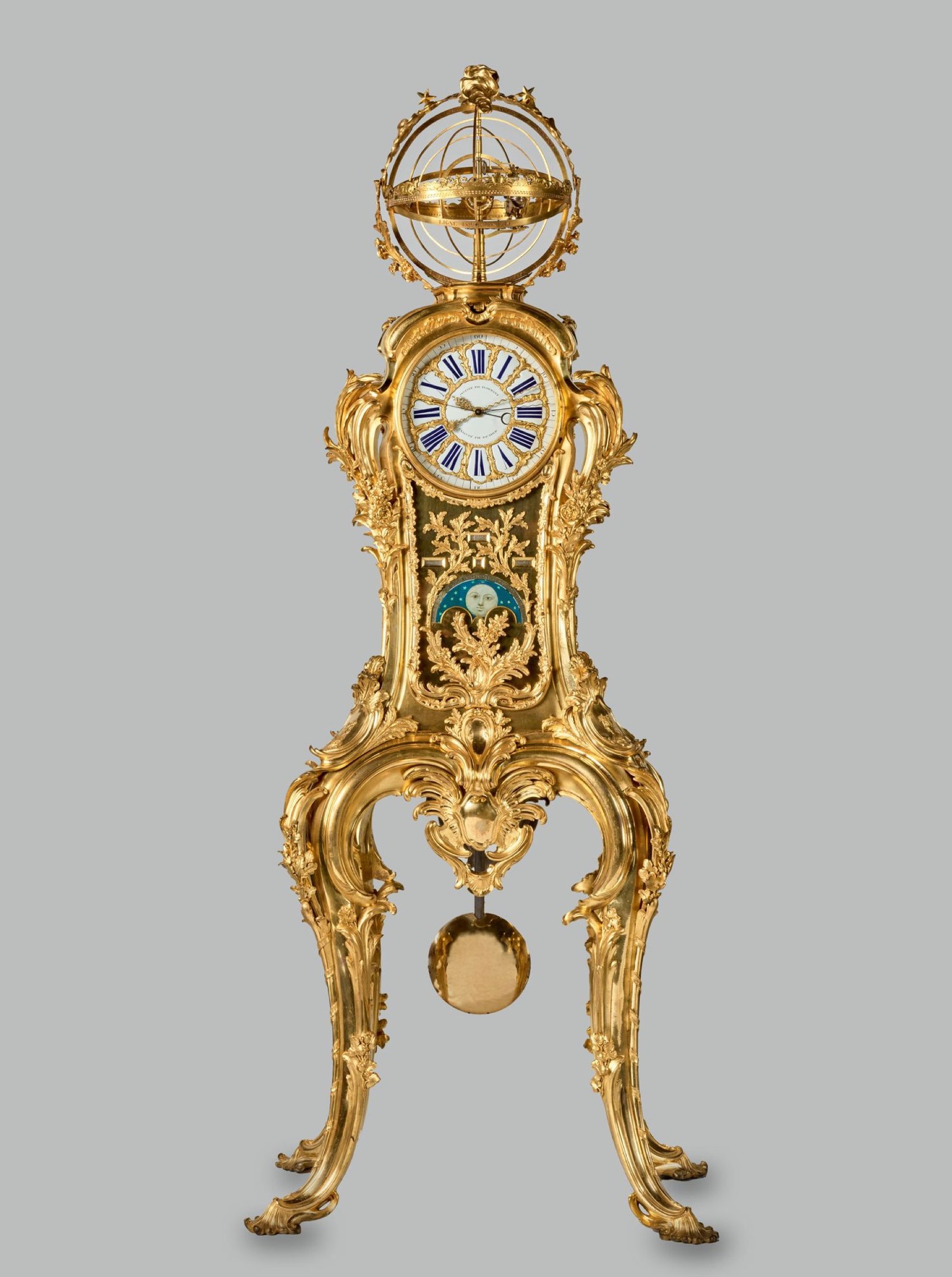
The kings of France were no less devoted to the sciences. From their earliest years they received a scientific education and frequented the Académie des Sciences. Upon his installation at Versailles in 1722, Louis XV fitted out numerous cabinets and libraries within his private apartments around the Cour des Cerfs. There, in 1754, he placed the extraordinary astronomical clock by Passemant. In his Cabinet du Tour, the king himself practiced the art of turning, which fosters both mastery and patience. In 1744 he invited the Abbé Nollet to instruct the Dauphin, and the following year the Dauphine, appointing him deputy tutor for the sciences. From 1758, the scientist oversaw the arrangement of the Cabinet des Enfants de France in the Hôtel des Menus-Plaisirs at Versailles, bringing together several hundred of his instruments. Louis XVI, in his turn, was passionate about clockmaking, locksmithing, and mechanics. He drew maps himself in his cabinet of geography and, in 1780, had a chemistry cabinet installed. The kings of France likewise encouraged innovations of every kind: hard-paste porcelain was presented to the courtiers immediately after its invention, and the Montgolfier brothers’ balloon rose from Versailles in September 1783, only months after its first flight.
© Château de Versailles, Dist. GrandPalaisRmn / Christophe Fouin
From the king’s cabinets to the salons of the aristocracy, the sciences of the eighteenth century were at once an instrument of power, an intellectual passion, and a social spectacle. Of this enthusiasm, precious witnesses remain to us today: air pumps, globes, barometers, and clocks with their many dials.
Bibliography:
Calin Demetrescu, Les ébénistes de la Couronne sous le règne de Louis XIV, La Bibliothèque des Arts, Lausanne, 2021.
Jean-Nérée Ronfort, « Bernard I Van Risamburgh (c. 1660–1738) », dans André-Charles Boulle (1642−1732). Un nouveau style pour l’Europe, cat. exp. Paris, musée des Arts Décoratifs / Somogy éditions d’art, 2009, pp. 96–100.
Jean-Nérée Ronfort et Jean-Dominique Augarde, « Le maître du bureau de l’Électeur », L’Estampille/L’Objet d’Art, n° 221, janvier 1991, pp. 42–75.

